
The Clubhouse
In April 1950, Club 100 purchased land at 520 Kamoku Street — the site of the current 100th Infantry Battalion Memorial Building (Clubhouse).
Community leader and realtor Hung Wo Ching, a friend of Hawaiʻi’s Japanese American community and brother of Varsity Victory Volunteers founder Hung Wai Ching, arranged the purchase of three lots at 520 Kamoku Street for Club 100. The property, located in the Kapiʻolani Boulevard–Date Street area, totaled 21,600 square feet and cost $1.05 per square foot.
The agreement of sale was signed on behalf of Club 100 by President Sakae Takahashi and Treasurer Thomas “Tom” Nosse. Its provisions included a clause allowing the seller to repurchase one of the 7,200-square-foot lots at the original price within one year if Club 100 chose to sell it — providing financial reassurance to veterans still rebuilding their lives after the war. The agreement also required that no secondhand materials or Quonset huts be used in construction, reflecting the veterans’ determination to build a permanent and dignified clubhouse rather than a temporary wartime-style structure.
To help raise much-needed money for the clubhouse building fund, Club 100 sponsored benefit shows in Hawaii featuring Japanese entertainers Hibari Misora, then a 12-year-old star of Japan’s stage and screen, and Haruhisa Kawada, her manager/mentor and versatile performer from Japan. The programs included a benefit screening of the film “Kanashiki Kuchibue,” starring the young actress. The pair appeared throughout the Hawaiian Islands during May and June, with proceeds donated to the clubhouse building fund.
James “Jim” Lovell served as chairman of the Building Committee, with Tadashi Ohta as vice chairman. The committee accepted a bid of $58,350 from contractor D.K. Nagata to construct the Clubhouse.
The Club 100 Memorial Building was dedicated in July 1952, during the 10th anniversary year of the formation of the 100th Infantry Battalion. The formal dedication was attended by approximately 1,500 members of Club 100, along with their guests and friends, marking a major milestone for the organization.
During the ceremony, the keys to the Clubhouse were handed over from contractor D.K. Nagata to Building Committee chairman James Lovell, who then passed them to immediate past president Warren Iwai. In a deeply symbolic final act, the keys were then presented to Mr. and Mrs. Kikuzo Tanaka, Gold Star parents of Pfc. Keichi Tanaka (Co. B) – the second in the 100th Infantry Battalion to be killed in action.
With the battalion’s wartime dream of a clubhouse now fulfilled, the memory of the fallen was placed at the very center of its first moment of use, making it clear that the structure belonged as much to those who never returned as to those who survived.
In 1958, a single marble slab was imported from Carrara, Italy — a region where the battalion had fought on the Gothic Line — and inscribed with the names of the soldiers who died during World War II, along with seven more who later died in the Korean War. Carved at the top of the marble wall are the words: “This building is dedicated to the memory of our comrades of the 100th Infantry Battalion – United States Army who gave their lives in defense of our country – World War II 1941–1946.”
The marble plaque was unveiled at a dedication ceremony held at the Clubhouse on September 28, 1958, affirming that the building is not only for the living but also serves as a living memorial dedicated to honoring those who gave their lives.
Also in 1958, an Apartment Building Committee headed by Robert Sakoki studied the feasibility of constructing an apartment building on vacant land adjacent to the clubhouse. Financing was secured, and a 23-unit, three-story apartment building was completed in July 1959. Since its opening, rental income from the apartments has provided a source of revenue for the club’s operations.
Honoring their Comrades
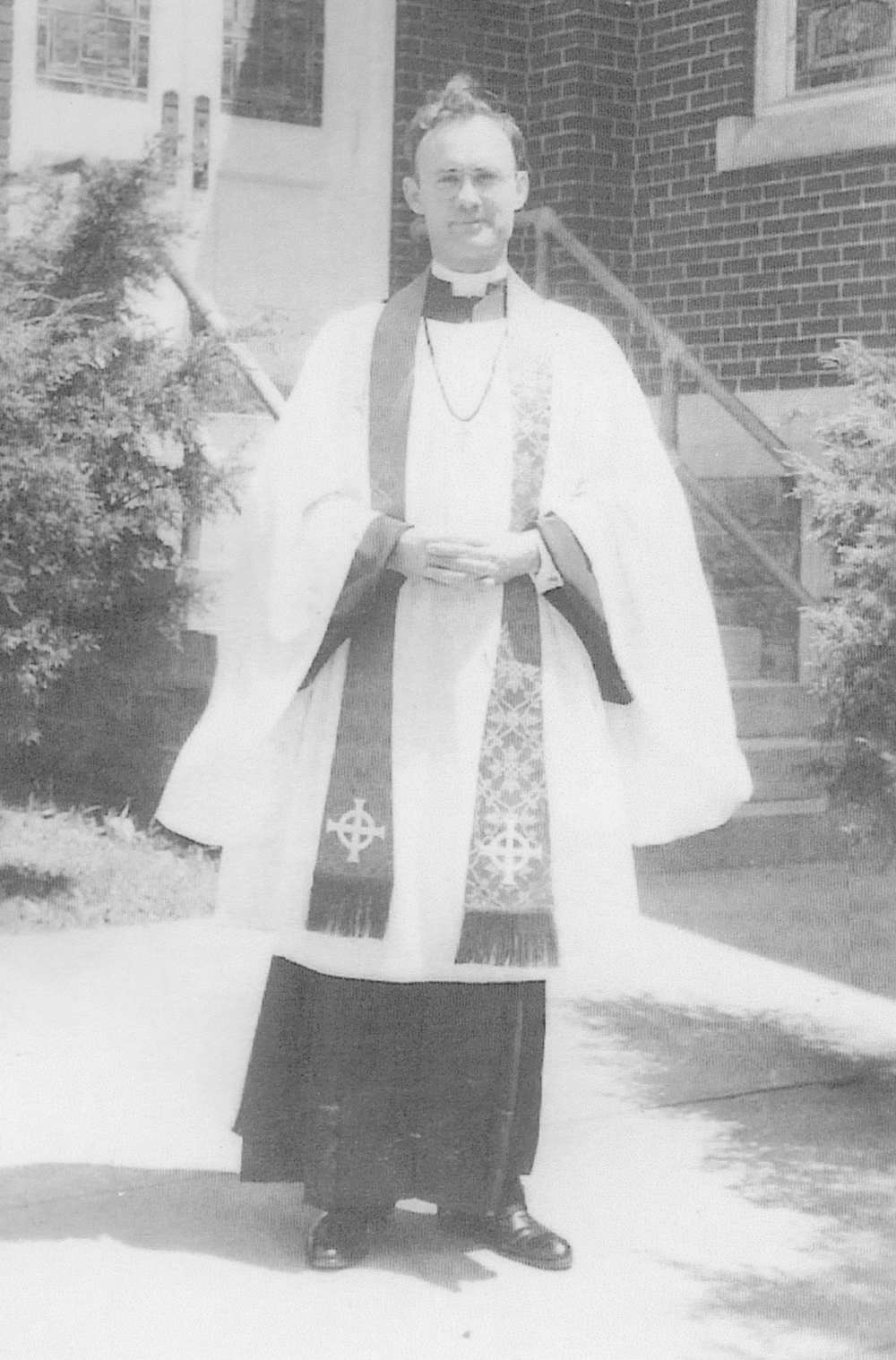 On September 29, 1946, the veterans of the 100th Infantry Battalion held a memorial service in Hawaiʻi to honor their comrades who had died in the war.
In September and October 1947, memorial services on the various islands were conducted by the battalion’s chaplain, Israel Yost, who traveled from Pennsylvania to Hawaiʻi.
In September 1948, the remains of 79 soldiers from Hawaiʻi who had died in combat were returned from overseas cemeteries. Representatives from the 100th, 442nd, and Military Intelligence Service clubs were aboard a Coast Guard cutter to greet the incoming ship. Veterans also attended services for their comrades at the National Memorial Cemetery of the Pacific (Punchbowl) and at cemeteries across the islands. Taro Suzuki, an original officer of the 100th Infantry Battalion, later served as the first superintendent of the Punchbowl National Memorial Cemetery.
Through Club 100, the veterans continued this tradition of holding an annual memorial service on the Sunday in September closest to September 29 — the date in 1943 when Sgt. Shigeo “Joe” Takata (Co. B) became the first member of the unit to be killed in action.
Today, the families and members of the 100th Infantry Battalion Veterans (Club 100) continue this observance. Since 2006, it has been held as a joint memorial service honoring all who served in the 100th Infantry Battalion, the 442nd Regimental Combat Team, the Military Intelligence Service, and the 1399th Engineer Construction Battalion, recognizing those who died in World War II or have since passed.
Documenting the History of the 100th
In 1948, Farrant Turner and James Lovell commissioned Dr. Thomas Murphy, a history professor at the University of Hawaiʻi, to write a history of the 100th Infantry Battalion. The veterans had initially requested a concise account covering the battalion’s formation, combat service, and deactivation. Dr. Murphy, then serving as chairman of the local War Records Committee, was selected to carry out the work.
At the outset, he expected the project to be completed within a year. However, as his research deepened, he came to see the story as more than military history — describing it as “a real American saga, a working out of the American dream,” and, in his words, “the story of Hawaiʻi itself.”
Determined to tell the story fully, he took two sabbatical leaves from the University of Hawaiʻi, traveled to the Pentagon to review formerly classified records on the 100th and the formation of the 442nd, and conducted extensive interviews with the veterans themselves. James Lovell, then chair of the Club 100 history committee, assisted by providing documents and helping arrange interviews. Dr. Murphy devoted two to three nights each week to the project as it grew in scope.
Over five years, the work developed into a comprehensive narrative that traced the men’s backgrounds, reconstructed combat experiences, and situated the battalion within the broader history of Hawaiʻi and its people. It also examined the social, economic, and political conditions affecting the Japanese American community before, during, and after the war.
Published in 1954 by the University of Hawaiʻi Press, “Ambassadors in Arms: The Story of Hawaiʻi’s 100th Battalion” remains a foundational source on the unit’s history. Within a month of opening pre-publication reservations for the first printing of the special edition, Club 100 received an outpouring of orders from members — more than twice the number originally guaranteed to the University of Hawaiʻi Press. The special edition included the names of all men known to have served in the 100th Infantry Battalion, with a separate section honoring those who had died in service.
The book was dedicated to those who did not return, reflecting the promise made during the war among members of the battalion that those who gave their lives would never be forgotten, and that the veterans who survived would carry forward their memory by documenting and perpetuating the identity, history, and heroic achievements of the 100th Infantry Battalion through Club 100, ensuring their sacrifices would not be made in vain.
Over the years, many veterans came to regard it as the most trusted and complete account of their shared experience, referring to it as a steady reference when asked to recall events and often recommending it to others as an honest record of what they had lived through. It remains in print today.
Puka Puka Parade Newsletter
The first issue, published in April 1946, was edited by veteran Samuel Sakamoto. A contest was held to name the bulletin, with a $10 prize for the winner. A panel of judges selected “Puka Puka Parade” as the title. Charlie Company veteran Arthur Itsuo Shinyama of Maui had suggested “Puka Puka,” drawn from Club 100’s “One Puka Puka” moniker. While the judges felt “Puka Puka” alone was incomplete, they considered several additions — including “Peeps,” “Bulletin,” “News,” and “Monthly” —before settling on “Parade” for its military connotation. Thus was born the Puka Puka Parade (PPP), often referred to as the organization’s “club organ.”
Over the decades, the Puka Puka Parade has served as a vital link, keeping Club 100 members connected and sustaining the organization’s continuity. From the beginning, it was hoped that each club chapter — based on wartime company assignments — would share brief monthly updates on members and activities. “Let us know who’s getting married or who’s passing out cigars,” Sakamoto wrote. “And if you’re going into business, we certainly will be able to give you some free publicity in these columns.”
As veterans returned to civilian life, some pursued education under the G.I. Bill, while others established small businesses. In its early years, the Puka Puka Parade played a role in promoting mutual assistance among 100th veterans and their families, including the families of their deceased comrades. The newsletter carried notices of rights and benefits available to them, as well as advertisements for services ranging from auto repair and trucking to carpentry, plumbing, electrical work, landscaping, photography, cafes, grocery stores, and real estate.
Following their return from the war, many veterans of the 100th emerged as leaders in Hawaiʻi’s postwar community. Some entered public service or politics, helping advance equality and shape the social and political transformation of Hawaiʻi. While Club 100 itself remained non-political, its motto of “For Continuing Service” was reflected in its broader commitment to community well-being — promoting unity among all people in their respective communities, advancing the social welfare of the people of Hawaiʻi, and fostering patriotism and loyalty to the United States.
In 1950, Sakae Takahashi became the first American of Japanese ancestry (AJA) elected to public office after the war when he won a seat on the Honolulu Board of Supervisors, the equivalent of today’s Honolulu City Council. He also played an important role in the development of Central Pacific Bank, helping establish one of the key financial institutions that supported small business growth and economic opportunity in Hawaiʻi’s postwar Japanese American community. Fellow 100th veteran Spark Matsunaga also entered public service, serving in the Hawaiʻi Territorial Legislature from 1954 to 1959, where he advocated and lobbied for Hawaiʻi statehood. After statehood was achieved in 1959, he went on to represent Hawaiʻi in the U.S. House of Representatives beginning in 1963 and was elected to the U.S. Senate in 1976, becoming one of Hawaiʻi’s most influential political leaders.
The Puka Puka Parade played an important connecting role throughout these years, communicating news of members’ civic involvement, community service activities, and public milestones. It helped keep veterans informed of one another’s work, strengthened ties across chapters and islands, and documented how the 100th remained represented at memorial services and community events. In doing so, it became more than a newsletter — it served as a continuing thread linking personal lives, shared service, and the enduring identity of the battalion.
The Puka Puka Parade continues this role today, sharing 100th Infantry Battalion Veterans (Club 100) activities and events with veterans and families of the 100th. It provides information on opportunities for members to engage in preserving and perpetuating the battalion’s legacy through Club 100 initiatives, Education Center projects and tours, and encourages broader community participation in programs such as the organization’s Legacy2Action student project-based learning program. It also highlights the club’s social activities, annual banquets honoring the battalion, and the 100th’s representation at memorial services, along with other community events that invite participation in remembering and honoring its history.
Published continuously since 1946, the Puka Puka Parade has remained the organization’s “club organ” for over eight decades and continues to serve that purpose today.
Past issues can be accessed at: https://evols.library.manoa.hawaii.edu/handle/10524/11835