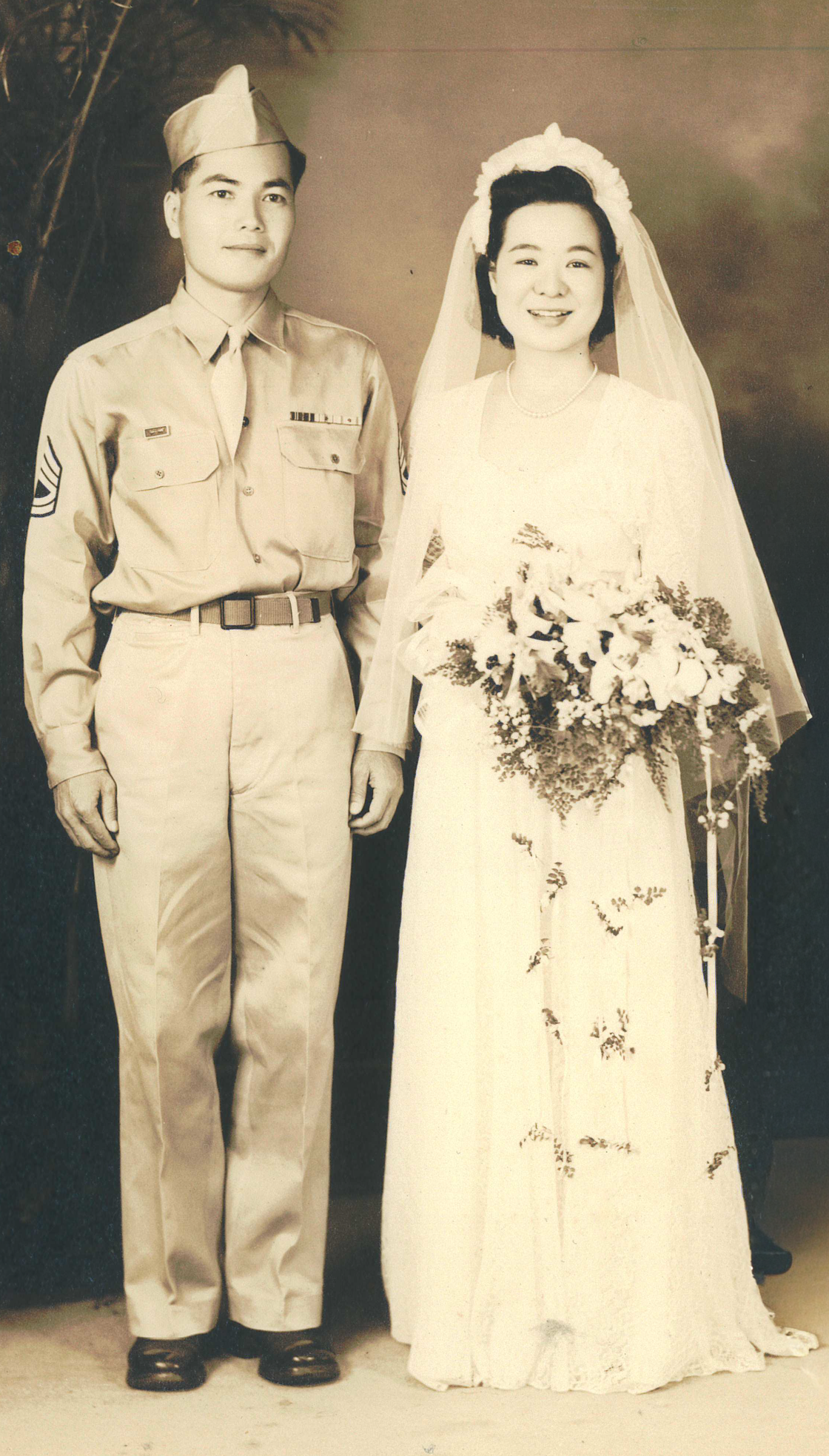
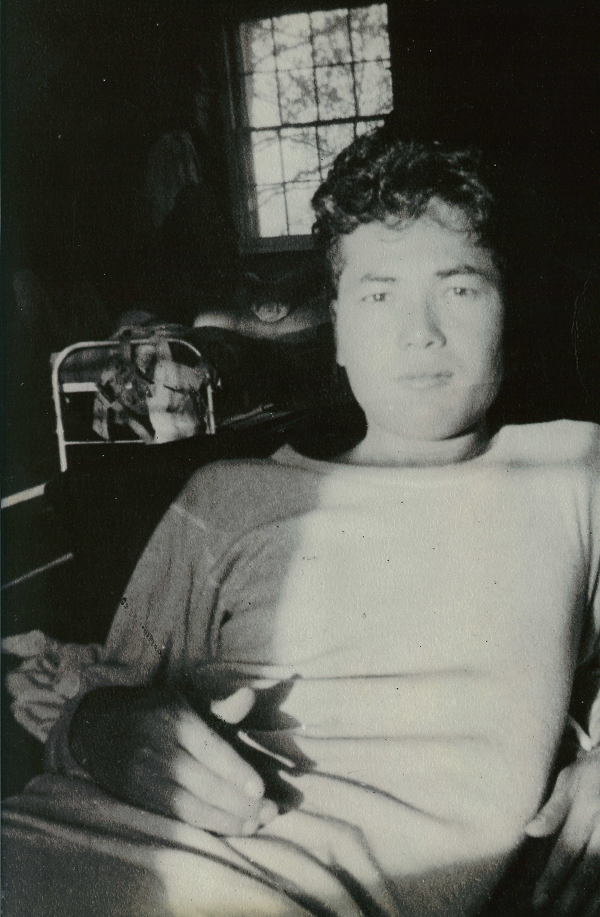
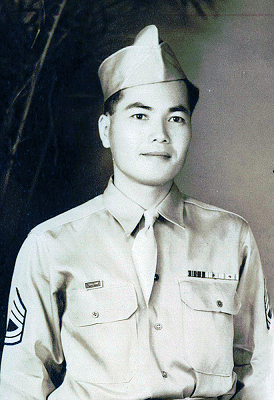
Headquarters Company, 100th Infantry Battalion (Separate) and Military Intelligence Service (MIS)
Even as a young boy, Ernest showed a knack for business. When his father became discouraged after failing to sell their flowers, Ernest asked if he could try. He bundled the blooms himself and sold them at nearby cemeteries, where families purchased them for gravesites. He also helped his father peddle vegetables from a handcart and collected kiawe beans, which he sold as horse feed — fifteen cents for a hundred-pound sack. His entrepreneurial spirit was evident even then, a quality that would carry him through the challenges ahead.
After graduating from McKinley High School, Ernest attended the University of Hawai‘i at Mānoa, where he earned a master’s degree in chemistry. His education and discipline would later serve him well in both science and military intelligence.
When World War II broke out, Ernest joined the 100th Infantry Battalion (Separate), the famous unit composed largely of Japanese Americans from Hawai‘i. He trained at Camp McCoy, Wisconsin, alongside other young men eager to prove their loyalty to the United States. Although he expected to be sent to Europe to fight with his battalion, the Army had other plans. Because of his education and fluency in Japanese, Ernest was reassigned to the Military Intelligence Service (MIS).
He was sent to Brisbane, Australia, where his role was crucial yet often unseen —translating captured Japanese military documents and reports. These translations were forwarded directly to General Douglas MacArthur’s command, providing intelligence that helped shape Allied operations across the Pacific. It was demanding, high-stakes work that required precision, cultural understanding, and mental endurance. Ernest’s contributions, like those of many Nisei linguists, were instrumental in shortening the war and saving countless lives.
While in service, Ernest often thought of his fiancée, Shizue, back home in Hawai‘i. He once remarked that thinking about her made him reflect on all the other couples separated by the war — each longing for the day they could rebuild their lives together.
When the war finally ended, Ernest returned to Honolulu determined to start fresh. Using the modest savings he had accumulated during his military service, along with a small loan from his father, he imported a few rose plants from Texas and planted them with his parents and new wife on a small plot in Wai‘alae-Kāhala. What began as a modest family venture soon blossomed — literally — into the state’s largest rose-growing business.
Ernest initially balanced his floral business with his career as a research chemist at the Hawai‘i Sugar Planters’ Association, but his passion for roses soon took over. By the 1960s, Watanabe Floral had become Hawai‘i’s leading commercial rose grower. Ernest’s six children — Jeanne, Wesley, Russell, Louise, Leland, and Susan — all took part in the business, continuing the family tradition of hard work and dedication.
[Courtesy of Russell Watanabe]