
Baker Company, 100th Infantry Battalion
Tokuji Ono was born on May 7, 1919, in the working-class neighborhood of Iwilei, Honolulu, where the sounds of the nearby pineapple cannery marked the rhythms of daily life. His father worked as a timekeeper, and the family of seven lived modestly. From an early age, Ono learned the value of perseverance. He walked more than five miles to school each morning, catching the bus home only on the return trip. Of the five children, he was the only one to attend the University of Hawai‘i at Mānoa (UH); his older brother left school to support the family. These sacrifices shaped Ono’s lifelong belief in education as the path to opportunity.
![Tokuji Ono (Co. B, 100th Inf. Bn.) [Courtesy of Leslie Taniyama]](https://www.100thbattalion.org/wp-content/gallery/photos-ono-tokuji/ono_tokuji_124_kccx.jpg "Tokuji Ono (Co. B, 100th Inf. Bn.) [Courtesy of Leslie Taniyama]")
After graduating from UH, Ono began teaching in Makawao, Maui. His career had barely begun when he was drafted into the U.S. Army.
On December 7, 1941, while riding a bus toward Schofield Barracks, he saw black smoke rising from Pearl Harbor. Passengers fell silent as they realized a real attack — not a training drill — was underway. Back at Schofield, Ono witnessed Japanese American soldiers stripped of their rifles without explanation. Quietly, they endured the indignity. Soon thereafter, he was assigned to Company B of the 100th Infantry Battalion (Separate).
Sent to Camp McCoy, Wisconsin, Ono found warmth in the friendships forged with local Wisconsin families who welcomed the Hawai‘i boys into their homes. But the strangest chapter in his military experience came in November 1942, when he and several Company B soldiers were sent to a secret mission on Cat Island, Mississippi. Based on the racist belief that “all Japanese smell alike,” they were used to train attack dogs, wearing padded suits with meat tied around their necks. To the men, the experiment was absurd — yet memorable. Ono joked that if the Army truly wanted the dogs to learn a “Japanese scent,” the soldiers needed miso soup and rice, not C-rations. After a couple of hours, the exhausted dogs would quit, leaving the men free to go fishing. The episode later inspired the novel The Eyes of the Emperor, for which Ono proudly provided background interviews. The experiment was eventually deemed a failure, and the group returned to continue training with the 100th, which was by then at Camp Shelby, Mississippi.
In August 1943, Ono deployed to Italy with the 100th. During a patrol, a German rifle grenade exploded nearby, inflicting a severe abdominal wound that ended his combat service. He received the Purple Heart, Bronze Star, and — his greatest point of pride — the Combat Infantryman Badge. He was honorably discharged in 1945.
Returning home, Ono became a founding member of the Hawai‘i Chapter of the Disabled American Veterans, alongside Spark Matsunaga (Co. D) and Tommy Kakesako, and in 1961, served as president of Club 100. But it was in education that he built his enduring legacy. Ono taught math at Farrington High School before rising through the ranks as vice principal, acting principal, and ultimately principal at Nāpō‘opo‘o School, Waimea High and Elementary, Kailua High, Washington Intermediate, and Kalākaua Intermediate. His leadership was marked by fairness, inclusion, and an unwavering belief in young people. In 1974, the Hawai‘i State House of Representatives commended his “outstanding and devoted service to public education.”
Ono married Toshiko Matsui, a public health nurse, and together they raised three children: Diane, Jeff, and Peter. In retirement, he remained dedicated to preserving the legacy of the 100th Infantry Battalion, sharing his wartime experiences to inspire new generations.
Tokuji Ono passed away on April 10, 2016, at age 96.
![Billy Takaezu, T. Tanaka, Robert Goshima, James Komatsu, F. Kanemura, Y. Takata, T. Ono at Camp Shelby after Ship Island. [Courtesy of Leslie Taniyama]](https://www.100thbattalion.org/wp-content/gallery/photos-ono-tokuji/ono_tokuji_112_kccx.jpg "Billy Takaezu, T. Tanaka, Robert Goshima, James Komatsu, F. Kanemura, Y. Takata, T. Ono at Camp Shelby after Ship Island. [Courtesy of Leslie Taniyama]")
![Albert Oki and Tokuji Ono in front of a home in Wisconsin [Courtesy of Leslie Taniyama]](https://www.100thbattalion.org/wp-content/gallery/photos-ono-tokuji/ono_tokuji_288.jpg "Albert Oki and Tokuji Ono in front of a home in Wisconsin [Courtesy of Leslie Taniyama]")
![William Takaezu (far right) and friends with Italian children, Italy, September 16, 1944 [Courtesy of Leslie Taniyama] Inscription: Reverse: Sept. 16 ‘44 In Italy](https://www.100thbattalion.org/wp-content/gallery/photos-ono-tokuji/ono_tokuji_291.jpg "William Takaezu (far right) and friends with Italian children, Italy, September 16, 1944 [Courtesy of Leslie Taniyama] Inscription: Reverse: Sept. 16 ‘44 In Italy")
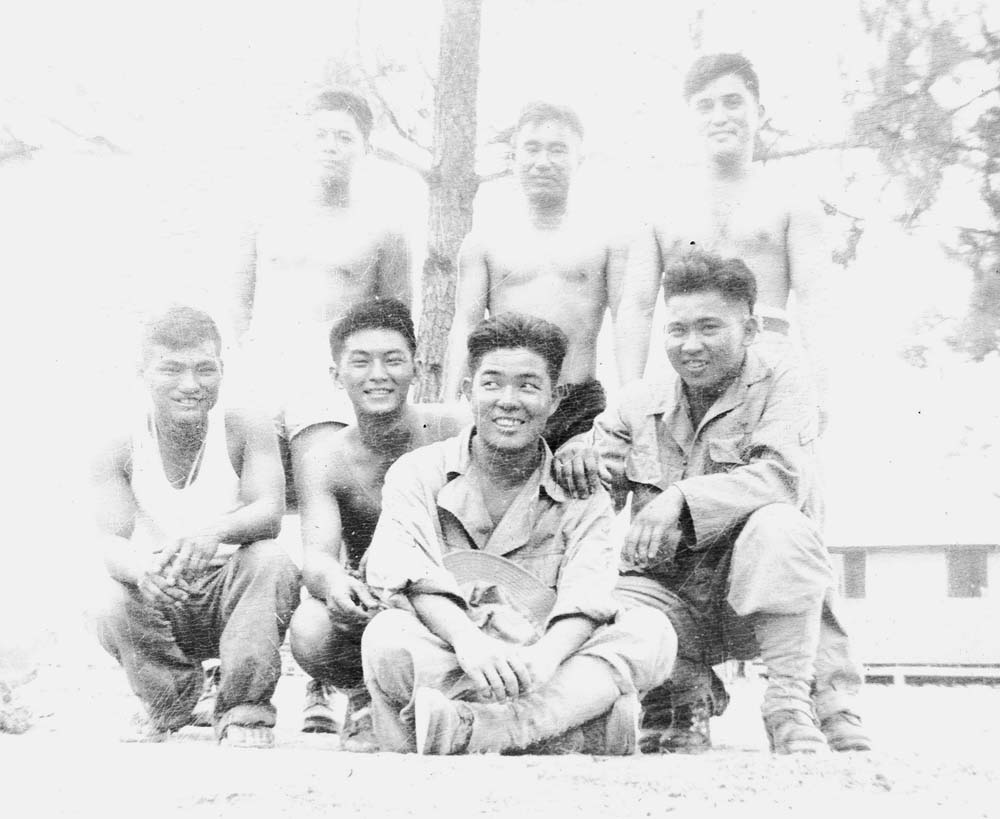
![Tokuji Ono and friends at Camp McCoy, Wisconsin. building [Courtesy of Leslie Taniyama]](https://www.100thbattalion.org/wp-content/gallery/photos-ono-tokuji/ono_tokuji_305.jpg "Tokuji Ono and friends at Camp McCoy, Wisconsin. building [Courtesy of Leslie Taniyama]")
![[Courtesy of Leslie Taniyama]](https://www.100thbattalion.org/wp-content/gallery/photos-ono-tokuji/ono_tokuji_093_kccx.jpg "[Courtesy of Leslie Taniyama]")
![[Courtesy of Leslie Taniyama]](https://www.100thbattalion.org/wp-content/gallery/photos-ono-tokuji/ono_tokuji_096_kccx.jpg "[Courtesy of Leslie Taniyama]")
![[Courtesy of Leslie Taniyama]](https://www.100thbattalion.org/wp-content/gallery/photos-ono-tokuji/ono_tokuji_101_kccx.jpg "[Courtesy of Leslie Taniyama]")
![Tokuji Ono [Courtesy of Leslie Taniyama]](https://www.100thbattalion.org/wp-content/gallery/photos-ono-tokuji/ono_tokuji_103_kccx.jpg "Tokuji Ono [Courtesy of Leslie Taniyama]")
![Don Ishiki and Albert Okuma. [Courtesy of Leslie Taniyama]](https://www.100thbattalion.org/wp-content/gallery/photos-ono-tokuji/ono_tokuji_106_kccx.jpg "Don Ishiki and Albert Okuma. [Courtesy of Leslie Taniyama]")
![Platoon Sgt. Harry Koizumi at Camp McCoy. [Courtesy of Leslie Taniyama]](https://www.100thbattalion.org/wp-content/gallery/photos-ono-tokuji/ono_tokuji_111_kccx.jpg "Platoon Sgt. Harry Koizumi at Camp McCoy. [Courtesy of Leslie Taniyama]")
![?, Tokuji Ono, ? in dress uniform standing in front of a blank wall [Courtesy of Leslie Taniyama]](https://www.100thbattalion.org/wp-content/gallery/photos-ono-tokuji/ono_tokuji_243.jpg "?, Tokuji Ono, ? in dress uniform standing in front of a blank wall [Courtesy of Leslie Taniyama]")
![Wozumi, Ono, Nozawa and Shirai. [Courtesy of Leslie Taniyama]](https://www.100thbattalion.org/wp-content/gallery/photos-ono-tokuji/ono_tokuji_118_kccx.jpg "Wozumi, Ono, Nozawa and Shirai. [Courtesy of Leslie Taniyama]")
![Takaezu and Hirasuna. [Courtesy of Leslie Taniyama]](https://www.100thbattalion.org/wp-content/gallery/photos-ono-tokuji/ono_tokuji_121_kccx.jpg "Takaezu and Hirasuna. [Courtesy of Leslie Taniyama]")
![Billy Takaezu, Shigeyuki Suma, Uki Wozumi, James Shintaky and Ben Ono. [Courtesy of Leslie Taniyama]](https://www.100thbattalion.org/wp-content/gallery/photos-ono-tokuji/ono_tokuji_123_kccx.jpg "Billy Takaezu, Shigeyuki Suma, Uki Wozumi, James Shintaky and Ben Ono. [Courtesy of Leslie Taniyama]")
![Tokuji “Bullie” Ono. [Courtesy of Leslie Taniyama]](https://www.100thbattalion.org/wp-content/gallery/photos-ono-tokuji/ono_tokuji_125_kccx.jpg "Tokuji “Bullie” Ono. [Courtesy of Leslie Taniyama]")
![Tokuji Ono [Courtesy of Leslie Taniyama]](https://www.100thbattalion.org/wp-content/gallery/photos-ono-tokuji/ono_tokuji_126_kccx.jpg "Tokuji Ono [Courtesy of Leslie Taniyama]")
![Tokuji Ono [Courtesy of Leslie Taniyama]](https://www.100thbattalion.org/wp-content/gallery/photos-ono-tokuji/ono_tokuji_128_kccx.jpg "Tokuji Ono [Courtesy of Leslie Taniyama]")
![Tokuji Ono [Courtesy of Leslie Taniyama]](https://www.100thbattalion.org/wp-content/gallery/photos-ono-tokuji/ono_tokuji_143_kccx.jpg "Tokuji Ono [Courtesy of Leslie Taniyama]")
![Tokuji Ono [Courtesy of Leslie Taniyama]](https://www.100thbattalion.org/wp-content/gallery/photos-ono-tokuji/ono_tokuji_146_kccx.jpg "Tokuji Ono [Courtesy of Leslie Taniyama]")
!['Mac' Yazawa cutting Tokuji Ono’s hair [Courtesy of Leslie Taniyama]](https://www.100thbattalion.org/wp-content/gallery/photos-ono-tokuji/ono_tokuji_116.jpg "'Mac' Yazawa cutting Tokuji Ono’s hair [Courtesy of Leslie Taniyama]")
![Tokuji Ono after the war [Courtesy of Leslie Taniyama]](https://www.100thbattalion.org/wp-content/gallery/photos-ono-tokuji/ono_tokuji_095.jpg "Tokuji Ono after the war [Courtesy of Leslie Taniyama]")
![Tokuji Ono during furlough from Camp Shelby, Mississippi, March 1943 [Courtesy of Leslie Taniyama] Inscription: Reverse: Coporal Tokuji Ono - Co B. 100th Inf. BN - Camp Shelby Miss - Taken on Furlough - Mar. 1943](https://www.100thbattalion.org/wp-content/gallery/photos-ono-tokuji/ono_tokuji_097.jpg "Tokuji Ono during furlough from Camp Shelby, Mississippi, March 1943 [Courtesy of Leslie Taniyama] Inscription: Reverse: Coporal Tokuji Ono - Co B. 100th Inf. BN - Camp Shelby Miss - Taken on Furlough - Mar. 1943")
![Tokuji Ono in dress uniform during a furlough [Courtesy of Leslie Taniyama]](https://www.100thbattalion.org/wp-content/gallery/photos-ono-tokuji/ono_tokuji_102.jpg "Tokuji Ono in dress uniform during a furlough [Courtesy of Leslie Taniyama]")
![Tokuji Ono in uniform standing at the base of a statue of Andrew Jackson in Jackson Square, New Orleans [Courtesy of Leslie Taniyama] Inscription: Reverse: Dec. ‘42 New Orleans Jackson Square](https://www.100thbattalion.org/wp-content/gallery/photos-ono-tokuji/ono_tokuji_105.jpg "Tokuji Ono in uniform standing at the base of a statue of Andrew Jackson in Jackson Square, New Orleans [Courtesy of Leslie Taniyama] Inscription: Reverse: Dec. ‘42 New Orleans Jackson Square")
![Ishii and Ono with their catch from Mississippi, November 1942 [Courtesy of Leslie Taniyama] Inscription: Reverse: Nov. 1942 Lt. Ishii - Cook. & yours truly T. Ono. Dec 31/1942](https://www.100thbattalion.org/wp-content/gallery/photos-ono-tokuji/ono_tokuji_107.jpg "Ishii and Ono with their catch from Mississippi, November 1942 [Courtesy of Leslie Taniyama] Inscription: Reverse: Nov. 1942 Lt. Ishii - Cook. & yours truly T. Ono. Dec 31/1942")
![Tokuji Ono in long thermal underwear on Ship Island, Mississippi, 1942 [Courtesy of Leslie Taniyama] Inscription: Yours Truly, Bullie(?) Reverse: Jan ‘42 Ships Island](https://www.100thbattalion.org/wp-content/gallery/photos-ono-tokuji/ono_tokuji_108.jpg "Tokuji Ono in long thermal underwear on Ship Island, Mississippi, 1942 [Courtesy of Leslie Taniyama] Inscription: Yours Truly, Bullie(?) Reverse: Jan ‘42 Ships Island")
!['Ma' Zilavy with Tokuji Ono at her home [Courtesy of Leslie Taniyama] Inscription: West Allis, Wi](https://www.100thbattalion.org/wp-content/gallery/photos-ono-tokuji/ono_tokuji_110.jpg "'Ma' Zilavy with Tokuji Ono at her home [Courtesy of Leslie Taniyama] Inscription: West Allis, Wi")
!['Toro' John Kihara and 'Old Man' Tanaka cleaning their rifles in front of tents at Camp Shelby [Courtesy of Leslie Taniyama] Inscription: Louisiana April ‘43 Maneuvers “Toro” John Kihara, “Old Man” Tanaka. both deceased](https://www.100thbattalion.org/wp-content/gallery/photos-ono-tokuji/ono_tokuji_114.jpg "'Toro' John Kihara and 'Old Man' Tanaka cleaning their rifles in front of tents at Camp Shelby [Courtesy of Leslie Taniyama] Inscription: Louisiana April ‘43 Maneuvers “Toro” John Kihara, “Old Man” Tanaka. both deceased")
![S. Okuma, “Heavy” Koizumi, Tokuji Ono, and K. Iwashita prepare “Clarence” the Pig for a feast, Ship Island, Mississippi, 1943 [Courtesy of Leslie Taniyama] Inscription: Reverse: Ship Island - Jan ‘43 “Clarence” the Pig. S. Okama,(Okuma) “Heavy” Koizumi, Yours truly, K. Iwashita](https://www.100thbattalion.org/wp-content/gallery/photos-ono-tokuji/ono_tokuji_115.jpg "S. Okuma, “Heavy” Koizumi, Tokuji Ono, and K. Iwashita prepare “Clarence” the Pig for a feast, Ship Island, Mississippi, 1943 [Courtesy of Leslie Taniyama] Inscription: Reverse: Ship Island - Jan ‘43 “Clarence” the Pig. S. Okama,(Okuma) “Heavy” Koizumi, Yours truly, K. Iwashita")
![Sueo Noda, Dad, Ma, Walter, Tokuji Ono, Pat, Sharleen, Sandy, Diana standing in front of a house in Wisconsin [Courtesy of Leslie Taniyama] Inscription:Sueo, Dad, Ma, Walter, Tokiji. Pat. Sharleen, Sandy, Diana. Reverse: Zelany(Zilany) family, West Allis, Wisconsin. Family who befriended us & w/whom we spent a number of weekends. 1942](https://www.100thbattalion.org/wp-content/gallery/photos-ono-tokuji/ono_tokuji_120.jpg "Sueo Noda, Dad, Ma, Walter, Tokuji Ono, Pat, Sharleen, Sandy, Diana standing in front of a house in Wisconsin [Courtesy of Leslie Taniyama] Inscription:Sueo, Dad, Ma, Walter, Tokiji. Pat. Sharleen, Sandy, Diana. Reverse: Zelany(Zilany) family, West Allis, Wisconsin. Family who befriended us & w/whom we spent a number of weekends. 1942")
![Tokuji Ono standing in front of mammal exhibit at the Bronx Zoo [Courtesy of Leslie Taniyama] Inscription: Reverse: Oct. ‘42 N.Y. Bronx Zoo](https://www.100thbattalion.org/wp-content/gallery/photos-ono-tokuji/ono_tokuji_127.jpg "Tokuji Ono standing in front of mammal exhibit at the Bronx Zoo [Courtesy of Leslie Taniyama] Inscription: Reverse: Oct. ‘42 N.Y. Bronx Zoo")
![7 soldiers in dress uniform with young children in front of a car and building [Courtesy of Leslie Taniyama] Inscription: Reverse: At Journey’s End. Devil’s Lake, Wisconsin, July 4, 1942](https://www.100thbattalion.org/wp-content/gallery/photos-ono-tokuji/ono_tokuji_145.jpg "7 soldiers in dress uniform with young children in front of a car and building [Courtesy of Leslie Taniyama] Inscription: Reverse: At Journey’s End. Devil’s Lake, Wisconsin, July 4, 1942")
![Tokuji Ono standing with hands behind his back along a street [Courtesy of Leslie Taniyama]](https://www.100thbattalion.org/wp-content/gallery/photos-ono-tokuji/ono_tokuji_152.jpg "Tokuji Ono standing with hands behind his back along a street [Courtesy of Leslie Taniyama]")
![Tokuji Ono standing with hands behind his back in front of an Indian teepee at Stand Rock [Courtesy of Leslie Taniyama] Inscription: Reverse: 7-5-42 'Yours Truly', Bullie. At 'Stand Rock', Winnebago Indian ceremonial ground on the Wisconsin River](https://www.100thbattalion.org/wp-content/gallery/photos-ono-tokuji/ono_tokuji_160.jpg "Tokuji Ono standing with hands behind his back in front of an Indian teepee at Stand Rock [Courtesy of Leslie Taniyama] Inscription: Reverse: 7-5-42 'Yours Truly', Bullie. At 'Stand Rock', Winnebago Indian ceremonial ground on the Wisconsin River")
![Tokuji Ono sitting on a wooden crate eating [Courtesy of Leslie Taniyama] Inscription: Bullie 'Chow-hound' Reverse: 8-13-42 Camp McCoy](https://www.100thbattalion.org/wp-content/gallery/photos-ono-tokuji/ono_tokuji_163.jpg "Tokuji Ono sitting on a wooden crate eating [Courtesy of Leslie Taniyama] Inscription: Bullie 'Chow-hound' Reverse: 8-13-42 Camp McCoy")
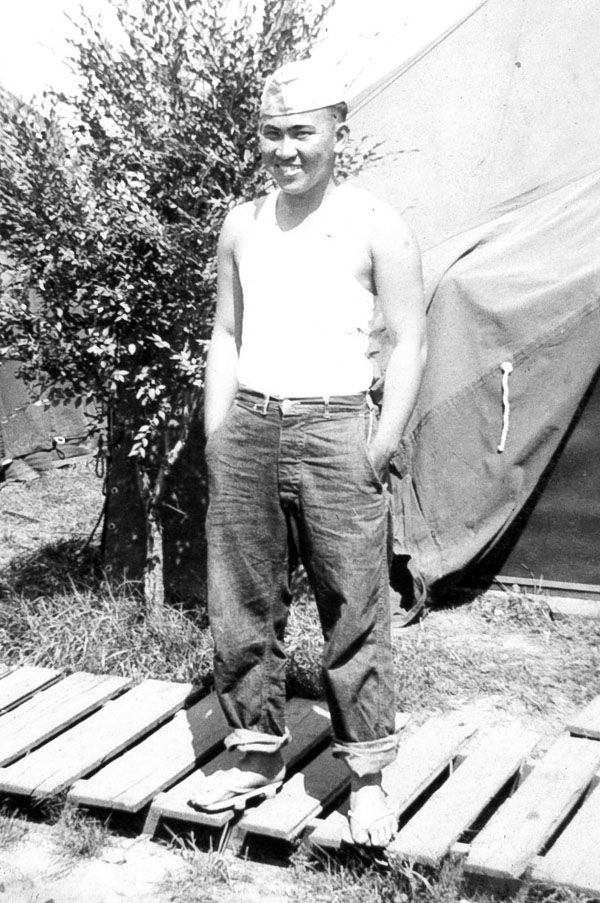
![Tokuji Ono standing with hands in pockets on a wooden path in front of tents [Courtesy of Leslie Taniyama] Inscription: Yours Truly Reverse: 8-29-42, 9/7/42](https://www.100thbattalion.org/wp-content/gallery/photos-ono-tokuji/ono_tokuji_164.jpg "Tokuji Ono standing with hands in pockets on a wooden path in front of tents [Courtesy of Leslie Taniyama] Inscription: Yours Truly Reverse: 8-29-42, 9/7/42")
![Ono dressed in fatigues with helmet and rifle [Courtesy of Leslie Taniyama]](https://www.100thbattalion.org/wp-content/gallery/photos-ono-tokuji/ono_tokuji_166.jpg "Ono dressed in fatigues with helmet and rifle [Courtesy of Leslie Taniyama]")
![A. Nozawa, H.Wozumi, T.Shirai, Hirasuna at the base of eagle statue at Grant’s Tomb [Courtesy of Leslie Taniyama] Inscription:Reverse: N.Y. Oct. 1942 A. Nozawa, H. Wozumi, “Fundi” T. Shirai, H.N. HIrasuna. Gran’ts Tomb](https://www.100thbattalion.org/wp-content/gallery/photos-ono-tokuji/ono_tokuji_188.jpg "A. Nozawa, H.Wozumi, T.Shirai, Hirasuna at the base of eagle statue at Grant’s Tomb [Courtesy of Leslie Taniyama] Inscription:Reverse: N.Y. Oct. 1942 A. Nozawa, H. Wozumi, “Fundi” T. Shirai, H.N. HIrasuna. Gran’ts Tomb")