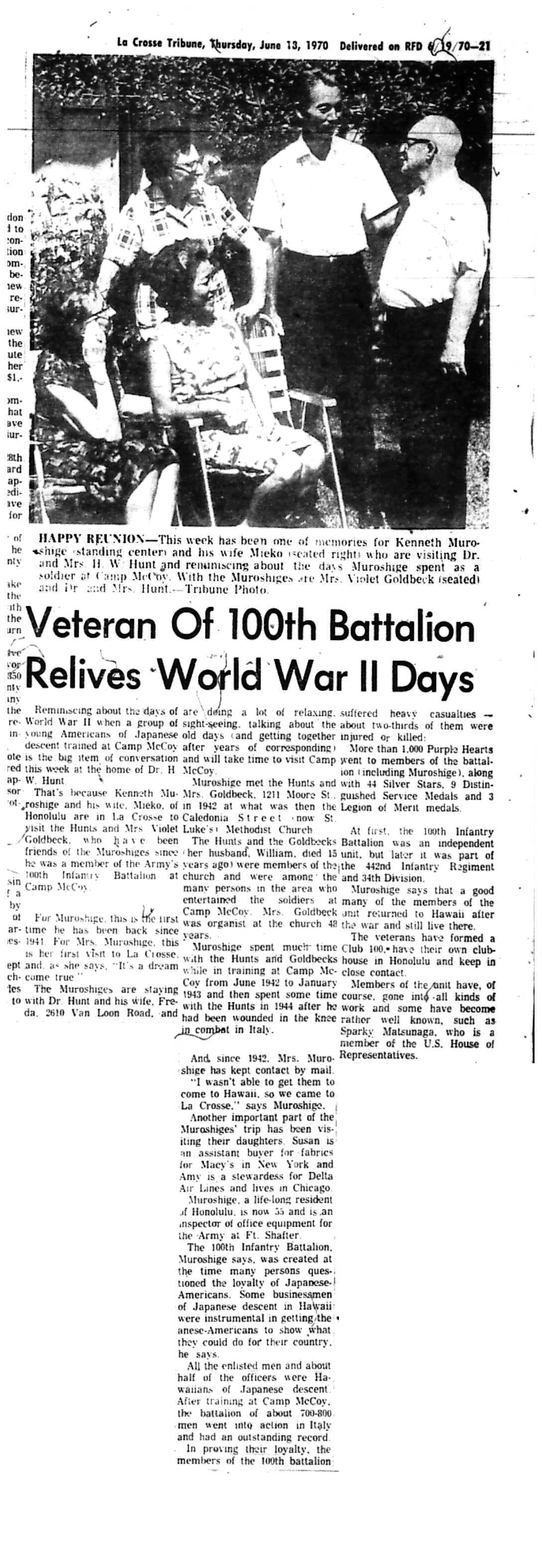
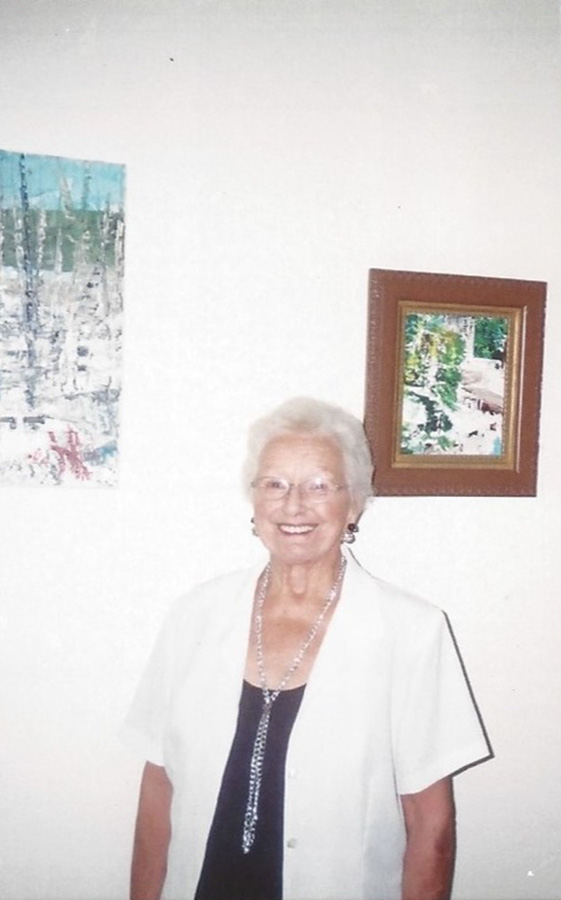
Baker Company, 100th Infantry Battalion (Separate)
Kenneth Torao Muroshige was born in November 1914 in Kipahulu, Maui, and grew up in the Haiku area. After moving to Honolulu for work, he was drafted into the Hawaii National Guard and assigned to the 298th Infantry. In the months after Pearl Harbor, he served among the soldiers guarding Oahu’s north shore, preparing for what many feared would be a second attack.
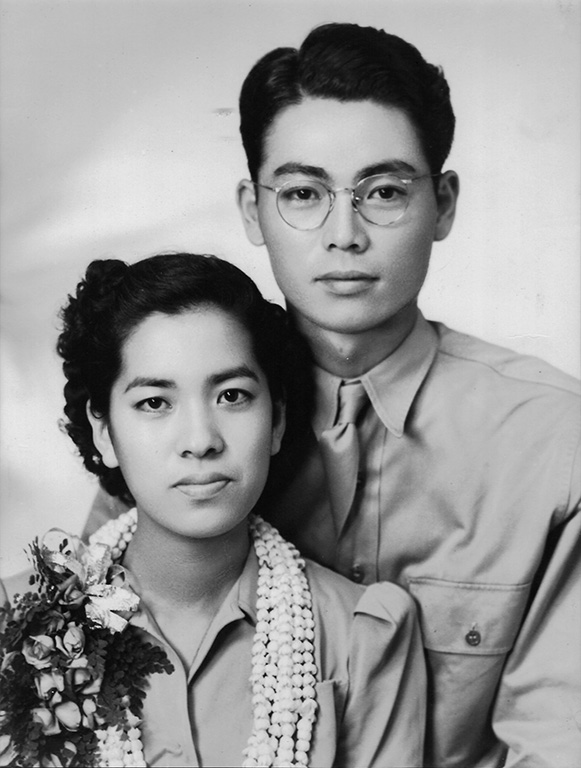
In April 1942, he married Mieko Tomita. Two months later, he sailed with the Hawaiian Provisional Infantry Battalion, later designated the 100th Infantry Battalion (Separate) after the unit arrived in Oakland. An original member of the 100th, Muroshige served in Company B. He began keeping a diary on June 5, 1942, the day the battalion left Honolulu, and it would follow him through training, combat, and hospitalization over the next two and a half years.
At Camp McCoy, Wisconsin, he settled into the routine of training and life far from home. Local La Crosse families befriended him, offering a sense of community and normalcy. His diary describes his experiences at Camp McCoy, including his friendships with local families, his furloughs when he visited Chicago, New York City and Washington, D.C. and more briefly, the battalion’s training exercises in Louisiana and Mississippi.
In August 1943, the 100th shipped out for North Africa. Muroshige recorded his experiences on the long sea voyage and the battalion’s arrival in Oran on September 2. A few weeks later, they were in Italy. Wounded near Pozzilli on November 5, he wrote a detailed account of his combat experience and of being stranded for over 24 hours on a mountain before he could be evacuated.
Evacuation carried him through several stages of Army medical care. After initial treatment in Italy, he was flown to Bizerte, Tunisia, then moved by train to Casablanca and finally to a hospital in Oran, Algeria.
In March 1944, he left Oran on a ship which landed in Charlestown, South Carolina. About 9 days later, he was assigned to a hospital in Palm Springs, California. He arrived there on March 31 after traveling through Augusta, Georgia; Mobile, Alabama; New Orleans, Louisiana; Houston, San Antonio and El Paso, Texas; Tucson and Yuma, Arizona and finally Palm Springs.
Three months later, Muroshige was transferred to a hospital in El Paso, and then in November finally assigned to Fort Lawton, Seattle where he boarded a ship to Honolulu on December 9, 1944. He wrote of his experiences while he was recovering from his leg wound, including his month-long furlough when he went back to La Crosse, Wisconsin and stayed with families who had befriended him while he was at Camp McCoy.
After the war, Muroshige joined the Civil Service and worked repairing office machinery at military bases throughout Hawaii, eventually becoming a supervisor. He remained active in Club 100 and stayed connected with fellow veterans through bowling, softball, and golf.
Kenneth Muroshige died in August 2008 and was interred at the National Memorial Cemetery of the Pacific at Punchbowl, alongside many of the men with whom he had served. He was survived by his wife, Mieko, and their daughters, Susan and Amy.
Read Kenneth Muroshige’s Diary
![Kenneth Muroshige, B Company. [Courtesy of Mieko Muroshige]](https://www.100thbattalion.org/wp-content/gallery/kenneth-muroshige/muroshige_kenneth.jpg "Kenneth Muroshige, B Company. [Courtesy of Mieko Muroshige]")
![Kenneth Muroshige, Evelyn Falke, Violet Goldbeck, and Richard Hamada in LaCrosse, Wisconsin, winter 1942. [Courtesy of Mieko Muroshige]](https://www.100thbattalion.org/wp-content/gallery/kenneth-muroshige/muroshige_kenneth_002.jpg "Kenneth Muroshige, Evelyn Falke, Violet Goldbeck, and Richard Hamada in LaCrosse, Wisconsin, winter 1942. [Courtesy of Mieko Muroshige]")
![Corrine and Kay Falke wearing Army covers while at Aunt Vi's and Uncle Bill's house in LaCrosse, Wisconsin, winter 1942. [Courtesy of Mieko Muroshige]](https://www.100thbattalion.org/wp-content/gallery/kenneth-muroshige/muroshige_kenneth_004.jpg "Corrine and Kay Falke wearing Army covers while at Aunt Vi's and Uncle Bill's house in LaCrosse, Wisconsin, winter 1942. [Courtesy of Mieko Muroshige]")