
Headquarters Company, 100th Infantry Battalion (Separate)
![Gary Uchida (HQ Co., 100th Inf. Bn.) [Courtesy of Janice Uchida Sakoda]](https://www.100thbattalion.org/wp-content/gallery/photos-uchida-gary/Uchida-Gary.png "Gary Uchida (HQ Co., 100th Inf. Bn.) [Courtesy of Janice Uchida Sakoda]")
Uchida moved to Honolulu to attend McKinley High School, though he left early to work at the Hālekulani Hotel. While working at the hotel, he received his draft notice, and was inducted into the U.S. Army on June 30, 1941.
He was transferred to Schofield Barracks, and after undergoing basic training — learning to strip and reassemble rifles blindfolded and enduring hikes through the hills — Uchida and his fellow draftees lived in a tent city they dubbed “Boom Town.” Uchida was assigned to the 298th Regiment, Company H — the heavy weapons company.
On December 7, 1941, Uchida was off-base visiting tenants when he heard the radio announcement: “This is the Real McCoy. This is no practice.” Looking toward Pearl Harbor, he saw black smoke and anti-aircraft bursts. The United States was at war.
Following the attack, Uchida’s duties included manning an observation post atop Mount ʻOlomana, reporting aircraft movements and unusual activity.
Over the years, his children did several oral histories with him. Uchida recalled: “Occasional maneuvers were held in the 298th defense sector which extended from Waimānalo to the China Man’s Hat. H Company Sector was the Kailua and Kāneʻohe area. In one of these maneuvers, I was an 81mm ammunitions carrier and followed the 81mm crew wherever they went. It was a backbreaking task. Another time, I was with a heavy machine gun crew and dug a nest on Kailua Beach near Lanikai. Our biggest enemy that night was the swarm of mosquitoes. The mosquito repellent oil of citronella was ineffective.”
In May 1942, American soldiers of Japanese ancestry (AJA) like Uchida were called back to Schofield Barracks, their loyalty questioned despite being American-born. Uchida recalled, “We AJAs knew in our hearts where our loyalty lay… we would defend [America] at any cost.”
In June 1942, 1,432 men, including Uchida, silently departed Hawaiʻi aboard the troop ship Maui and sailed to the mainland. There, they became the 100th Infantry Battalion (Separate). In July 1942 at Camp McCoy, Wisconsin, Uchida was promoted to Communications Sergeant for Company A, then later transferred to S-2, Headquarters.
By September 1943, Uchida was landing at Salerno, Italy as an original member of the 100th Infantry Battalion. Although the beach was technically secured, shelling continued in the hills. When Uchida and his unit faced combat firsthand, questions of faith arose. One night in foxholes, under heavy artillery fire, even the atheists among them began to pray.
![Gary Uchida’s travel bag with an illustrated record of his U.S. Army experiences. [Courtesy of Janice Uchida Sakoda]](https://www.100thbattalion.org/wp-content/gallery/photos-uchida-gary/Uchida-Gary-Memorabilia.png "Gary Uchida’s travel bag with an illustrated record of his U.S. Army experiences. [Courtesy of Janice Uchida Sakoda]")
Uchida spent months in various hospitals, recovering from his injuries. Evacuated through hospitals in Sicily and North Africa, Uchida was later transferred to the United States for further surgeries. He recovered at facilities in West Virginia, Iowa, and finally California, enduring multiple operations to repair nerve damage in his arm and leg.
Finally, on October 17, 1944, still carrying shrapnel in his body, Uchida returned home to Hawaiʻi. Upon seeing Diamond Head from his ship. “I didn’t think there was a dry eye among the men from Hawaiʻi,” he recalled. Months later, on February 19, 1945, Gary Uchida was honorably discharged due to physical disability.
Upon his return to Honolulu, he married Edna Sagara and returned to work at the Hālekulani Hotel. He became Vice President of the Hālekulani Corporation and retired in 1977 after working for 44 years at the hotel.
All throughout his time with the 100th Infantry Battalion, Uchida kept a journal by writing or drawing notes or comments on his duffle bag. This bag is now with the National Museum of the US Army. Through pain, uncertainty, and the prejudice of his time, Gary Uchida’s loyalty never wavered. His story stands as a testament to the bravery of the 100th Infantry Battalion and the enduring spirit of those who serve.
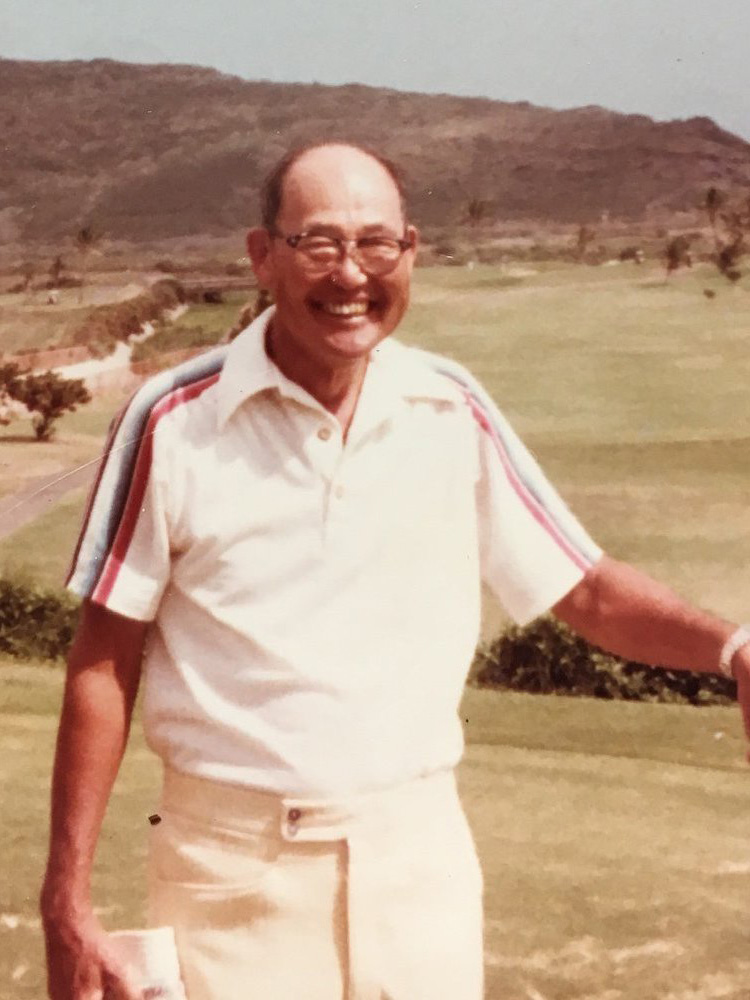
![Gary Uchida [Courtesy of Janice Uchida Sakoda]](https://www.100thbattalion.org/wp-content/gallery/photos-uchida-gary/0_headshot.jpg "Gary Uchida [Courtesy of Janice Uchida Sakoda]")
![Gary Uchida checks out the bulletin board at Camp McCoy, Wisconsin, September 1942. [Courtesy of Janice Uchida Sakoda]](https://www.100thbattalion.org/wp-content/gallery/photos-uchida-gary/uchida_gary_002.jpg "Gary Uchida checks out the bulletin board at Camp McCoy, Wisconsin, September 1942. [Courtesy of Janice Uchida Sakoda]")
![Parade in La Crosse, Wisconsin to promote bond sale. [Courtesy of Janice Uchida Sakoda]](https://www.100thbattalion.org/wp-content/gallery/photos-uchida-gary/uchida_gary_004.jpg "Parade in La Crosse, Wisconsin to promote bond sale. [Courtesy of Janice Uchida Sakoda]")
![Gary Uchida as “Chief Soldier Under Blanket” snapped at the Dells, Wisconsin, July 12, 1942. [Courtesy of Janice Uchida Sakoda]](https://www.100thbattalion.org/wp-content/gallery/photos-uchida-gary/uchida_gary_008.jpg "Gary Uchida as “Chief Soldier Under Blanket” snapped at the Dells, Wisconsin, July 12, 1942. [Courtesy of Janice Uchida Sakoda]")
![Gary Uchida and Stanley cross a stream. Inscription:Reverse: Me on Stanley. I am not pulling rank. Stanley wanted to go home cross country & promised he would carry me over if we encountered a stream. Here's the result. [Courtesy of Janice Uchida Sakoda]](https://www.100thbattalion.org/wp-content/gallery/photos-uchida-gary/uchida_gary_009.jpg "Gary Uchida and Stanley cross a stream. Inscription:Reverse: Me on Stanley. I am not pulling rank. Stanley wanted to go home cross country & promised he would carry me over if we encountered a stream. Here's the result. [Courtesy of Janice Uchida Sakoda]")
![Sgt. Wilfred Maki (right) and I, taken in our room in our woolen undies. Camp McCoy, Wis. Oct. 1942. In the fall, the 100th moved into new barracks. Sgt. Shiro Maki and I share a room in the new building. [Courtesy of Janice Uchida Sakoda] [Courtesy of Janice Uchida Sakoda]](https://www.100thbattalion.org/wp-content/gallery/photos-uchida-gary/uchida_gary_028.jpg "Sgt. Wilfred Maki (right) and I, taken in our room in our woolen undies. Camp McCoy, Wis. Oct. 1942. In the fall, the 100th moved into new barracks. Sgt. Shiro Maki and I share a room in the new building. [Courtesy of Janice Uchida Sakoda] [Courtesy of Janice Uchida Sakoda]")
![Gary Uchida and a friend at Wisconsin Dells Park. [Courtesy of Janice Uchida Sakoda]](https://www.100thbattalion.org/wp-content/gallery/photos-uchida-gary/uchida_gary_035.jpg "Gary Uchida and a friend at Wisconsin Dells Park. [Courtesy of Janice Uchida Sakoda]")
![Horseback riding in Hawaii. [Courtesy of Janice Uchida Sakoda]](https://www.100thbattalion.org/wp-content/gallery/photos-uchida-gary/uchida_gary_059.jpg "Horseback riding in Hawaii. [Courtesy of Janice Uchida Sakoda]")
![Gary Uchida during his induction ceremony. [Courtesy of Janice Uchida Sakoda]](https://www.100thbattalion.org/wp-content/gallery/photos-uchida-gary/uchida_gary_067b.jpg "Gary Uchida during his induction ceremony. [Courtesy of Janice Uchida Sakoda]")
![Gary Uchida at Schofield Barracks. [Courtesy of Janice Uchida Sakoda]](https://www.100thbattalion.org/wp-content/gallery/photos-uchida-gary/uchida_gary_067c.jpg "Gary Uchida at Schofield Barracks. [Courtesy of Janice Uchida Sakoda]")
![Catching snakes at Camp McCoy, summer 1942. [Courtesy of Janice Uchida Sakoda]](https://www.100thbattalion.org/wp-content/gallery/photos-uchida-gary/uchida_gary_070.jpg "Catching snakes at Camp McCoy, summer 1942. [Courtesy of Janice Uchida Sakoda]")
![Gary Uchida at Camp McCoy, Wisconsin. [Courtesy of Janice Uchida Sakoda]](https://www.100thbattalion.org/wp-content/gallery/photos-uchida-gary/uchida_gary_071.jpg "Gary Uchida at Camp McCoy, Wisconsin. [Courtesy of Janice Uchida Sakoda]")
![Sightseeing while on furlough. [Courtesy of Janice Uchida Sakoda]](https://www.100thbattalion.org/wp-content/gallery/photos-uchida-gary/uchida_gary_095.jpg "Sightseeing while on furlough. [Courtesy of Janice Uchida Sakoda]")
![Gary Uchida (HQ Co., 100th Inf. Bn.) [Courtesy of Janice Uchida Sakoda]](https://www.100thbattalion.org/wp-content/gallery/photos-uchida-gary/uchida_gary_106.jpg "Gary Uchida (HQ Co., 100th Inf. Bn.) [Courtesy of Janice Uchida Sakoda]")
![Gary Uchida writes a letter home. [Courtesy of Janice Uchida Sakoda]](https://www.100thbattalion.org/wp-content/gallery/photos-uchida-gary/uchida_gary_122.jpg "Gary Uchida writes a letter home. [Courtesy of Janice Uchida Sakoda]")
![Upon our arrival at Camp McCoy, we were quartered in 4-5 man pyramidal tents. I shared a tent with s/sgt Walter Gora and s/sgt. Larry Mizuno. The warm and humid nights were almost unbearable as swarms of bugs and insects crawled all over us. Twilight hours were long-we could read newspapers outside after the movies about 9-10 pm [Courtesy of Janice Uchida Sakoda]](https://www.100thbattalion.org/wp-content/gallery/photos-uchida-gary/uchida_gary_001ax.jpg "Upon our arrival at Camp McCoy, we were quartered in 4-5 man pyramidal tents. I shared a tent with s/sgt Walter Gora and s/sgt. Larry Mizuno. The warm and humid nights were almost unbearable as swarms of bugs and insects crawled all over us. Twilight hours were long-we could read newspapers outside after the movies about 9-10 pm [Courtesy of Janice Uchida Sakoda]")
![[Courtesy of Janice Uchida Sakoda]](https://www.100thbattalion.org/wp-content/gallery/photos-uchida-gary/uchida_gary_098_kccx.jpg "[Courtesy of Janice Uchida Sakoda]")
![S/sgt. Larry Mizuno [Courtesy of Janice Uchida Sakoda]](https://www.100thbattalion.org/wp-content/gallery/photos-uchida-gary/uchida_gary_001bx.jpg "S/sgt. Larry Mizuno [Courtesy of Janice Uchida Sakoda]")
![[Courtesy of Janice Uchida Sakoda]](https://www.100thbattalion.org/wp-content/gallery/photos-uchida-gary/uchida_gary_025_kccx.jpg "[Courtesy of Janice Uchida Sakoda]")
![100th Battalion soldiers unload gas masks at Camp McCoy, Wisconsin. [Courtesy of Janice Uchida Sakoda]](https://www.100thbattalion.org/wp-content/gallery/photos-uchida-gary/uchida_gary_129.jpg "100th Battalion soldiers unload gas masks at Camp McCoy, Wisconsin. [Courtesy of Janice Uchida Sakoda]")
![Gary Uchida takes a train to New York while on furlough. Inscription: Off for New York on the Hiawatha. [Courtesy of Janice Uchida Sakoda]](https://www.100thbattalion.org/wp-content/gallery/photos-uchida-gary/uchida_gary_131.jpg "Gary Uchida takes a train to New York while on furlough. Inscription: Off for New York on the Hiawatha. [Courtesy of Janice Uchida Sakoda]")
![George, Ken, and Gary Uchida on furlough in New York City. [Courtesy of Janice Uchida Sakoda]](https://www.100thbattalion.org/wp-content/gallery/photos-uchida-gary/uchida_gary_137.jpg "George, Ken, and Gary Uchida on furlough in New York City. [Courtesy of Janice Uchida Sakoda]")
![Gary Uchida at the U.S. Capitol. [Courtesy of Janice Uchida Sakoda]](https://www.100thbattalion.org/wp-content/gallery/photos-uchida-gary/uchida_gary_139.jpg "Gary Uchida at the U.S. Capitol. [Courtesy of Janice Uchida Sakoda]")
![Ken, Karletta, Gary Uchida, & George, Washington D.C.. [Courtesy of Janice Uchida Sakoda]](https://www.100thbattalion.org/wp-content/gallery/photos-uchida-gary/uchida_gary_144.jpg "Ken, Karletta, Gary Uchida, & George, Washington D.C.. [Courtesy of Janice Uchida Sakoda]")
![Gary Uchida and Karletta, Washington D.C.. [Courtesy of Janice Uchida Sakoda]](https://www.100thbattalion.org/wp-content/gallery/photos-uchida-gary/uchida_gary_149.jpg "Gary Uchida and Karletta, Washington D.C.. [Courtesy of Janice Uchida Sakoda]")
![Blake and Deena Clark. Gary Uchida and Kenneth Yoshima. Neptune Restaurant Washington DC. Blake is the author of 'Remember Pearl Harbor.' [Courtesy of Janice Uchida Sakoda]](https://www.100thbattalion.org/wp-content/gallery/photos-uchida-gary/uchida_gary_184.jpg "Blake and Deena Clark. Gary Uchida and Kenneth Yoshima. Neptune Restaurant Washington DC. Blake is the author of 'Remember Pearl Harbor.' [Courtesy of Janice Uchida Sakoda]")
![Gary Uchida [Courtesy of Janice Uchida Sakoda]](https://www.100thbattalion.org/wp-content/gallery/photos-uchida-gary/uchida_gary_003x_kccx.jpg "Gary Uchida [Courtesy of Janice Uchida Sakoda]")
![A Co. Parades in La Crosse, Wisconsin in connection with Bond sale Promotion with Abbot an Costello. Parade is led by Capt. Jack Johnson. [Courtesy of Janice Uchida Sakoda]](https://www.100thbattalion.org/wp-content/gallery/photos-uchida-gary/uchida_gary_005_kccx.jpg "A Co. Parades in La Crosse, Wisconsin in connection with Bond sale Promotion with Abbot an Costello. Parade is led by Capt. Jack Johnson. [Courtesy of Janice Uchida Sakoda]")
![A Co. Parades in La Crosse, Wisconsin in connection with Bond sale Promotion with Abbot an Costello. Parade is led by Capt. Jack Johnson. [Courtesy of Janice Uchida Sakoda]](https://www.100thbattalion.org/wp-content/gallery/photos-uchida-gary/uchida_gary_001dx.jpg "A Co. Parades in La Crosse, Wisconsin in connection with Bond sale Promotion with Abbot an Costello. Parade is led by Capt. Jack Johnson. [Courtesy of Janice Uchida Sakoda]")
![Walter Gora and Clarence "Speedy" Miyamoto. [Courtesy of Janice Uchida Sakoda]](https://www.100thbattalion.org/wp-content/gallery/photos-uchida-gary/uchida_gary_001cx.jpg "Walter Gora and Clarence \"Speedy\" Miyamoto. [Courtesy of Janice Uchida Sakoda]")
![Gary Uchida [Courtesy of Janice Uchida Sakoda]](https://www.100thbattalion.org/wp-content/gallery/photos-uchida-gary/uchida_gary_036_kccx.jpg "Gary Uchida [Courtesy of Janice Uchida Sakoda]")
![Gary, Smiley, Mack Uchima, Tom Fujise. [Courtesy of Janice Uchida Sakoda]](https://www.100thbattalion.org/wp-content/gallery/photos-uchida-gary/uchida_gary_072x_kccx.jpg "Gary, Smiley, Mack Uchima, Tom Fujise. [Courtesy of Janice Uchida Sakoda]")
![Howard Miyake [Courtesy of Janice Uchida Sakoda]](https://www.100thbattalion.org/wp-content/gallery/photos-uchida-gary/uchida_gary_073x_kccx.jpg "Howard Miyake [Courtesy of Janice Uchida Sakoda]")
![Gary Uchida [Courtesy of Janice Uchida Sakoda]](https://www.100thbattalion.org/wp-content/gallery/photos-uchida-gary/uchida_gary_076x_kccx.jpg "Gary Uchida [Courtesy of Janice Uchida Sakoda]")
![Stanley, Tom and Smiley. [Courtesy of Janice Uchida Sakoda]](https://www.100thbattalion.org/wp-content/gallery/photos-uchida-gary/uchida_gary_079_kccx.jpg "Stanley, Tom and Smiley. [Courtesy of Janice Uchida Sakoda]")
![Sadao Hikida [Courtesy of Janice Uchida Sakoda]](https://www.100thbattalion.org/wp-content/gallery/photos-uchida-gary/uchida_gary_080_kccx.jpg "Sadao Hikida [Courtesy of Janice Uchida Sakoda]")
![Norito Himura. [Courtesy of Janice Uchida Sakoda]](https://www.100thbattalion.org/wp-content/gallery/photos-uchida-gary/uchida_gary_014ax.jpg "Norito Himura. [Courtesy of Janice Uchida Sakoda]")
![S/Sgt. Eugne Kawakami. [Courtesy of Janice Uchida Sakoda]](https://www.100thbattalion.org/wp-content/gallery/photos-uchida-gary/uchida_gary_014bx.jpg "S/Sgt. Eugne Kawakami. [Courtesy of Janice Uchida Sakoda]")
![Joe Takao Tamauchi. [Courtesy of Janice Uchida Sakoda]](https://www.100thbattalion.org/wp-content/gallery/photos-uchida-gary/uchida_gary_013a.jpg "Joe Takao Tamauchi. [Courtesy of Janice Uchida Sakoda]")
![Gary Uchida. [Courtesy of Janice Uchida Sakoda]](https://www.100thbattalion.org/wp-content/gallery/photos-uchida-gary/uchida_gary_013jx.jpg "Gary Uchida. [Courtesy of Janice Uchida Sakoda]")
![[Courtesy of Janice Uchida Sakoda]](https://www.100thbattalion.org/wp-content/gallery/photos-uchida-gary/uchida_gary_008gx.jpg "[Courtesy of Janice Uchida Sakoda]")
![Shigeru. [Courtesy of Janice Uchida Sakoda]](https://www.100thbattalion.org/wp-content/gallery/photos-uchida-gary/uchida_gary_013fx.jpg "Shigeru. [Courtesy of Janice Uchida Sakoda]")
![[Courtesy of Janice Uchida Sakoda]](https://www.100thbattalion.org/wp-content/gallery/photos-uchida-gary/uchida_gary_021fx.jpg "[Courtesy of Janice Uchida Sakoda]")
![Capt. Jack Mizuha. [Courtesy of Janice Uchida Sakoda]](https://www.100thbattalion.org/wp-content/gallery/photos-uchida-gary/uchida_gary_010cx.jpg "Capt. Jack Mizuha. [Courtesy of Janice Uchida Sakoda]")
![Rioe Tomita. [Courtesy of Janice Uchida Sakoda]](https://www.100thbattalion.org/wp-content/gallery/photos-uchida-gary/uchida_gary_013cx.jpg "Rioe Tomita. [Courtesy of Janice Uchida Sakoda]")
![[Courtesy of Janice Uchida Sakoda]](https://www.100thbattalion.org/wp-content/gallery/photos-uchida-gary/uchida_gary_011ex.jpg "[Courtesy of Janice Uchida Sakoda]")
![Sadao Hikida Port arms. [Courtesy of Janice Uchida Sakoda]](https://www.100thbattalion.org/wp-content/gallery/photos-uchida-gary/uchida_gary_008fx.jpg "Sadao Hikida Port arms. [Courtesy of Janice Uchida Sakoda]")
![Gary- It's getting cold outside. [Courtesy of Janice Uchida Sakoda]](https://www.100thbattalion.org/wp-content/gallery/photos-uchida-gary/uchida_gary_014dx.jpg "Gary- It's getting cold outside. [Courtesy of Janice Uchida Sakoda]")