Baker Company, 100th Infantry Battalion
Shinyei Nakamine’s life, though brief, stands as one of the most compelling examples of courage and loyalty shown by the Nisei soldiers of World War II. Born on January 21, 1920, in Wai‘anae on the island of O‘ahu, he was the eldest child of Kame and Ushi (Higa) Nakamine, immigrants from Okinawa who worked hard to build a future for their family in Hawai‘i.
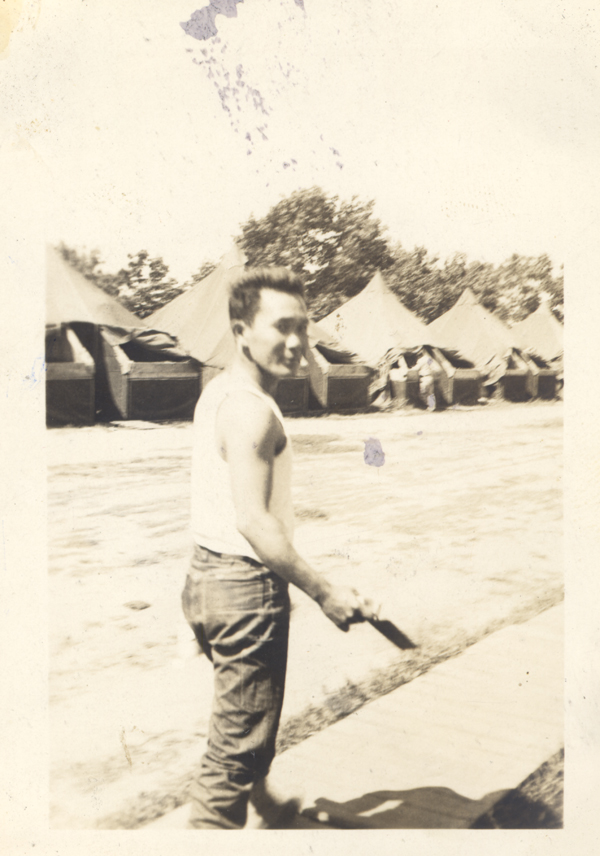
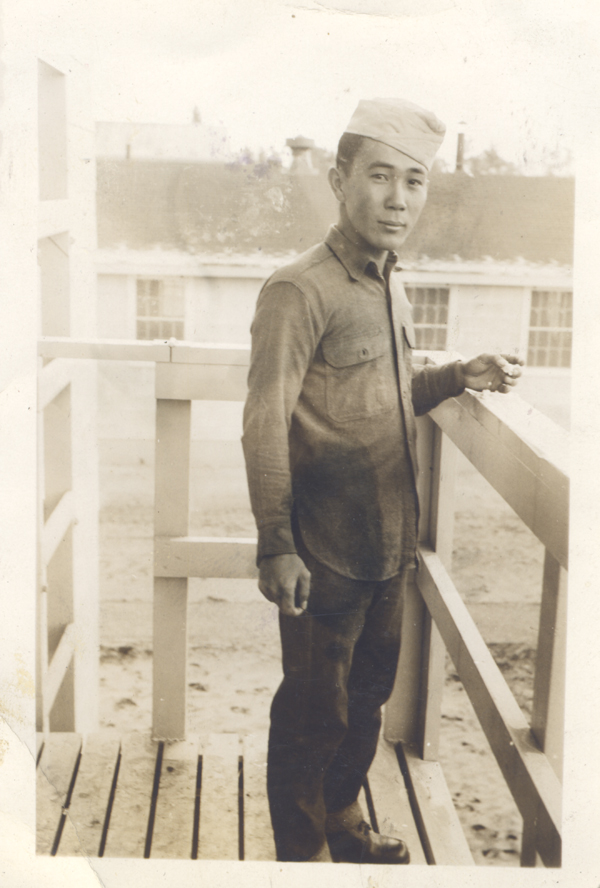
![Shinyei Nakamine (Co. B, 100th Inf. Bn.) [Courtesy of Anita Korenaga]](https://www.100thbattalion.org/wp-content/gallery/shinyei-nakamine/nakamine_shinyei_004x.jpg "Shinyei Nakamine (Co. B, 100th Inf. Bn.) [Courtesy of Anita Korenaga]")
Growing up with his younger siblings — Charles, Larry, and Anita —Shinyei experienced the rhythms of plantation-era life on the Leeward Coast. He attended the local elementary, junior high, and high schools in Wai‘anae, where he became known as a quiet, steady young man deeply connected to his family and community. Like many Nisei of his generation, he learned early what it meant to work hard, to persevere, and to remain loyal in the face of adversity.
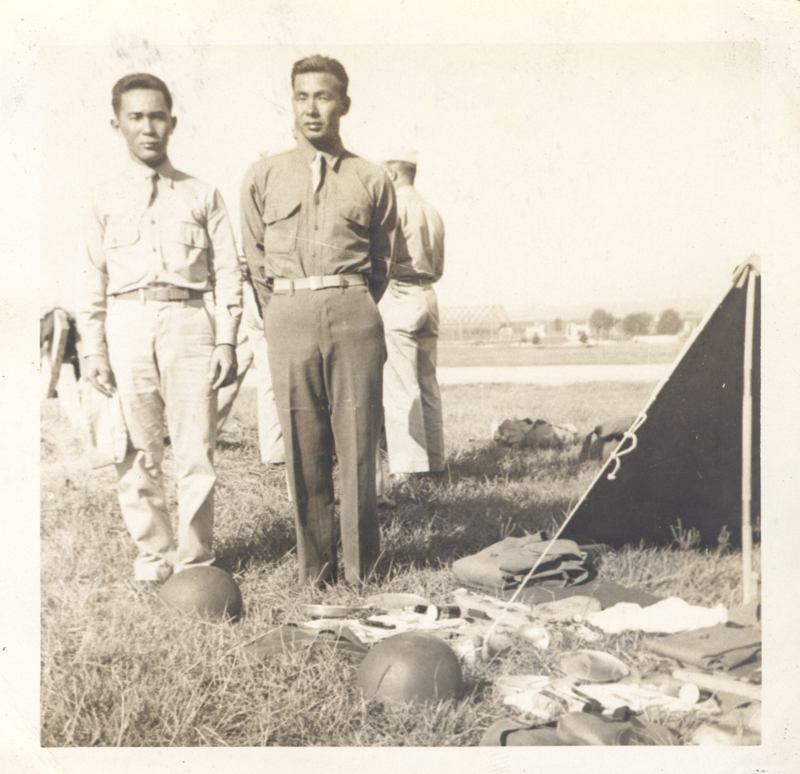
Shinyei was inducted into the U.S. Army in November 1941. His youngest sister, Anita Korenaga recalled, “he came in his motorcycle to bid me farewell at the elementary school. Did I ever shine! That is the last time I saw my brother.”
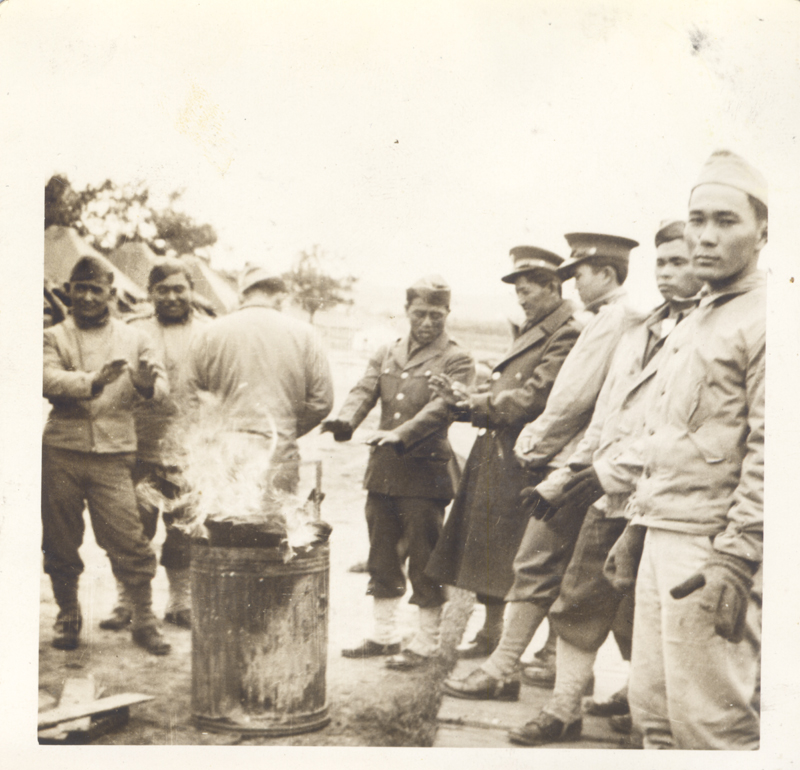
In 1942, Shinyei Nakamine became a member of the original 100th Infantry Battalion (Separate), serving in Company B. The unit was made up largely of Americans of Japanese ancestry from Hawai‘I, who had been serving in the U.S. Army from before the Pearl Harbor attack. As the unit prepared to depart Honolulu, Anita heard that a train carrying her brother and other soldiers would be passing through Wai‘anae, on its way to the harbor. She ran to Pōkaʻī Bay train station, arriving just in time to wave with a smile “to the blur of men’s faces” as the train passed by. She recalled crying the whole way home and wondered whether her brother had caught glimpse of her. A few months later, she received a photograph from her brother in the mail, of his view of her from the train, waving goodbye.
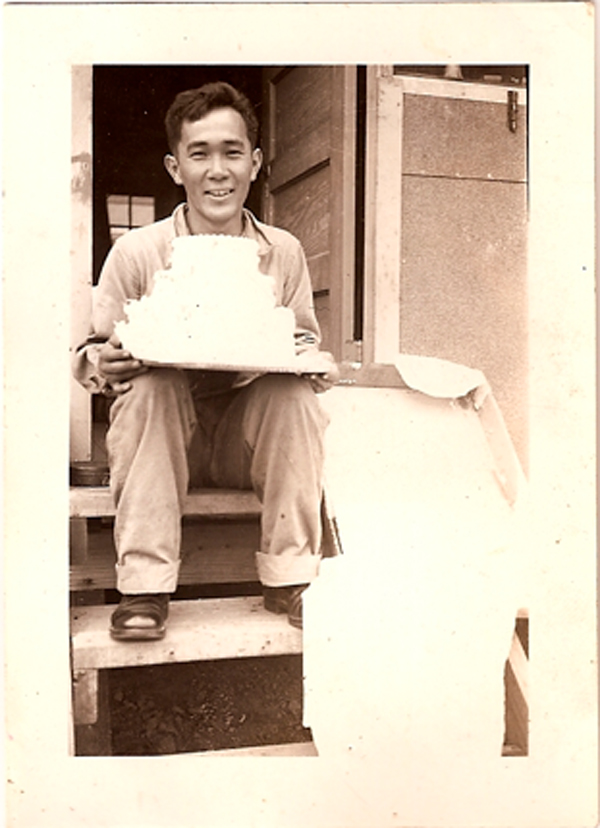
Anita recalled writing a letter for her mother while her brother was training at Camp McCoy, Wisconsin, asking the General to buy a cake for him on his 22nd birthday. They enclosed money for the cake and received a photo of him holding the huge birthday cake.
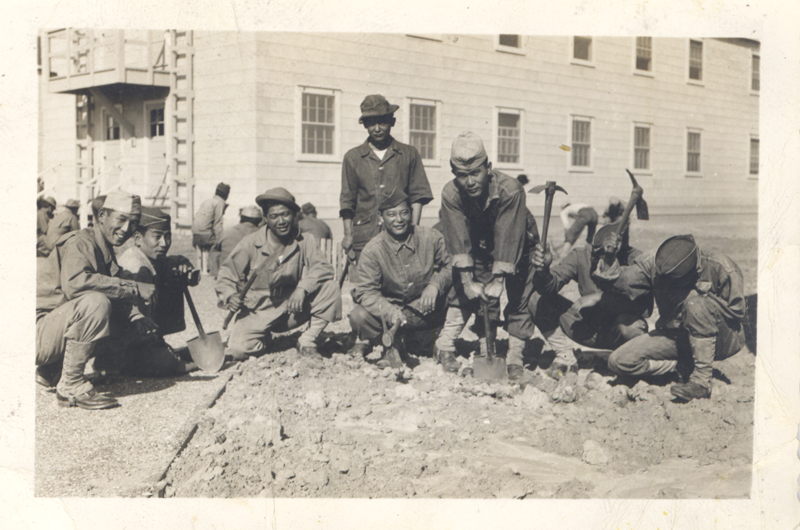
Shinyei Nakamine trained hard with the 100th Infantry Battalion. At a time when many people of Japanese ancestry were viewed with suspicion, the men of the 100th served with the hope of proving their loyalty to a country that did not always treat them as equals. Their courage in the European theater would earn the unit the nickname “The Purple Heart Battalion.”
Nakamine quickly distinguished himself as a disciplined and courageous soldier. On June 2, 1944, near La Torreto, Italy, his platoon was pinned down by heavy machine-gun crossfire from a small knoll 200 yards ahead. In an act of extraordinary initiative, Nakamine crawled forward alone, reaching to within 25 yards of the enemy before charging the position. He killed three enemy soldiers and captured two others, enabling his platoon to advance. Later that afternoon, seeing a German soldier threatening his unit’s right flank, he again crawled forward under fire and eliminated the danger.
But his bravery did not end there. Observing yet another machine gun nest approximately 75 yards to the front, Nakamine led an automatic rifle team forward under covering fire. Crawling once more to within 25 yards of the position, he hurled grenades, wounding one soldier and forcing four more to surrender. When he saw a third machine gun emplacement roughly 100 yards to his right, he again moved to neutralize the threat. It was during this final act of selfless leadership that he was struck and killed by a burst of machine-gun fire. He was 24 years old.
For his heroism, Nakamine was originally awarded the Distinguished Service Cross. More than five decades later, during a government review of wartime awards to Japanese American soldiers, his decoration was upgraded to the Medal of Honor. President Bill Clinton presented the award posthumously on June 21, 2000, recognizing at last the full measure of Nakamine’s sacrifice. Anita was the beneficiary of his war bonds, which helped finance her education and, she said, gave her “a wonderful career and life.”
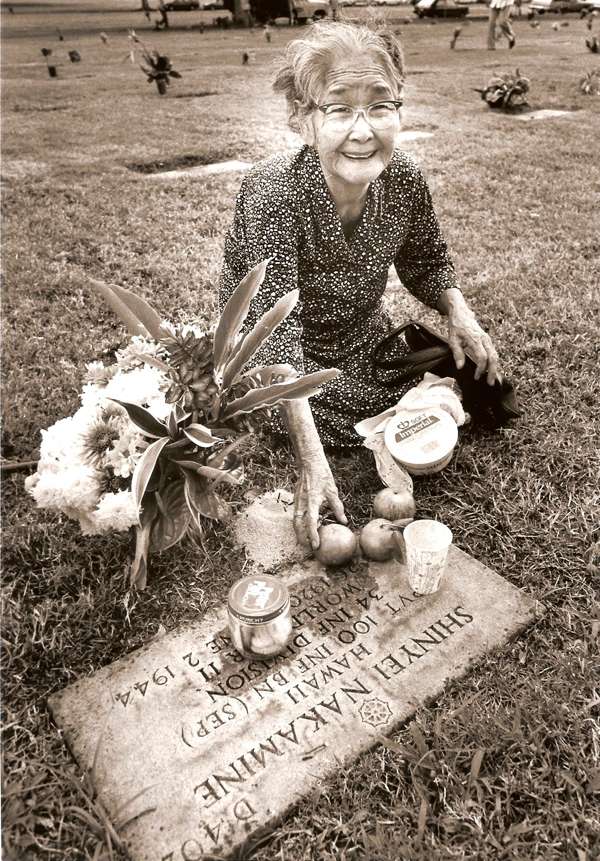
Today Shinyei Nakamine rests at the National Memorial Cemetery of the Pacific, his legacy woven into the proud history of the 100th Infantry Battalion and the American soldiers of Japanese ancestry who fought for freedoms not always afforded to them at home.
On June 4, 2025, the Honolulu City Council honored him again by renaming Wai‘anae District Park as the “Shinyei Nakamine and 100th Infantry Battalion Memorial Park,” ensuring that future generations will remember the courage of a local son whose actions on a distant battlefield helped define the meaning of duty, loyalty, and love of country.
In a 2007 interview, Anita Korenaga spoke about her memories of her brother: http://archives.starbulletin.com/2007/11/12/news/story04.html
Her handwritten notes about him were preserved with his profile in the Echoes of Silence project.: https://www.100thbattalion.org/wp-content/uploads/Nakamine-Shinyei.pdf