
Baker Company, 100th Infantry Battalion (Separate) and Military Intelligence Service (MIS)
Joichi “Joe” Muramatsu was born on March 1, 1920, and grew up in Honolulu during an era when family, work, and community formed the backbone of everyday life. A 1938 graduate of McKinley High School, he began adulthood like many young Nisei of his generation — working steadily and supporting his family. By 1941 he was a clerk at Love’s Bakery, unaware that his life, and the world, would soon be transformed by war.
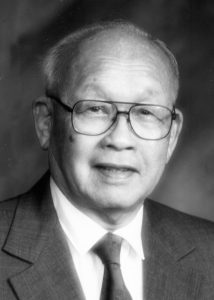
Drafted into the U.S. Army on November 14, 1941, he was still in basic training when the attack on Pearl Harbor plunged Hawai‘i under martial law and propelled him into service during one of the most turbulent moments in American history.
In the tense months that followed, the U.S. Army removed Americans of Japanese ancestry (AJA) from the 298th and 299th Infantry Regiments and reassembled them at Schofield Barracks. These soldiers — Muramatsu among them — were reorganized into the Hawaiian Provisional Infantry Battalion, a unit that would later become the famed 100th Infantry Battalion (Separate). Without warning and without the chance to say goodbye to their families, they were placed on trucks, taken to the pier in Honolulu, and shipped out aboard the US Army transport ship Maui on June 5, 1942.
Muramatsu remembered this abrupt departure vividly for the rest of his life — the uncertainty, the hurried goodbyes never spoken, and the sense of stepping into an unknown future. After arriving in Oakland and receiving their official designation as the 100th Infantry Battalion (Separate), the men traveled by train to Camp McCoy, Wisconsin, where their intense training began. Muramatsu served in Baker Company, bonding with the men who would become his lifelong brothers.
But fate took Muramatsu on a different path from most of his Baker Company comrades. While the 100th advanced through training at Camp Shelby, Mississippi and prepared for deployment, Joe was selected for transfer to the Military Intelligence Service Language School (MISLS) at Camp Savage, Minnesota. Recruiters sought bilingual Nisei who could read, write, and speak Japanese — skills Muramatsu had acquired working in his father’s grocery store in Kalihi, serving a largely Japanese-speaking community. He attended MISLS in July 1943, studying Japanese military terminology and intelligence work at a pace so rigorous that it rivaled any battlefield preparation.
Upon graduating from MISLS, Muramatsu was assigned not back to the 100th but to a top-secret Army Security Agency operation at Vint Hill Farms Station in Virginia. There, about fifty MIS linguists worked in deep secrecy, translating intercepted Japanese communications —some originating from embassies in Berlin and across Europe. Their contributions were rarely spoken of, yet they were vital to Allied intelligence efforts and the broader war strategy.
After the war, Muramatsu’s loyalty to the 100th Infantry Battalion never wavered. Though he had served in a separate intelligence role, he remained deeply connected to Baker Company and the men with whom he had trained. He became an active member of the 100th Infantry Battalion veterans’ organization known as Club 100, incorporated in 1945, and over the years served in many leadership roles, including as president from 1997 to 1999. His commitment embodied the club motto: For Continuing Service.
In 1950, Muramatsu married Katherine Toshie Kujubu after what he mischievously described to his children as finding her “under a rock.” In truth, they met on a “shimpai” effort — a blind date arranged by a friend. Their courtship lasted five years before they married, building a family rooted in humor, respect, and shared values. Muramatsu’s fluency in Japanese remained a treasured skill; he wrote letters to relatives in Japan, carefully checking kanji in a dictionary to ensure every phrase was correct.
After the war, Muramatsu passed the U.S. Postal Service exam and began a distinguished career as a mail carrier, eventually retiring as a supervisor at age 65. His children remembered his impeccable sense of direction, his steady work ethic, and his unspoken love — a love expressed through actions rather than sentiment.
Muramatsu’s daughter, Joyce Doi, recalls her father’s devotion to family and the deep bonds he shared with the 100th Infantry Battalion throughout his life:
“My father had a wonderfully humorous way of telling stories, especially the one about how he met my mother. When we were young, he used to tell my siblings and me that he had found her “under a rock.” The tale was so outrageous that my sister and I never believed a word of it — my brother doesn’t remember it at all. The real story, as my mother eventually explained, was far less dramatic but every bit as charming. They met on a “shimpai” effort — a blind date. At the time, my mother was working at Goodwear dress shop in downtown Honolulu when her co-worker and friend, Norma Nanbara, suggested she meet a young man who worked at a grocery store in Kalihi. They went out, and although the courtship stretched on for about five years, they married in April 1950.
My father grew up working in his own father’s grocery store at the corner of McNeil and Dillingham Boulevard. The store catered largely to a Japanese neighborhood, which allowed him to become fluent in the language. Remarkably, he not only spoke Japanese well but could also write it. Letters from Japan would arrive from time to time, and he would write back in Japanese — occasionally consulting a dictionary to get the kanji just right.
Eventually, seeking a new path, he took both the fireman’s and post office examinations. He passed the post office test and began a long and fulfilling career with the U.S. Postal Service, retiring at age 65. He started as a Special Delivery mailman, later became a regular carrier, and eventually rose to supervisor. I always admired his incredible sense of direction — something I imagined came naturally from being a mailman, though I’m sure I exaggerated it in childhood.
My father adored his four granddaughters — Nicole, Erika, Megan, and Natalie. Megan and Natalie, who lived nearby, were especially fortunate to be babysat by my parents and enjoyed beach outings with them. Natalie even remembers the time they left their sand toys on the sand, only for another child to refuse to give them back — until Grandpa marched over and scared the boy away. Grandpa could definitely sound intimidating when he yelled!
He also had an undeniable sweet tooth. My daughter Nicole recalls him sneaking her and her cousins candy or ice cream — mostly as a way to indulge himself, despite his diabetes. My mother, of course, would scold him every time. The same thing happened with his fondness for beer and oysters, which often triggered his gout but brought him such satisfaction that he’d finish with a long, contented “ahhh.”
One of Nicole’s most treasured memories came years later, when she chose to give her first child her great-grandfather’s name as a middle name. He never said outright how touched he was, but we all remember how proudly he bragged at the 100th Clubhouse that his great-grandchild carried the name Joichi.
My father seldom spoke about his Army service to me. He told us only that he had done his basic training on the mainland with the 100th Infantry Battalion before being transferred to the Military Intelligence Service (MIS) because he could read and speak Japanese. I never knew whether he felt disappointed not to remain with his Baker Company friends or relieved that he did not have to go to Europe. He occasionally spoke fondly of the families in the towns where he was stationed, and beyond that, he kept most details to himself.
My brother, however, did hear a few stories. Dad once told him that he trained on an 82mm mortar at Makapuʻu Lookout, practicing by firing toward Rabbit Island. His partner, a man from Hilo, later went to war and was killed. He also remembered standing guard at Schofield just after December 7th, when a visiting general saw him and asked, “Did we get invaded?” He spent time stationed in Washington, D.C. — where a kind lady once cooked him breakfast — and also had assignments in Los Angeles and somewhere in the South.
My father’s loyalty to his 100th Infantry Battalion buddies lasted throughout his life. He served for several years as president of the club and worked tirelessly to help it fulfill its mission of continuing service. Like many men of his era, he did not speak often about his feelings, but his actions made it clear how proud he was to belong to this brotherhood. My husband once told me how moved he was to see my father’s emotional reaction when General Eric Shinseki presented him with a lei at a function held to honor these heroes.”
Joe Muramatsu died on September 3, 2009, and is interred at the National Memorial Cemetery of the Pacific. His life was shaped by service, dedication, and quiet accomplishment — devotion to family, pride in community, and loyalty to his fellow comrades.