Able Company, 100th Infantry Battalion
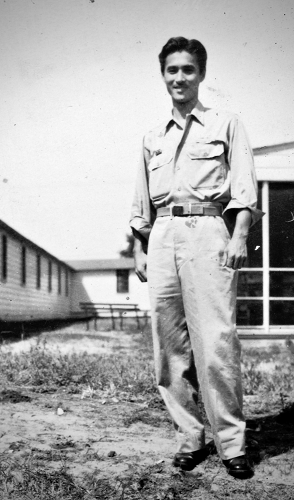
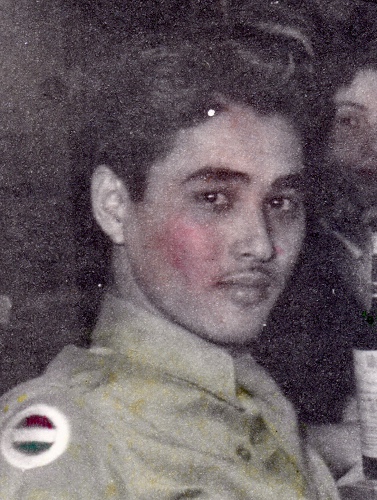
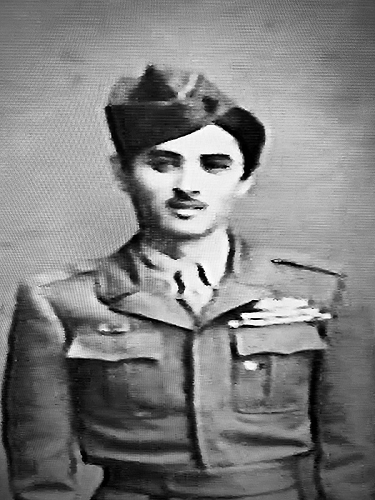
CPL Kisuke Richard Kusaka, Company A, was a sansei whose grandparents and parents worked as sugar laborers in Papaikou, Hawaii. Quitting public school after the 8th grade, he worked in the fields to support the growing Kusaka family.
Drafted on Nov. 14, 1941, he was stationed at Schofield Barracks when Japan attacked Pearl Harbor. He put on his uniform and reported for duty. An officer took one look at him and put him in the stockade, where he was joined by other Japanese American soldiers.
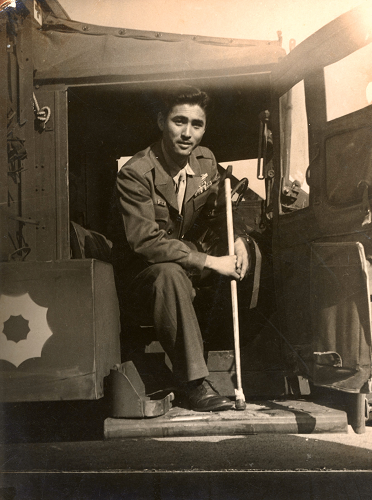
In combat with the 100th Infantry Battalion, Kusaka was injured three times and saw his fellow soldiers grievously hurt or killed.
The death that gave him nightmares involved hunkering down in a shallow fox hole with a buddy in the freezing night. His buddy complained about the cold until both fell asleep. When he awoke, Kusaka found his friend frozen stiff, his cold hands clenched against his chest as in prayer. Death was silent.
He was a rifleman and his squad’s point man. His officer asked him to pass on this dangerous job to one of the replacement troops, but he declined because an inexperienced guy could get hurt or die. Then he stepped on a landmine and lost his lower left leg on April 6, 1945, near Seravezza, Italy. The squad was ready to move out, so he took out his bayonet, poked the ground in front of him, stood up, raised his arm and said, “Let’s go.” He took a step, then boom!
When asked why he hadn’t discovered the landmine, he extended his arm, made a probing motion, and quietly said, “It was under my elbow.”
A soldier’s personal items carried in his pockets were usually photos, letters or the Bible. Kusaka had a treasured fountain pen. He learned cursive writing in school and had beautiful penmanship. When a wounded buddy asked to borrow his pen to write a letter to his mom, he hesitated but relented after the guy promised to return it. That didn’t happen.
After his honorable discharge and return to Honolulu, Kusaka remembered his buddy and looked up his family. He approached an elderly woman in her garden and introduced himself. Upon hearing his name, the woman cried and invited him into her house. His suspicion that his buddy had died proved correct when he saw the family shrine with the guy’s photo. And his pen was on a small stand in front of the photo. Her son’s final letter explained that Kusaka’s pen made it possible to write to her, and he promised to return it after he recovered. She found the pen among his returned belongings and waited many months with the hope of fulfilling her son’s promise.
After the war, he married, raised three children as a single parent, worked as a furniture maker and, when the company folded, as a building janitor. Cancer claimed his life in 2000. His ashes are interred at the Hawaii State Veterans Cemetery in Kaneohe.
[Courtesy of Randall Kusaka]