
Charlie Company, 100th Infantry Battalion (Separate)
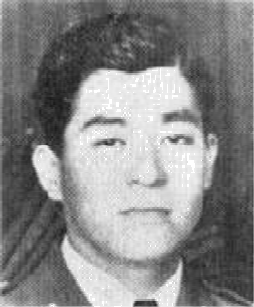
Richard Minoru Honda was born on March 27, 1917, in Honolulu, Hawaiʻi, the son of Seisaburo and Tsune (Watanabe) Honda. Growing up on Oʻahu, he attended Kūhiō School and later McKinley High School. He married Nancy Mitsuko Arizumi, of Honolulu, on May 29, 1942. Before entering the service, he was a farmer.
Honda was inducted into the U.S. Army in Honolulu on March 24, 1941, and served with the 298th Infantry Regiment of the Hawaii National Guard, and the 100th Infantry Battalion (Separate). He trained at Schofield Barracks (Hawaii), Camp McCoy (Wisconsin), and Camp Shelby (Mississippi), and was assigned to the 100th Infantry Battalion, Company C. Over the course of the war, he served in the Hawaiian Islands, continental United States, and ultimately in the brutal Italian Campaign.
In Italy, Honda fought with his comrades during some of the fiercest fighting of the war. The 100th Infantry Battalion took part in the grueling battle around Cassino, a strategic and symbolic point in the Gustav Line. Tragically, on February 10, 1944, Pfc. Richard M. Honda was killed in action near Cassino.
Honda’s death was particularly shrouded in uncertainty for years. Though the official reports listed him as missing in action, no trace of his body was found immediately in the chaotic terrain below the shattered Abbey of Monte Cassino. The April 1950 issue of the “Puka Puka Parade” bulletin, published by Club 100, the 100th Infantry Battalion veterans’ organization, noted:
“The remains of Pfc. Honda had been listed as Missing in Action since February 10, 1944. An intensive search for clues leading to the recovery of the veteran’s remains had been instigated for many months through Club 100 headquarters in cooperation with the American Graves Registration Office, Pacific Zone. Maps of the Cassino area and affidavits by members had been submitted to the Quartermaster General in Washington.”
It was not until six years later that an Italian farmer discovered his remains. As recounted in a heartfelt letter, the farmer, Potone Antonoccio, wrote to Honda’s widow in Italian:
“Gentle Lady: Eight days ago, while walking up the mountain looking and digging for vegetables, I uncovered the body of your husband, Tag # 30100958 T-43 Richard Honda. With all due course, I notified the American command in Rome, and they immediately took the body to the American cemetery. I am sending you my condolence from an Italian.”
This extraordinary discovery finally brought some closure to Honda’s family.
An eyewitness account from his comrade, Richard Nakahara (Co. A), adds a haunting personal dimension to the story of his final moments. Nakahara recalled that he and Honda were dug in along the base of a small cliff, under constant threat of enemy fire. When Honda grew weary, Nakahara urged him to lie down while he continued digging. Between 3 and 4 p.m. that day, an explosion struck. The cliff crumbled, burying them both under a mass of stones and dirt. Nakahara was partially buried, but Honda was completely engulfed. For a few agonizing minutes, Nakahara felt Honda’s legs move beneath the rubble — then, silence.
Honda’s sacrifice was not forgotten. His name is listed among those of the 100th who died in service and are memorialized on the clubhouse Memorial Wall, to whom the 100th Infantry Battalion Clubhouse is dedicated. He was posthumously honored with the Purple Heart, the Combat Infantryman Badge, and campaign medals recognizing his service in both the Pacific and European theaters.
Today, Richard Minoru Honda is interred at the National Memorial Cemetery of the Pacific (the Punchbowl) in Honolulu, a place of peace far from the hills of Cassino.
Echoes of Silence Profile