Able Company, 100th Infantry Battalion (Separate)
Pre-War
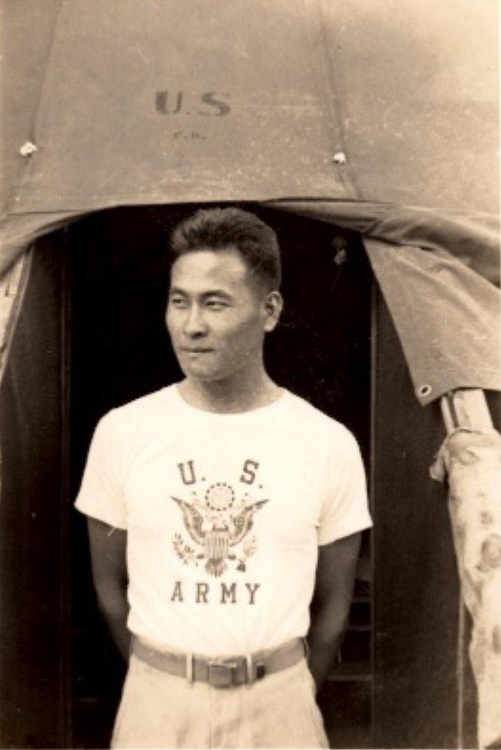
Hisashi Yoshihara was a member of the 100th Infantry Battalion (Separate) made up of soldiers from Hawaii that landed at Salerno, Italy in September 1943 with the 34th Infantry Division.
![Hisashi Yoshihara (Able Co., 100th Inf. Bn.) [Courtesy of Isami Yoshihara]](https://www.100thbattalion.org/wp-content/gallery/photos-hisashi-yoshihara/Hisashi-Yoshihara-headshot.png "Hisashi Yoshihara (Able Co., 100th Inf. Bn.) [Courtesy of Isami Yoshihara]")
Hisashi was born on November 11, 1917, in Wailuku, Maui to Hisakichi and Teru (née Nomura) Yoshihara. He was one of 10 children – 5 boys and 5 girls. After attending Haiku School, he graduated from Maui Vocational School in May 1936. From 1936 to 1941, he worked on Maui at several pineapple and sugar plantations. In his free time, he enjoyed surfing at Ho’okipa Beach Park near Paia, Maui.
On June 30, 1941, at the age of 23, Hisashi was drafted and, after basic training at Schofield Barracks, he was assigned to the 3rd Engineers Regiment.
War Years
After the Pearl Harbor attack, the 298th and 299th Regiments were responsible for guarding the shorelines of the Hawaiian Islands.
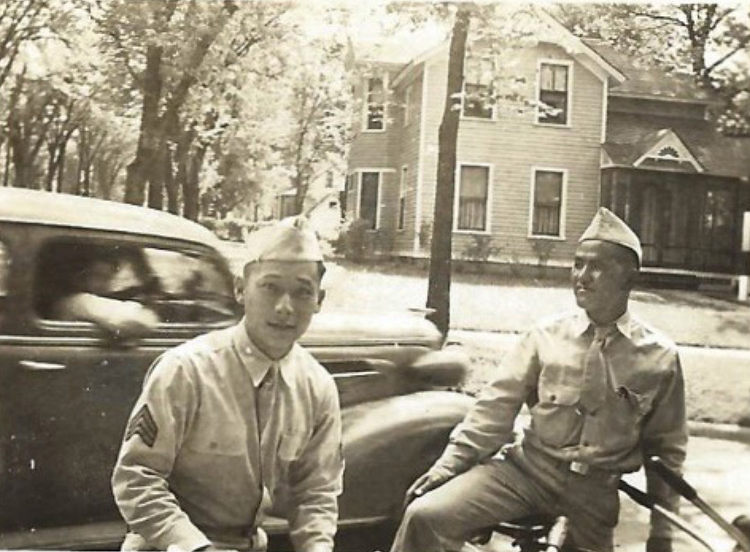
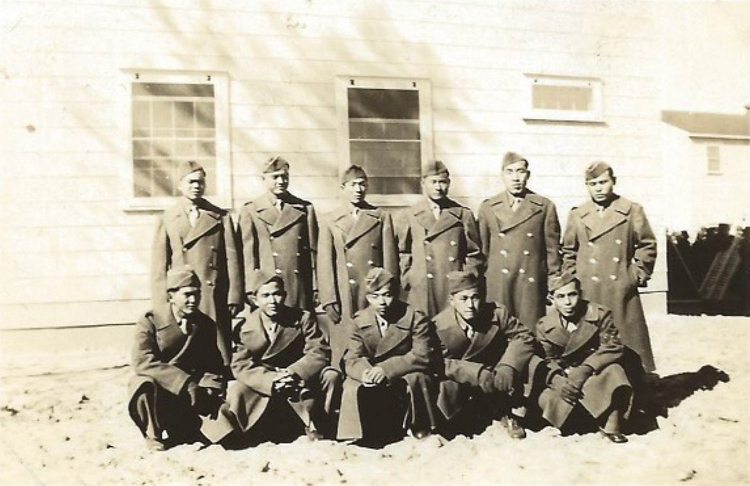
On June 5, 1942, the American soldiers of Japanese ancestry in these regiments and combat engineer units were transferred to the new Hawaiian Provisional Battalion which eventually became the 100th Infantry Battalion (Separate) when they landed at Oakland on June 12th. At Camp McCoy, he was assigned to Able Company. During their free time, he along with other soldiers explored other parts of the Midwest, and some went as far as New York City and Washington, D.C.”
After completing advanced battle training at Camp Shelby MS, the unit shipped out from Staten Island NY on August 21, 1943. After it arrived at Oran, North Africa on September 2, 1943, the 100th Infantry Battalion was attached to the battle-tested 34th Infantry Division and landed at Salerno, Italy on September 22, 1943. The battalion became the War Department’s experiment on whether soldiers of Japanese descent could be trusted in battle, and this unit forever answered the question of loyalty with its unparalleled combat record and became known as The Purple Heart Battalion.
On October 23, 1943, Hisashi was seriously wounded from an exploding German shell near the town of San Angelo d’Alife. That wound permanently knocked him out of war, with numerous hospitalizations in Italy and North Africa. His last duty station was in Tunisia when war ended in Europe, so he was transferred to the Military Intelligence Service Language School in the continental United States, where he graduated in August 1945. On September 8, 1945, he was discharged from the U.S. Army.
Post-War
One month after his discharge, Hisashi decided to get his high school diploma, and at age 27, he enrolled at Lahainaluna High School, graduating in June 1947. He then attended San Mateo Junior College in California, graduating in June 1950 with an Associated Arts degree. In September 1950, he enrolled at Iowa State College where he completed his freshman year. He then transferred to River Falls State Teachers College in Wisconsin (now UW-River Falls) where in June 1953, he graduated with a Bachelor of Science in Mathematics and Physics.
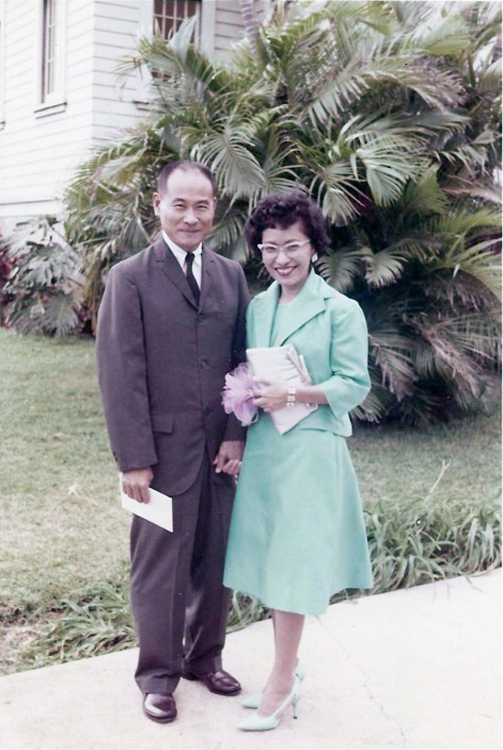
He accepted a teaching job in 1953 at Bound Brook High School in New Jersey where he taught until he retired in 1974 and was affectionately known as Mr. Yosh. Because of his father’s illness, he returned to Hawaii in 1962 to help the rest of the family to care for their beloved Papa. During his two years in Hawaii, he married Haruko Nakamatsu and taught at Baldwin High School on Maui.
They both returned to Bound Brook in the summer of 1964 where he resumed teaching, but because his wife unexpectedly passed away in September 1974, he retired from teaching in 1975 and returned to Hawaii. He passed away way too young on December 11, 1981. He and his beloved Haruko are interred at Punchbowl.
The following reflections from family provide insight into Hisashi’s life beyond his military service and career.
Our Remembrances
Isami Yoshihara (brother): As the youngest in the family who was six in 1945, I never saw my father show much emotion, except when Hisashi came home after being discharged. As he greeted Hisashi, I vividly remember Papa, as I called him, tearfully embracing his son.
Stephen Pucher, Bound Brook HS Class of 1956 wrote in 2011: “Mr. Yosh, being Japanese American and a young adult of 24 years, living when Pearl Harbor was attacked by the Japanese had to be one of a kind of a “plugger” to survive. Fifty years later, I regret as a teenager not understanding or being aware of the hardship the Japanese American community had to go through during WWII to prove their allegiance to the country they were born in simply because of their ancestry. Yes, Mr. Yosh was one of a kind and we were all fortunate to have had the opportunity to have known him.”
Elaine Lawrence (nee Yoshihara) (sister): After WWII, my brother decided to get serious about his education.
Violet Kikiloi (niece): One day, he showed me his rough draft of “My Life on Earth”. Being nosy, I asked why are you doing this? His reply, “I don’t have any kids and I don’t want to be forgotten. I want my nieces and nephews to know something about me.”
After Uncle Sashi retired and moved back home, he lived across the street from us and usually had dinner with us daily. We had very interesting conversations/discussions and whenever he did not agree with one of us, he would do research the following day (schoolteacher mentality). If he was wrong, he would bring canned food (sausage, fruit or veggies). I always thought that was a cute way of apologizing.
Amy Abe (niece): (memories at age 6) Uncle H (as I would call him) and Aunty Haruko would usually stay with us when they visited during summer breaks. He definitely loved the ocean since he didn’t mind taking Jon (Amy’s older brother) fishing and me to the beach almost daily on top of playing the card game Donkey with me.
(memories at age 16) One of my recollections of Uncle H was that he didn’t want me to buy him a rice cooker (since I noticed he didn’t have one) because he told me he always cooked rice the old-fashion way using a pot. He taught me to use my middle finger (not in a bad way) as a guide for measuring the amount of water to add to the pot.