
Charlie Company, 100th Battalion, 442nd RCT
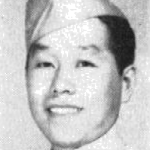
![Thomas Miyamoto (Co. C, 100th Inf. Bn.) [Courtesy of Lynda Asato]](https://www.100thbattalion.org/wp-content/gallery/photos-thomas-miyamoto/Miyamoto-Thomas1.png "Thomas Miyamoto (Co. C, 100th Inf. Bn.) [Courtesy of Lynda Asato]")
Miyamoto was inducted into the U.S. Army in Honolulu in April 1943. He trained at Camp Shelby, Mississippi, and served in combat with Company C, 100th Battalion, 442nd Regimental Combat Team in Italy and France.
Miyamoto was killed in action near Seravezza, Italy, during the Po Valley Campaign on April 5, 1945. On April 5, 1945, during the Po Valley Campaign in northern Italy, Company C of the 100th Infantry Battalion was engaged in intense combat operations in the mountainous terrain near Seravezza. That day was part of a broader push by the 442nd Regimental Combat Team to break through German defensive positions along the Gothic Line’s final phases. The fighting involved advancing up steep, exposed slopes under heavy enemy fire, clearing entrenched positions, and maintaining pressure on retreating German forces as Allied troops pushed north.
For his bravery and service, he was awarded the Purple Heart Medal, Combat Infantryman Badge, Distinguished Unit Badge with Oak Leaf Cluster, American Campaign Medal, European-African-Middle Eastern Campaign Medal, and the World War II Victory Medal. He is interred at the National Memorial Cemetery of the Pacific (Punchbowl) in Honolulu.
According to his niece, Lynda Asato, Miyamoto was remembered by family members as a kind, talented artist and a brave soldier. Though she never met him, Asato has worked to preserve his legacy, and shared the following on her uncle.
My uncle, Thomas Miyamoto, died in battle a month after I was born in 1945. I was told by my parents that he was a very kind man, fantastic artist, and brave soldier. He served as a scout for his unit and was killed in action climbing the mountain in Serravazza, Italy during the Po Valley campaign. He exemplified the values of yasashii (kindness) and gaman (acceptance and enduring hardships) for the sake of our family and our country. I am proud to be his niece and have been working to keep his legacy alive for my cousins and their children so his efforts will not be in vain.
Recently, I organized a family reunion in Kauai bringing together about 15 of us to honor him at the Kauai Veterans Center, where his memorabilia were on display. It was an emotional experience as the Buddhist minister recounted my uncle’s accomplishments and each of us cousins related how our parents had saved his letters and memorabilia from his camp Shelby and European souvenirs. We felt a need to “bring him home” to Kauai, even though his grave is at Punchbowl. We each said our “thank you” to our uncle whom we never met in person, but who gave his life for us to live our lives in America.
I have another uncle who also served in the 100th Infantry Battalion in B Company, Henry Fujii, who served as a driver for the commanding officer and whose life was always in danger. He was able to survive and returned to marry my uncle Thomas’ sister, Mildred Miyamoto.
Uncle Henry shared his stories with me during my visit to Washington state. He never shared these stories with his children but that is typical of many returning soldiers. They had a sense of humility about their heroism and were grateful for the opportunities they had to provide for their families. They taught us to respect and appreciate our ancestors (okage sama de), “I am who I am because of you.” I appreciate the sacrifices of my father, mother, uncles and aunties during World War II, and subsequent wars I have witnessed, and hope we will not be engaging in future wars.
How can we become a more “kind” nation, like my uncles were, and not threaten or be threatened by others? Let’s come up with some ways to be “kinder.”
![Thomas Miyamoto (Co. C, 100th Inf. Bn.) [Courtesy of Lynda Asato]](https://www.100thbattalion.org/wp-content/gallery/photos-thomas-miyamoto/Miyamoto-Thomas2.png "Thomas Miyamoto (Co. C, 100th Inf. Bn.) [Courtesy of Lynda Asato]")