Dog Company, 100th Infantry Battalion
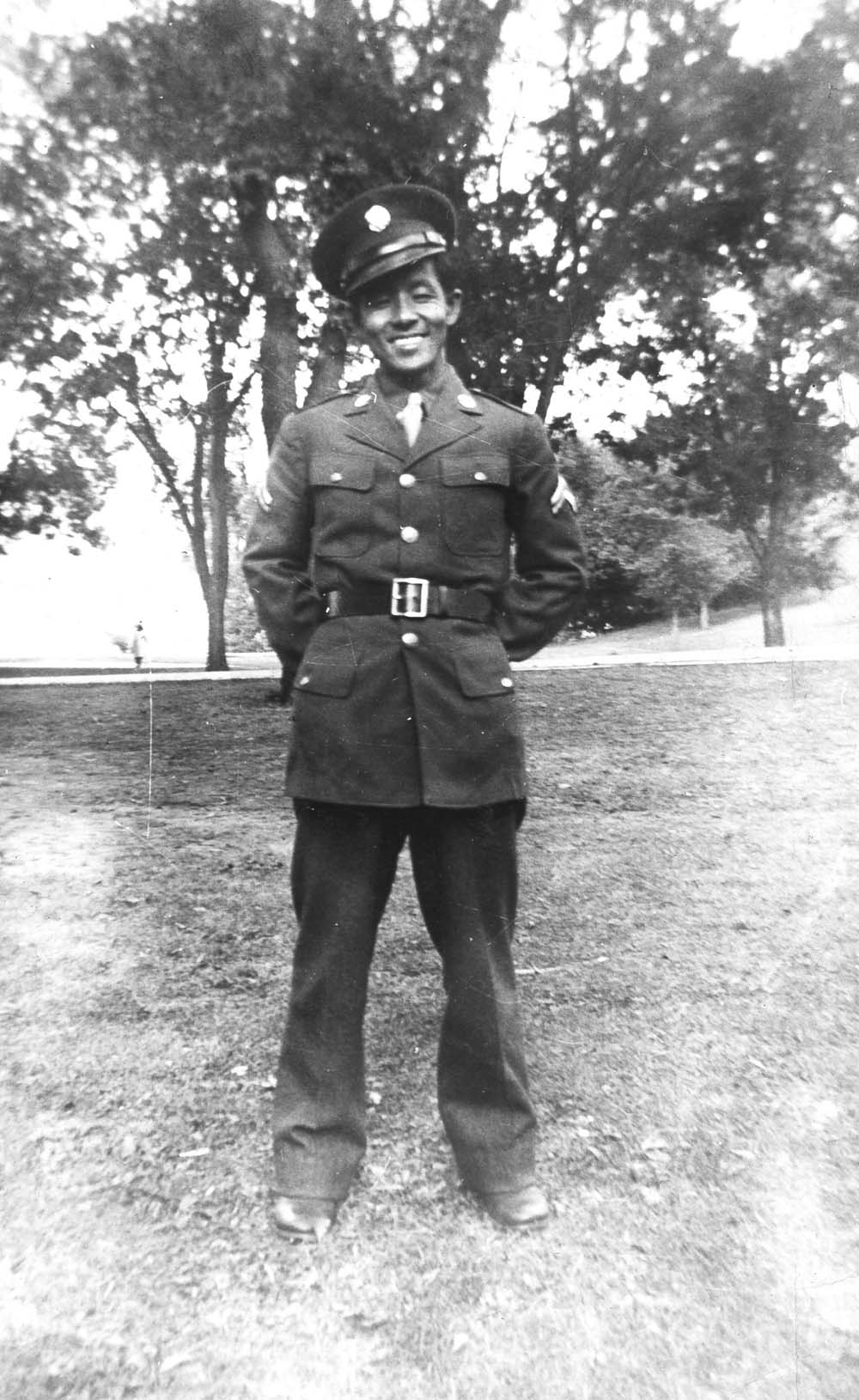
Conrad Choso Tsukayama was born on February 10, 1918, in Ewa, Oahu, Territory of Hawaii. He was the son of Choson and Kame (Nakaogi) Tsukayama, who emigrated from Yonabaru, Okinawa Prefecture, Japan, in 1906 and 1915, respectively. Choson married Kame upon her arrival at Honolulu. They raised a family of eight children: sons Conrad Choso, George Tomoyoshi, Albert Tomosuke, and Chomei David; and daughters Edna Hatsu, Janet Shizue, Edith Sumiko, and Shirley Asae.
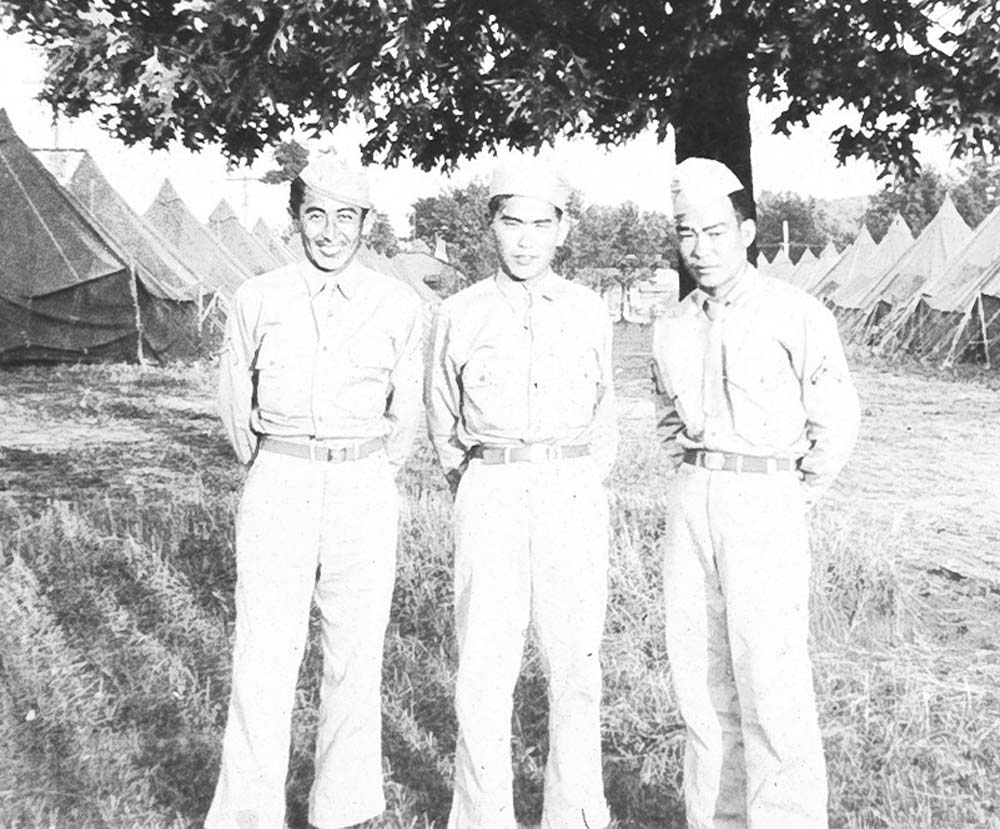
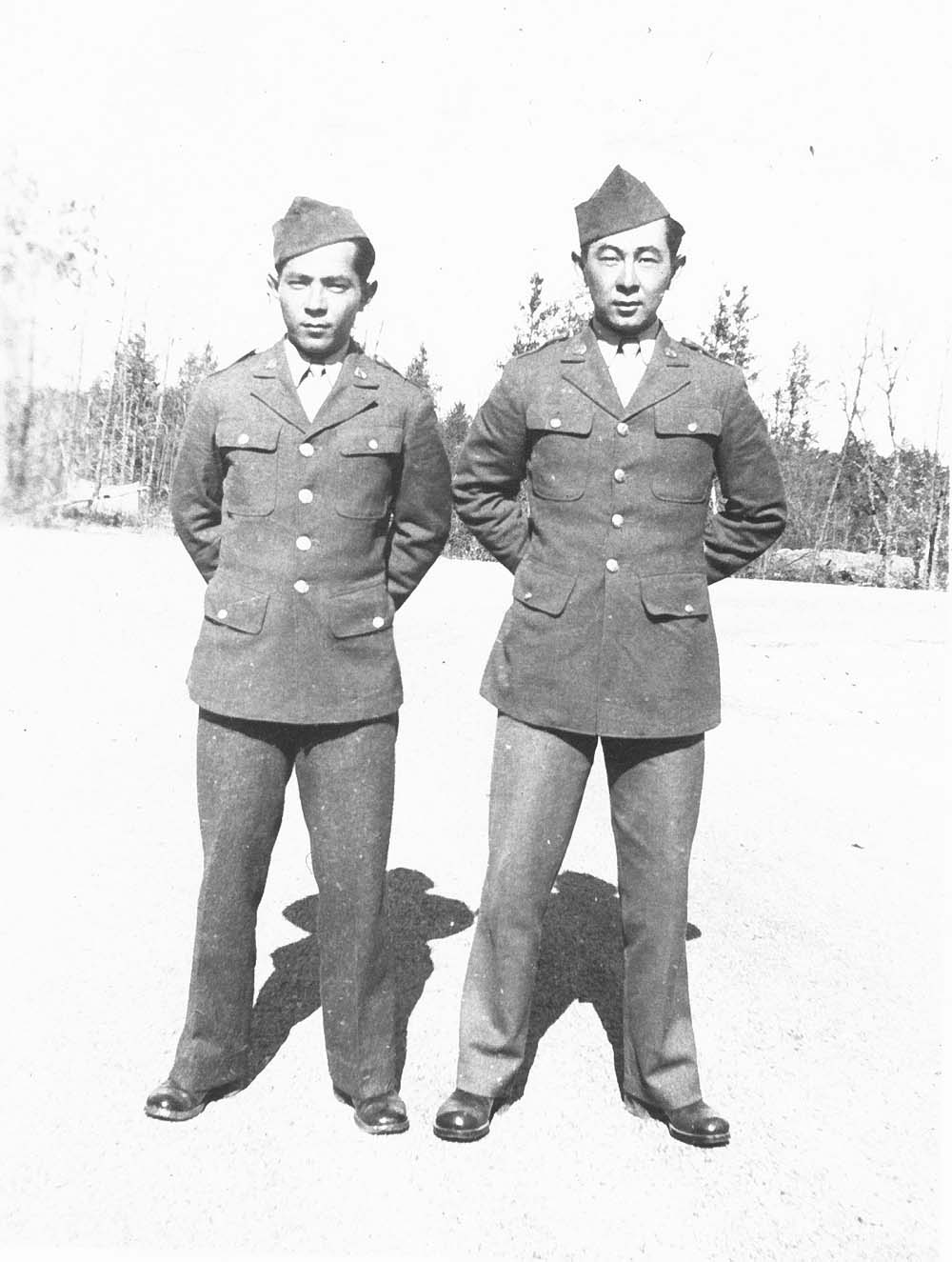
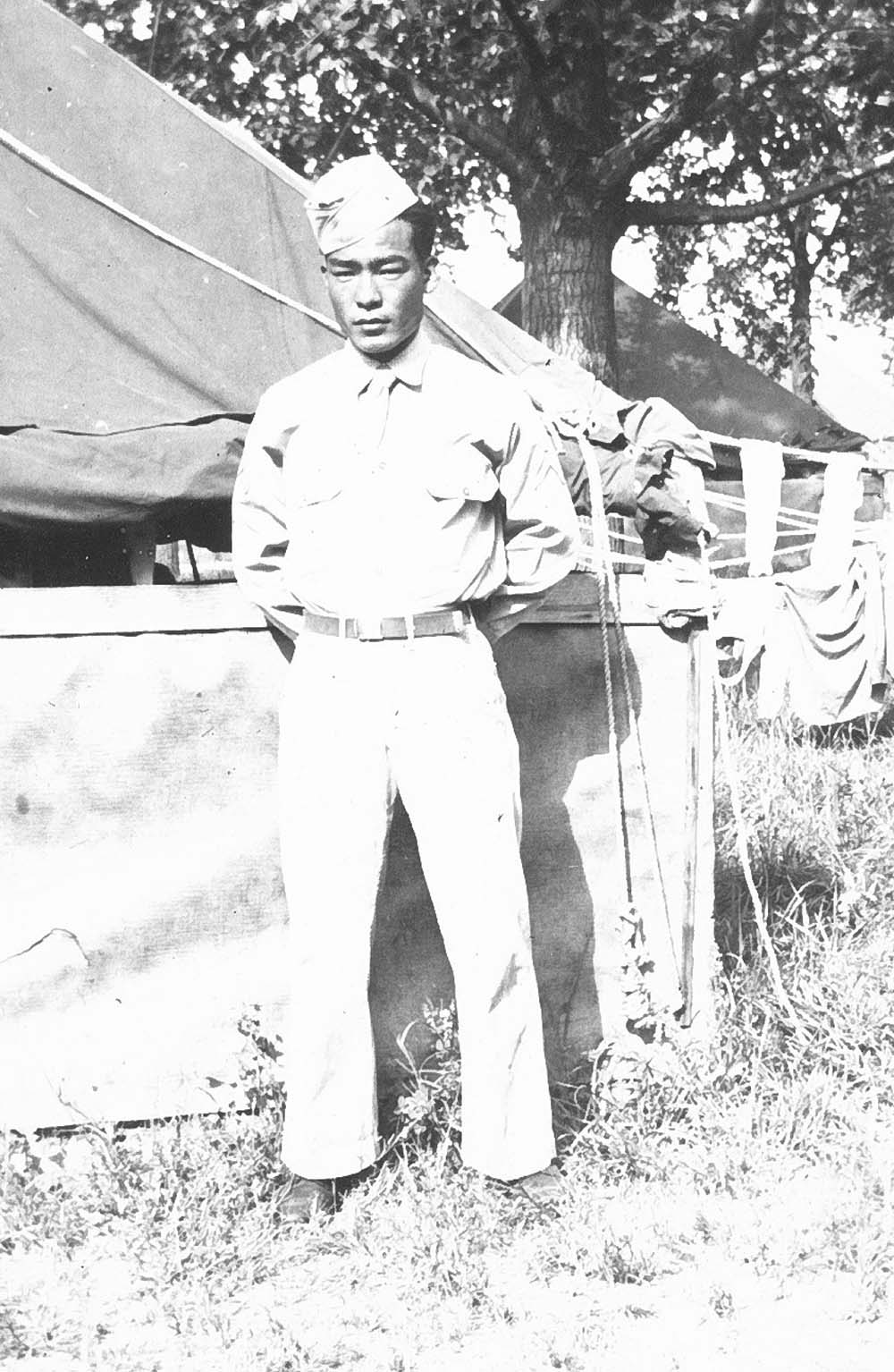
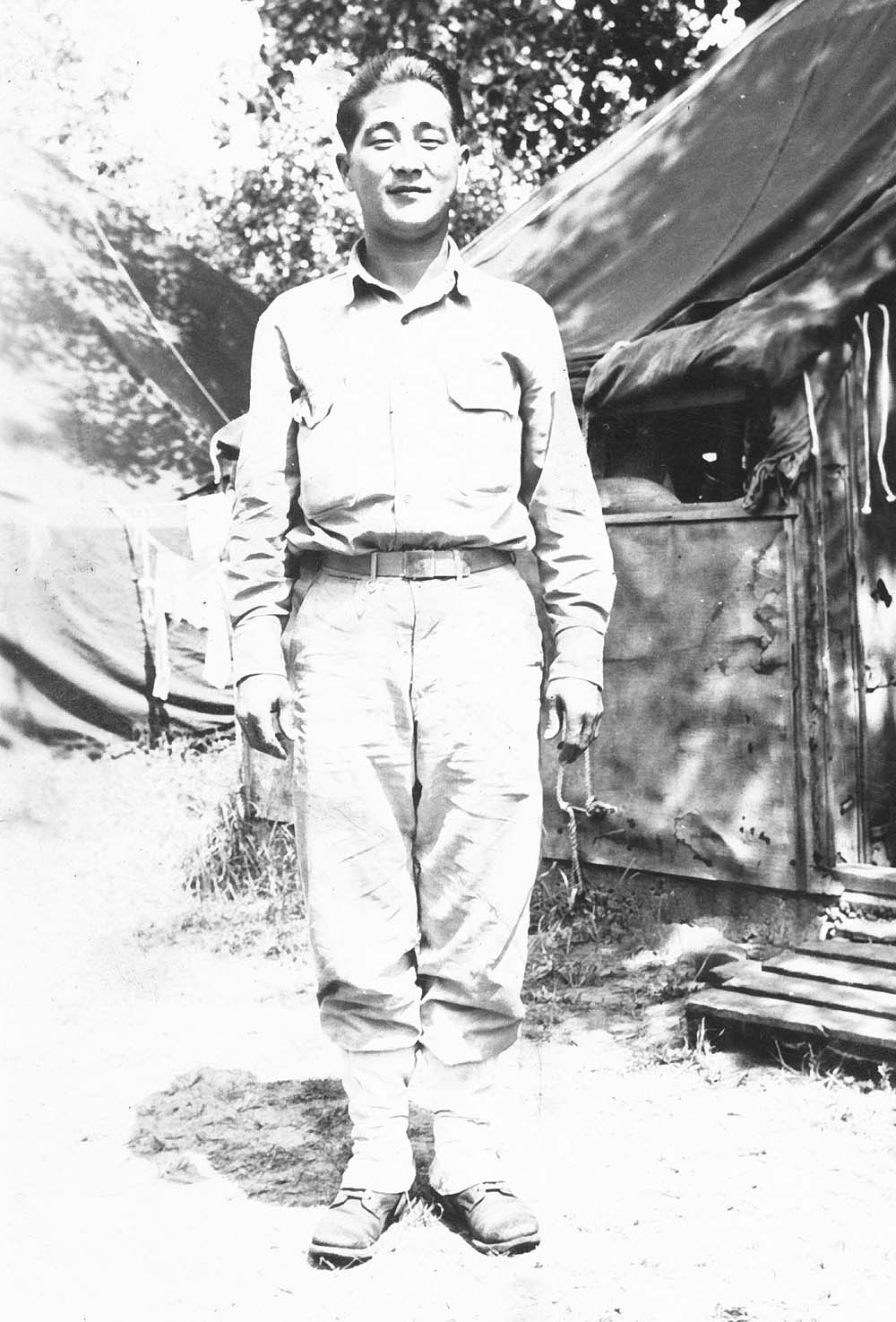
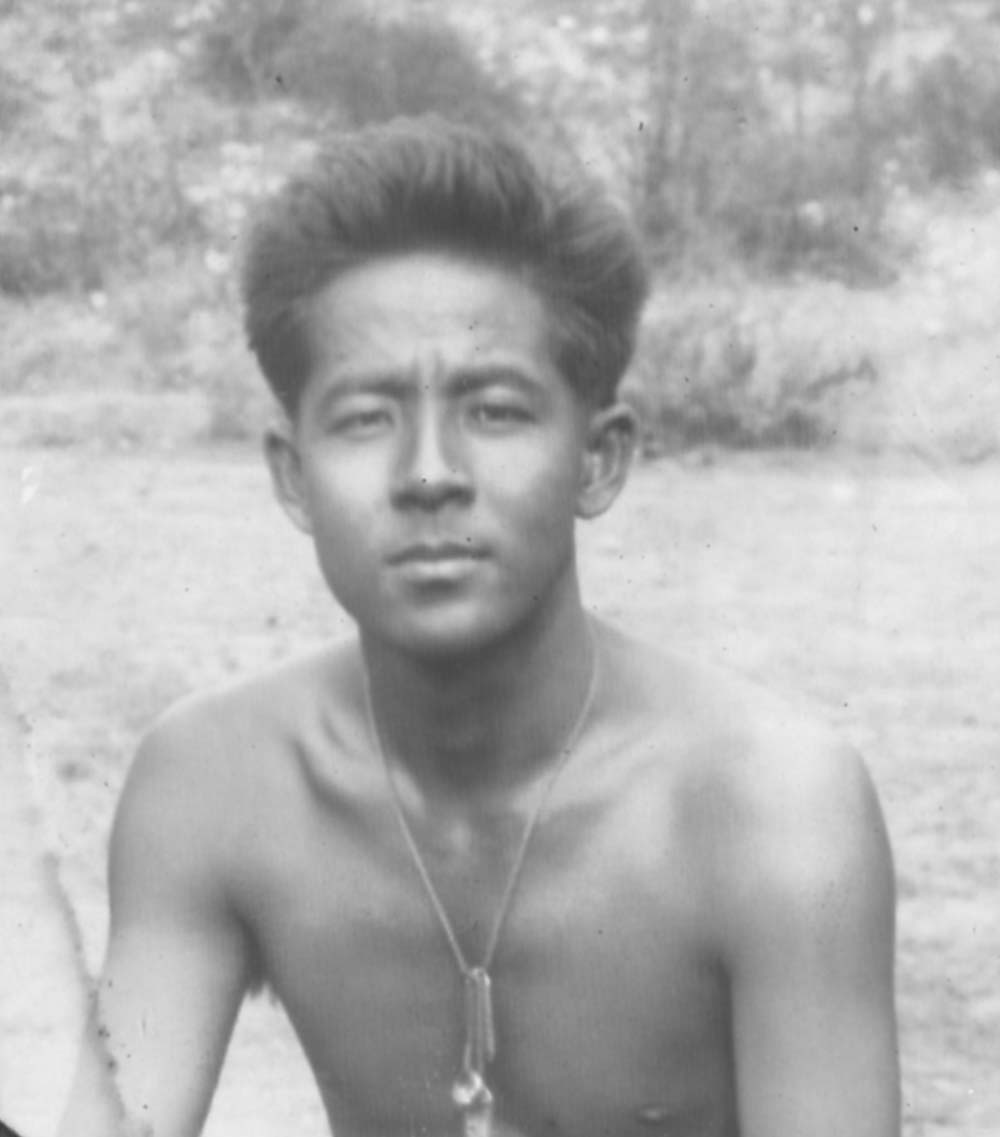
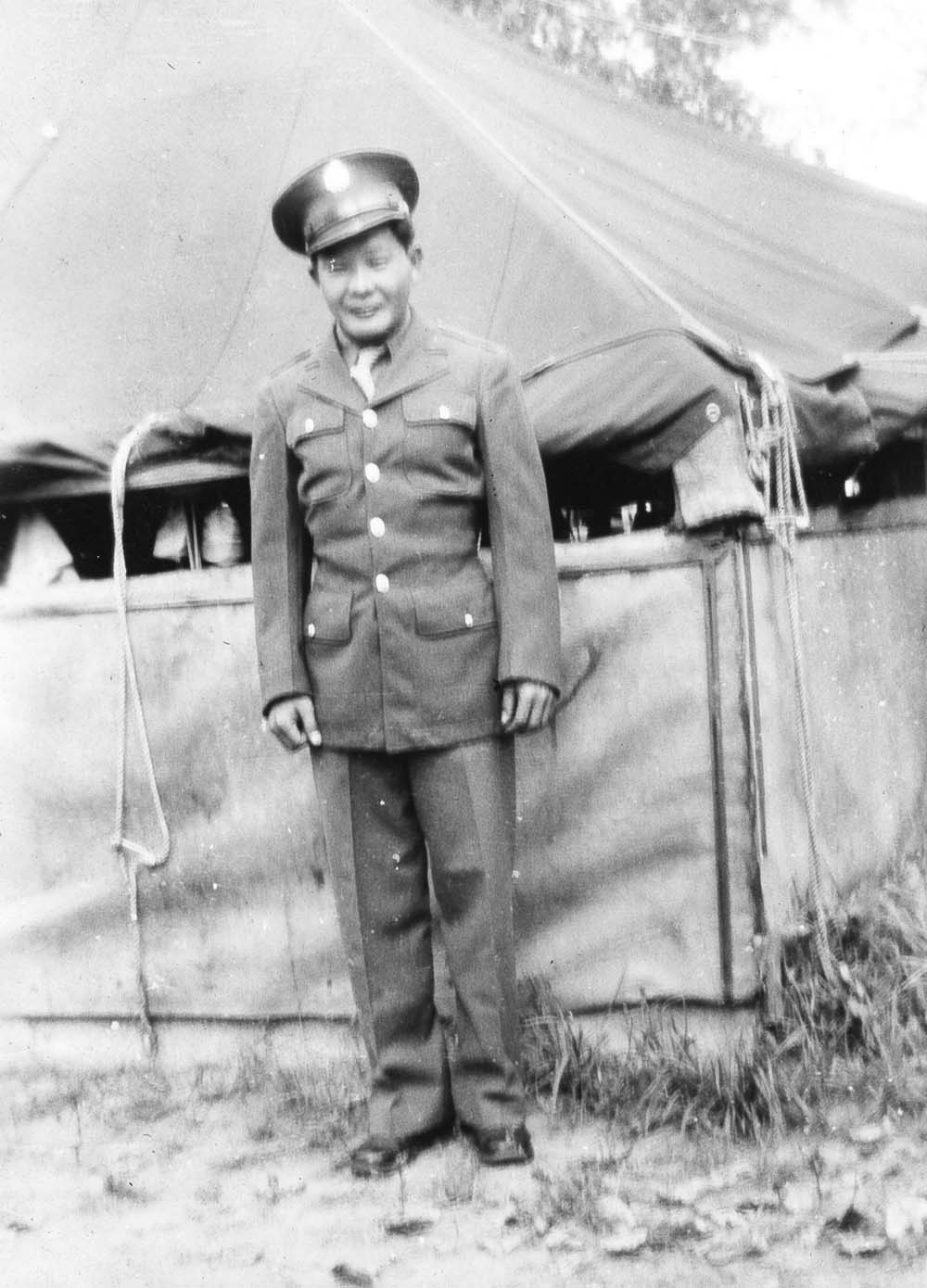
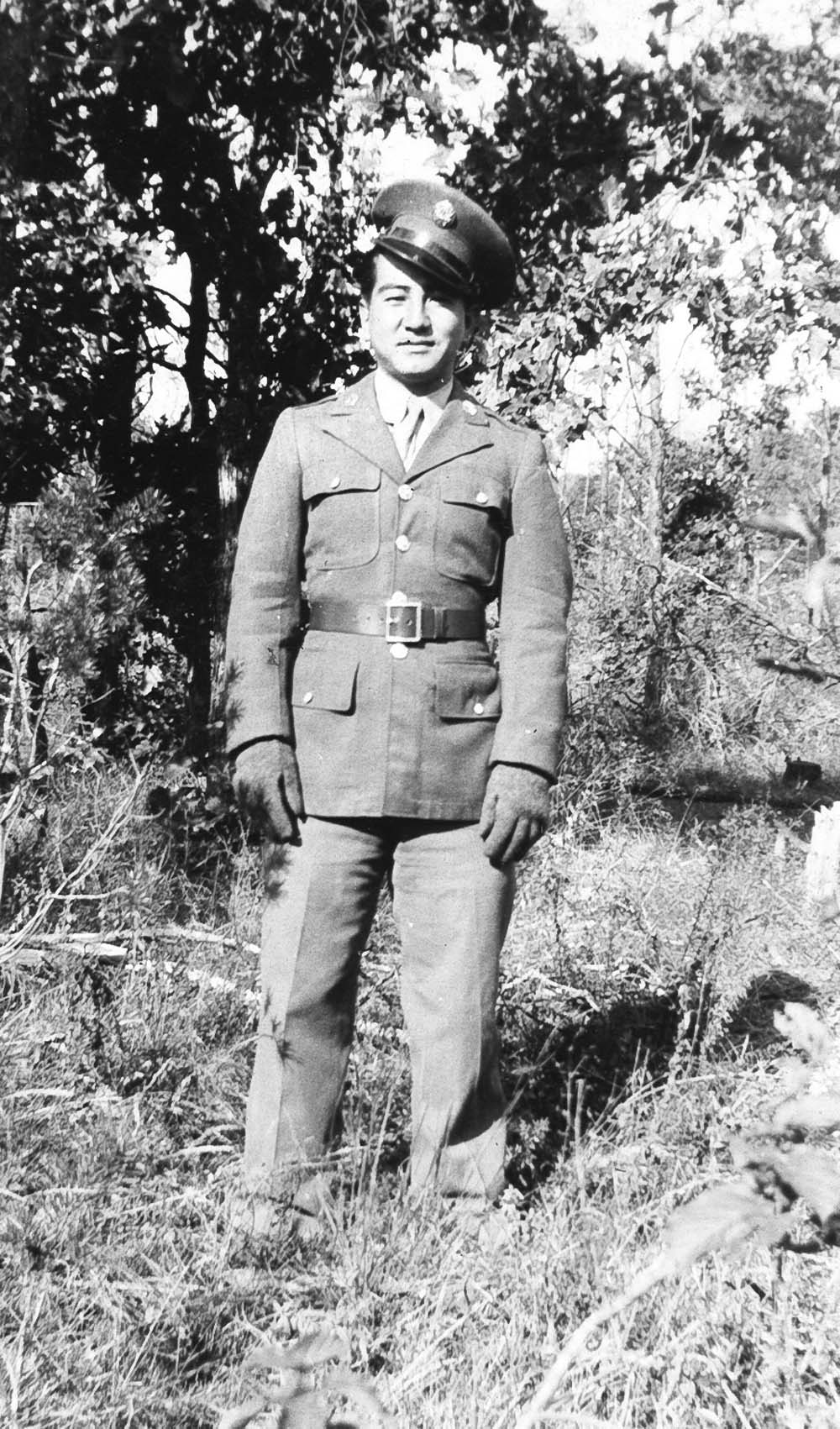
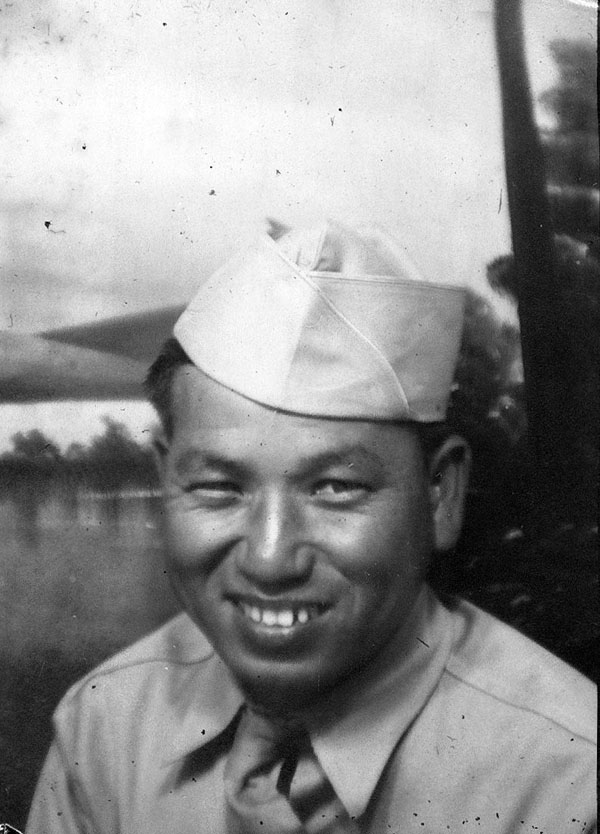
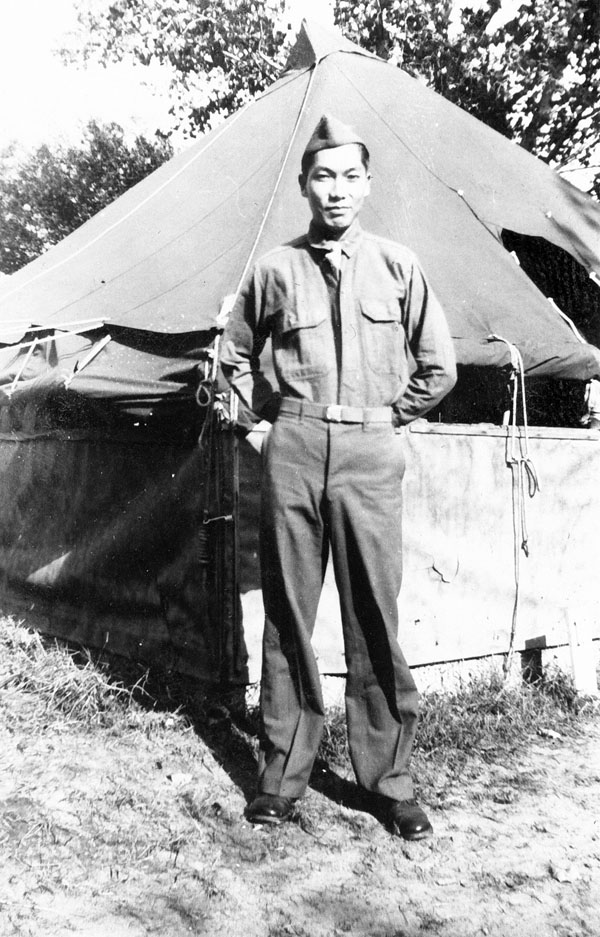
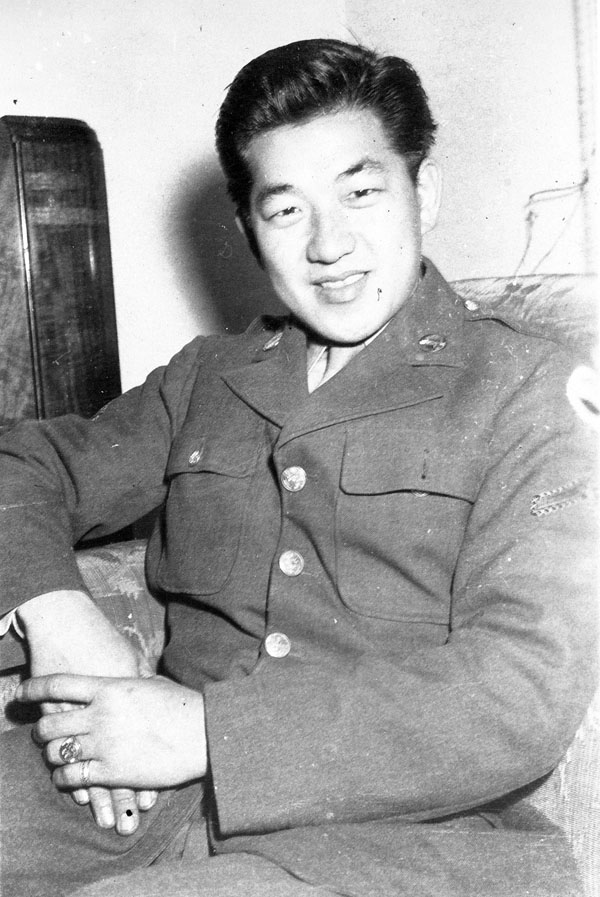
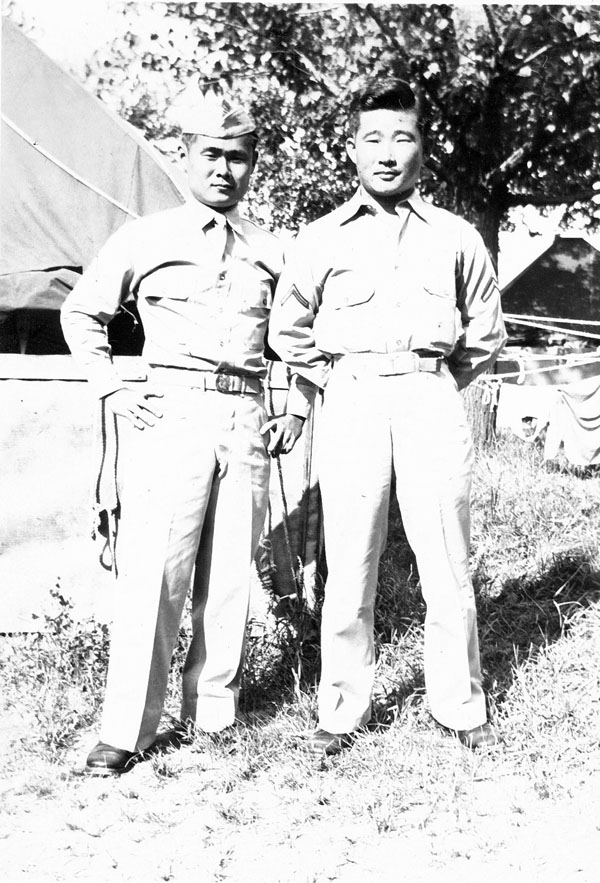
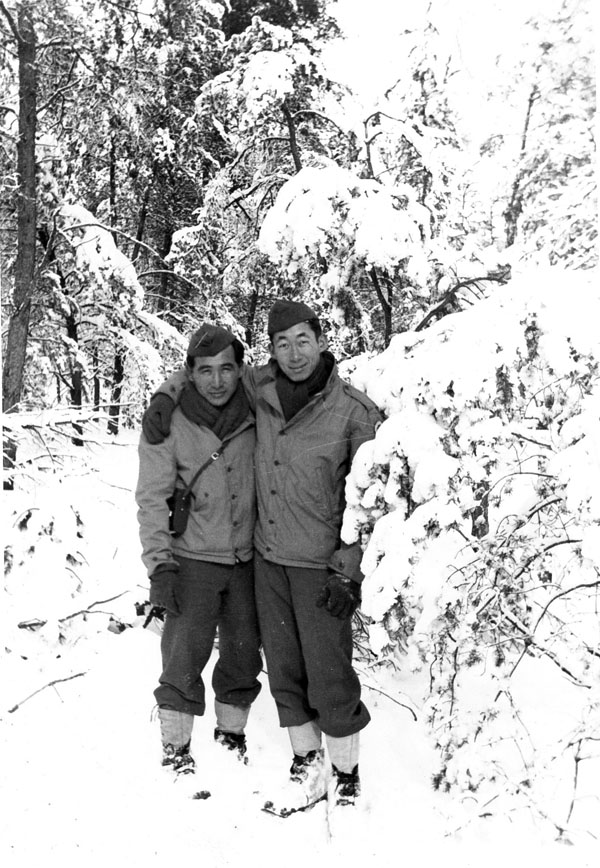
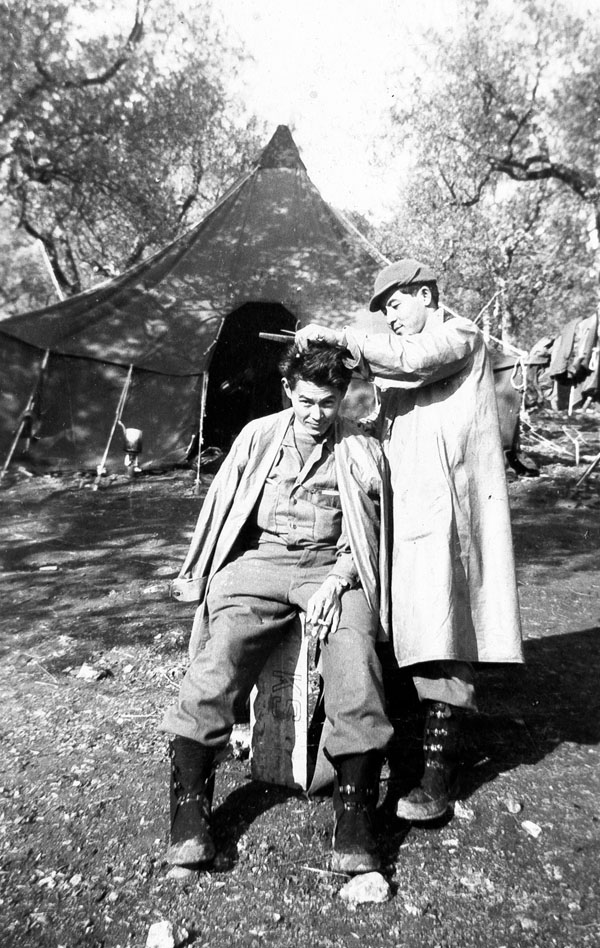
![Conrad Tsukayama (Dog Co., 100th Inf. Bn.) [Courtesy of Alvin Tsukayama]](https://www.100thbattalion.org/wp-content/gallery/photos-tsukayama-conrad/Tsukayama-Conrad-Choso.png "Conrad Tsukayama (Dog Co., 100th Inf. Bn.) [Courtesy of Alvin Tsukayama]")
In 1920, the family lived at the Ewa Plantation in the Japanese “B” Family Camp, where Choson worked as a laborer on the sugar plantation. By 1930, they had moved to Kailua on the Windward side of Oahu, where Choson leased land from Kaneohe Ranch to grow corn, papaya, and watermelon.
In 1940, they were still in Kailua, and Choson, in addition to farming, worked as a yard man for a private family. His son Choso (Conrad), while in high school, worked as a delivery man for a fish farm near Kaneohe Marine Base and a helper to a neon sign contractor. One of the signs he helped install at the Wo Fat restaurant in Chinatown became a recognizable and iconic fixture in the area.
Conrad graduated from Honolulu’s Central Intermediate School in 1934. He joined the ROTC while attending McKinley High School, but after two years due to family misfortune he left school and started working full time to help support his younger brothers and sisters through school.
On October 26, 1940, Conrad registered for the draft at the Kaneohe Court House, Local Board No. 1. He was living on the farm near what is now Kaha and Kainui Streets in Kailua and employed by Kanetake Appliances. He was 5’3” tall and weighed 118 pounds. After initially being rejected due to his flat feet, he was inducted into the U.S. Army on November 14, 1941, in Honolulu. At the time, he had completed two years of high school, and his occupation was, “semiskilled mechanic and repairman.”
On December 7th, he saw the Japanese airplanes flying over Kailua and could even see the pilots. Conrad’s father was worried that Hawaii would be invaded and was ready to protect his property. When his father saw him in uniform before he reported for duty, he realized that his son was an American, not Japanese.
Conrad was in the 298th Infantry Regiment of the Hawaii National Guard, stationed at Schofield Barracks. As such, he was in the group of original soldiers, the Hawaiian Provisional Infantry Battalion, sent to Oakland, California in secrecy, on June 5, 1942, on the USAT Maui. Conrad recalled in the 1998 book, “Japanese Eyes American Heart,” there was “one elderly Japanese mother waving good-bye to us” when the train left Schofield Barracks, and a “handful of Nisei girls waved from the pier as the SS Maui pulled away from the dock.”
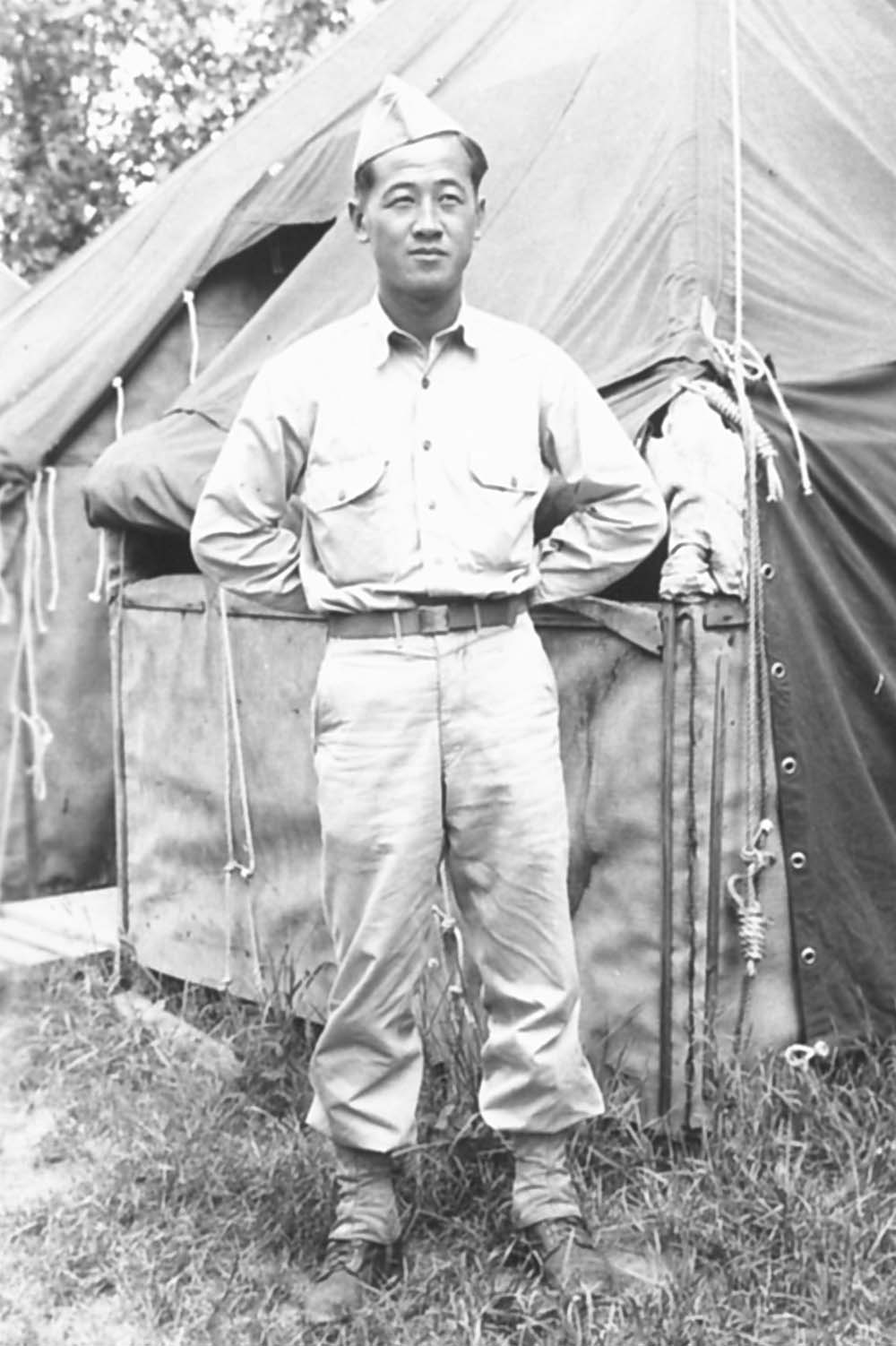
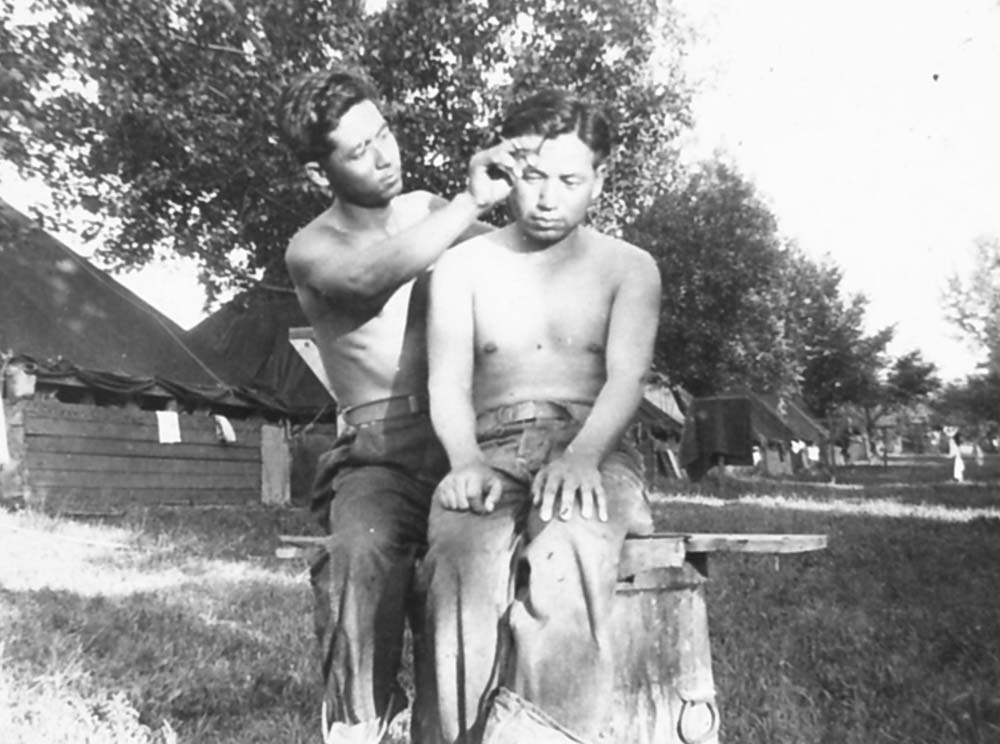
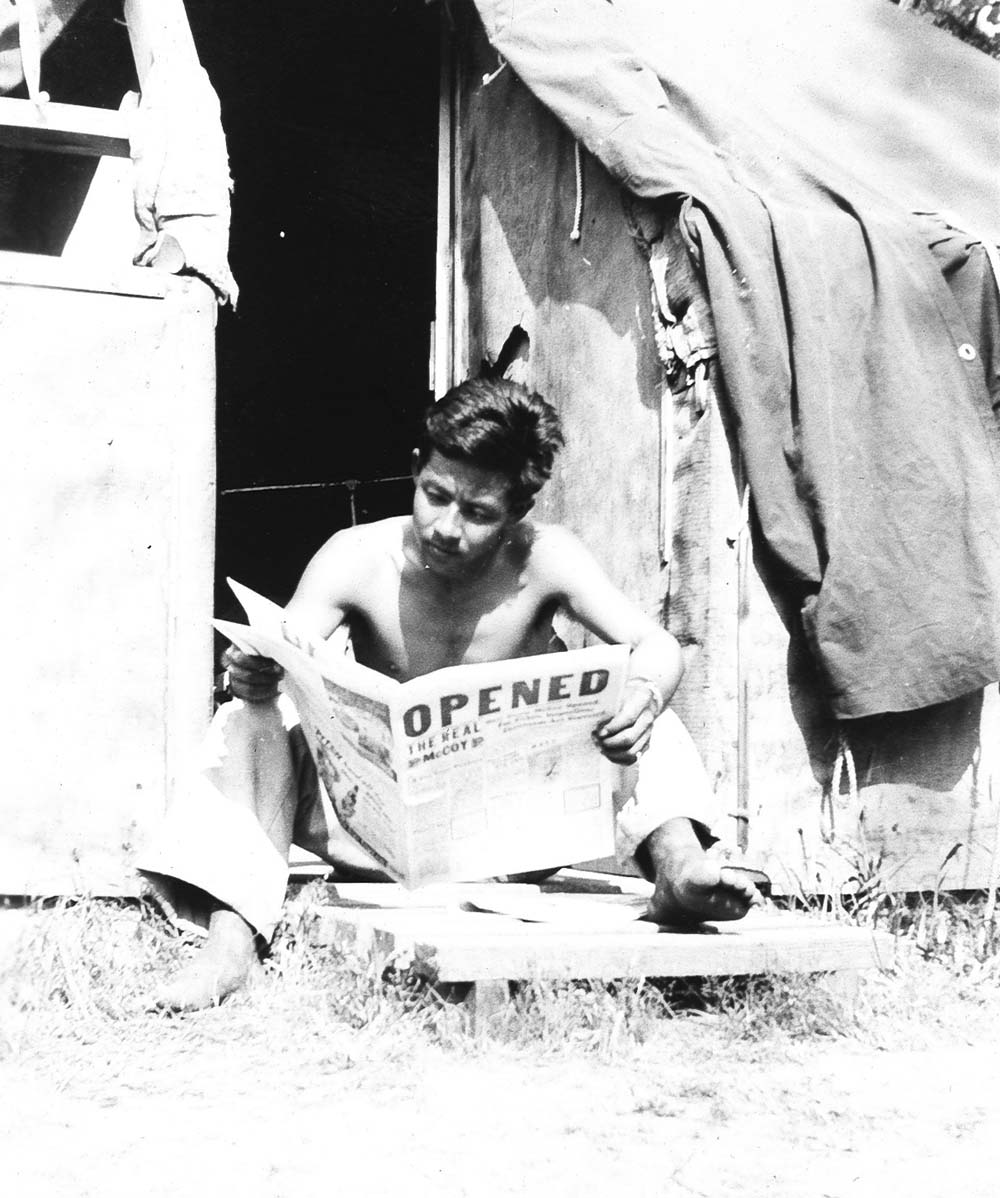
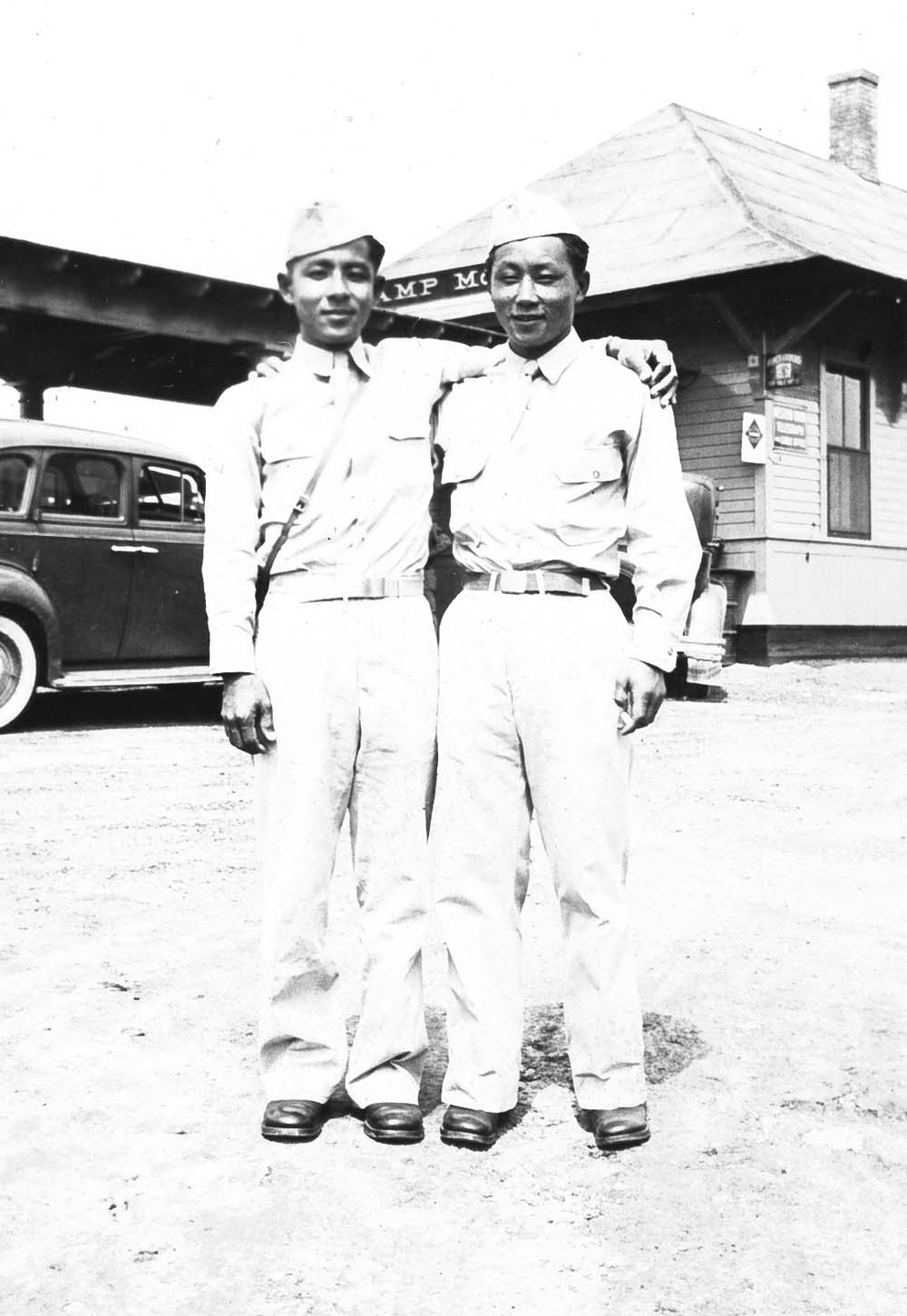
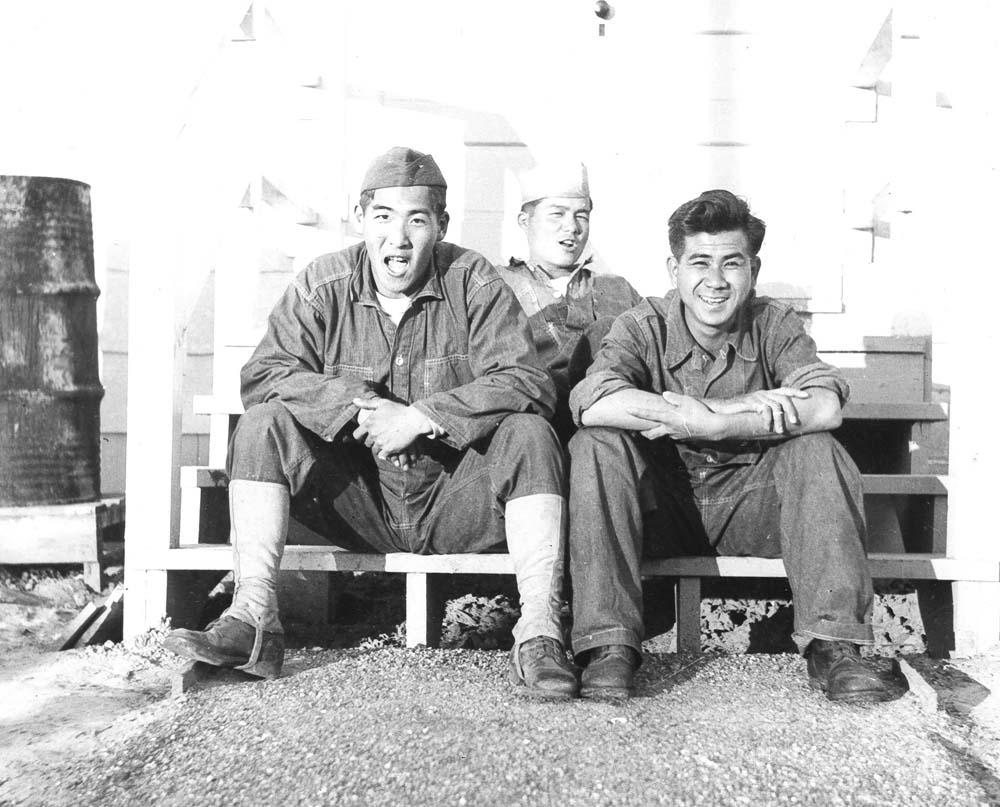
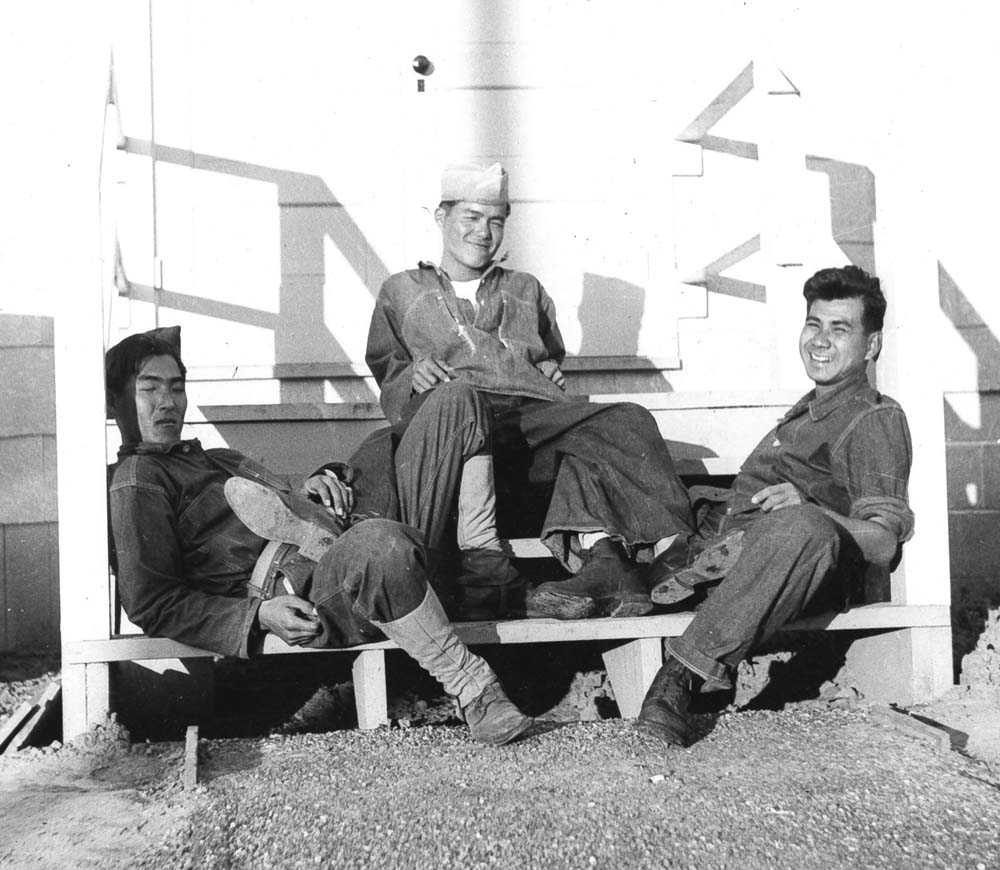
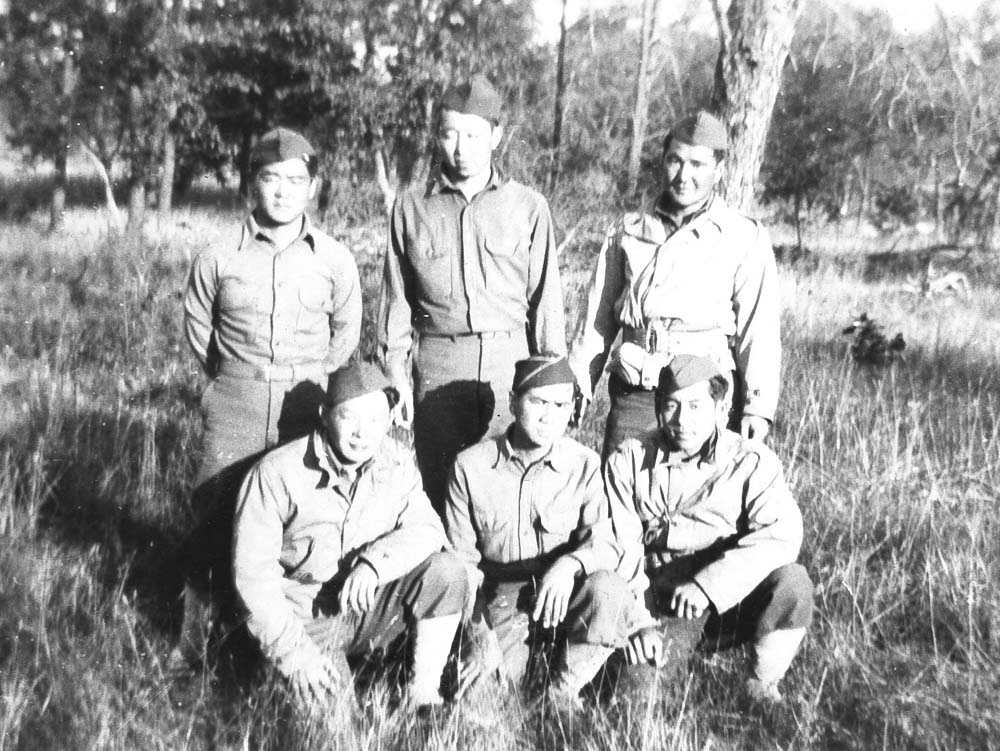
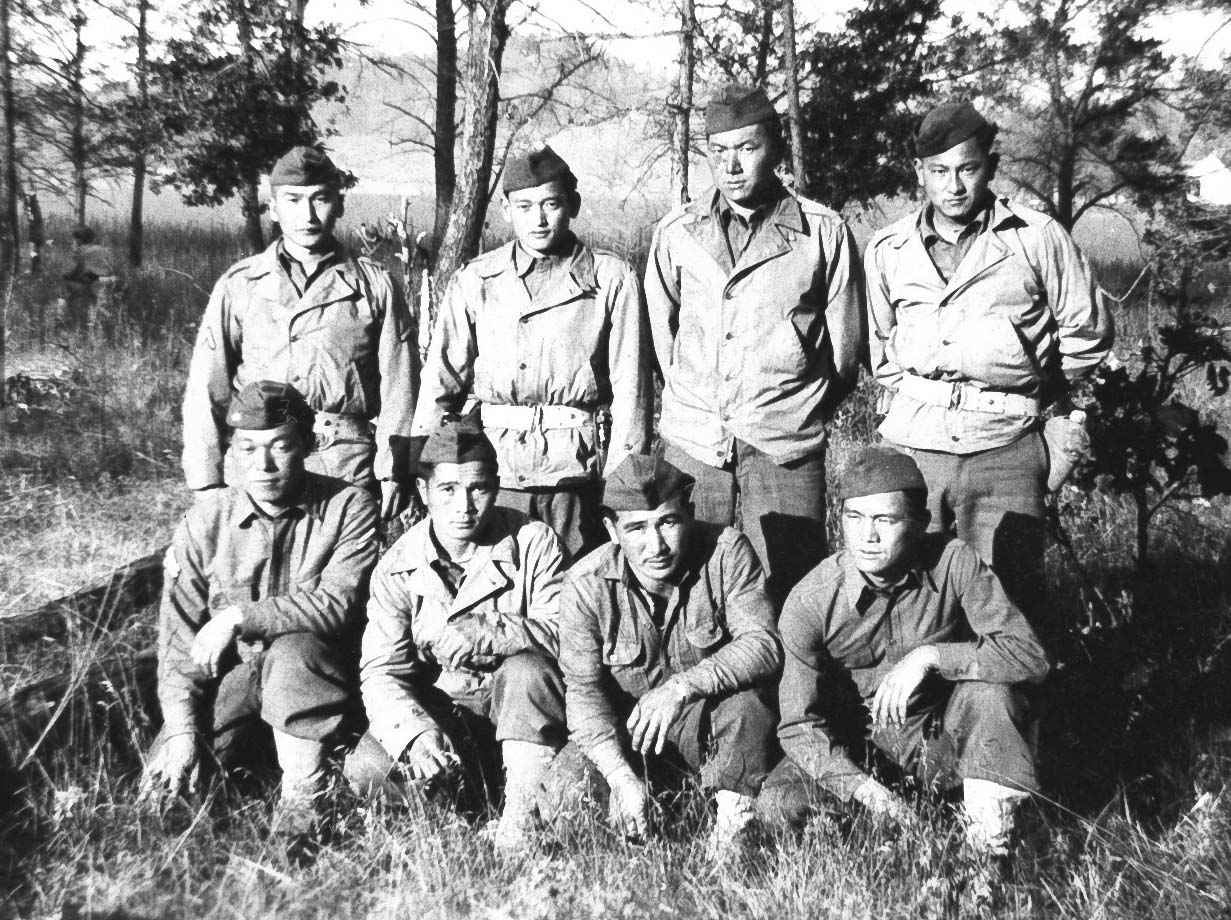
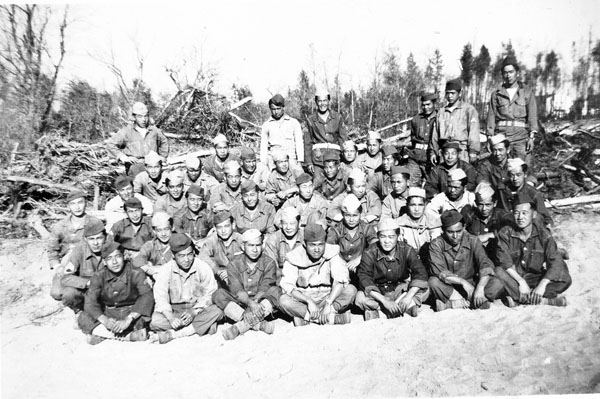
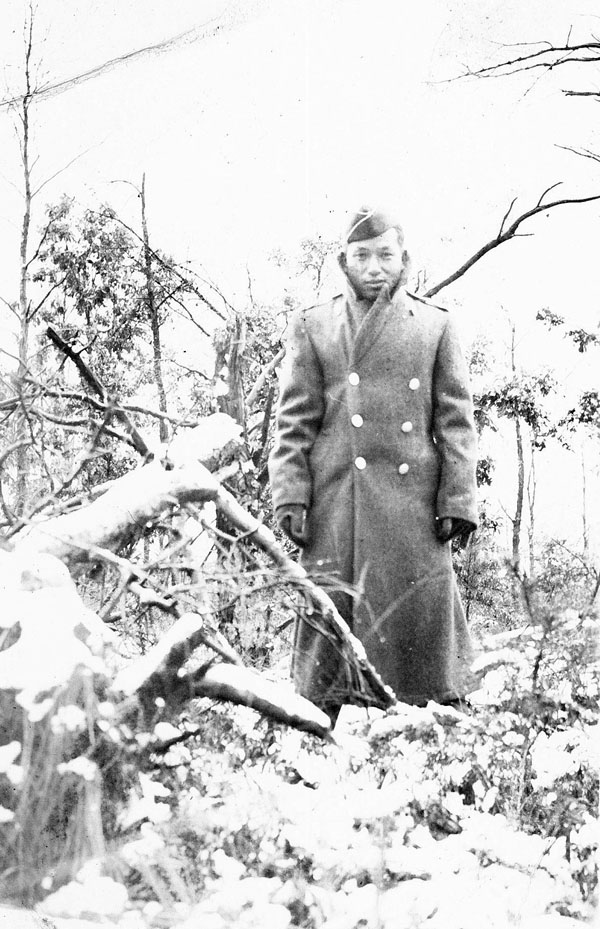
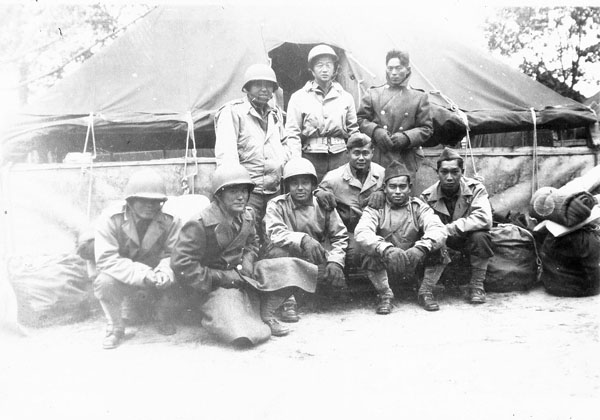
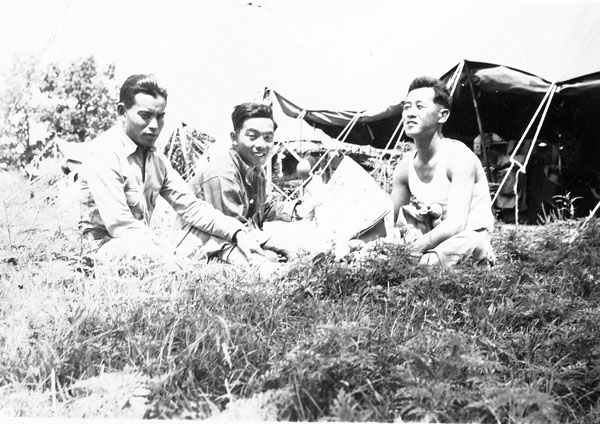
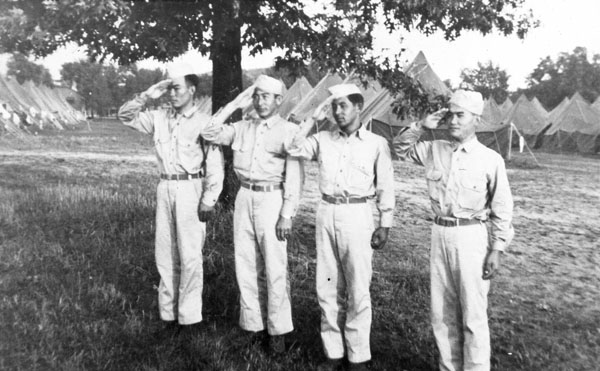
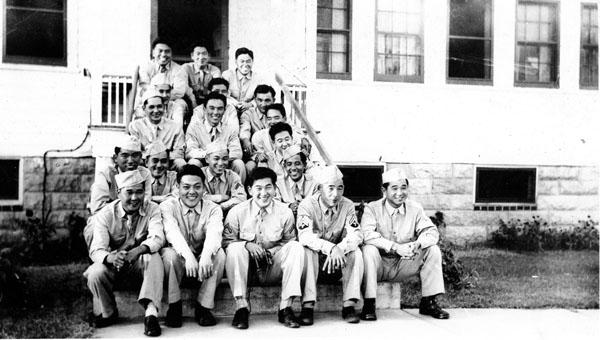
Upon arrival in California, they were designated the 100th Infantry Battalion (Separate) and sent to Camp McCoy, Wisconsin, for training. Conrad was in D Company. After more training at Camp Shelby, Mississippi, the 100th left Camp Kilmer, New Jersey, on the S.S. James Parker on August 21, 1943, for the European Theater.
After a brief stay in Oran, Algeria, the 100th arrived at Salerno, Italy, to take part in the Naples-Foggia Campaign. They entered combat on September 26, pursuing retreating German forces. Two days later, Conrad, then a Corporal, was wounded by a land mine, becoming the 100th’s first battle casualty and its first recipient of a Purple Heart. He then became the first of many in the 100th to perform a “reverse AWOL,” leaving a field hospital where he had been sent for treatment to return to his company and rejoin his comrades.
During this campaign, he was promoted to Sergeant and was quoted in the newspaper as saying that his men were, “…as calm a bunch of fighting men as we’ll ever round up. With fine spirit and courage, and with the cooperation of the fine unit with us, we’ll take the Germans sooner or later. The Jerries can’t whip us Yanks.”
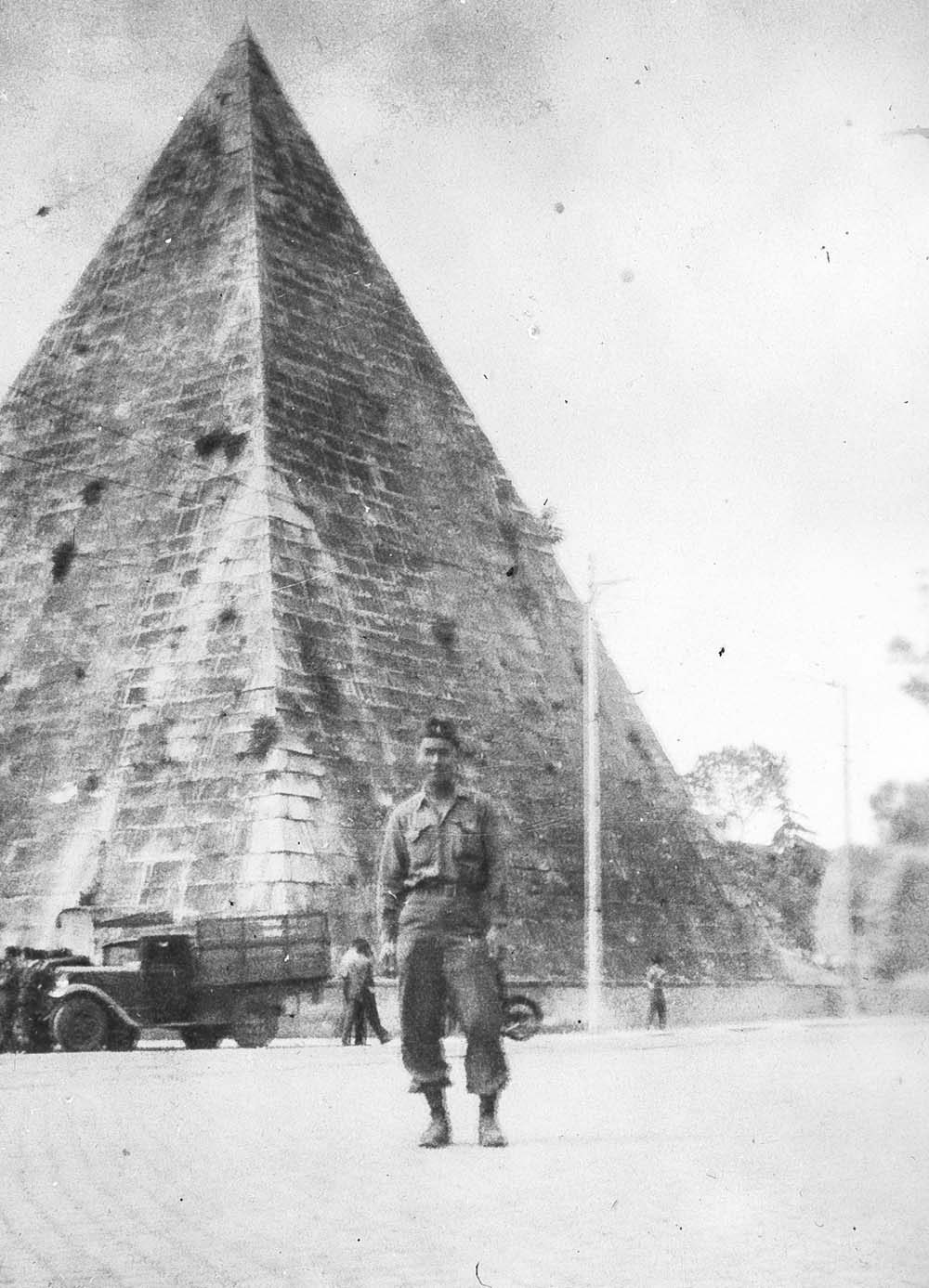
Conrad fought in all subsequent campaigns of the 100th Infantry Battalion and 442nd Regimental Combat Team — Rome-Arno and Anzio in Italy; Rhineland (Vosges and Maritime Alps) in France; and the North Apennines and Po Valley back in Italy. On November 28, 1944, while in France, he received a battlefield commission from Sergeant to 2nd Lieutenant due to his exceptional leadership. He later attained the rank of 1st Lieutenant.
After V-E Day on May 8, 1945, Conrad remained in Italy for the next three months as part of the occupation forces. At the time of his departure for the United States in August, he served as motor section leader for the 442nd RCT.
For his wartime service, 1st Lt. Conrad Tsukayama received the following awards: Bronze Star Medal, Purple Heart Medal, Good Conduct Medal, Asia-Pacific Campaign Medal, American Campaign Medal, European-African-Middle Eastern Campaign Medal with silver star, World War II Victory Medal, Army of Occupation Medal, Distinguished Unit Citation Badge with two oak leaf clusters, and Combat Infantryman Badge.
He was awarded the Congressional Gold Medal on October 5, 2010, along with the other veterans of the 100th/442nd Regimental Combat Team. This is the highest Congressional Civilian Medal.
On October 5, 2010, Congress authorized the Congressional Gold Medal for Conrad and the other soldiers of the 100th Infantry Battalion and 442nd Regimental Combat Team — the highest civilian honor bestowed by the U.S. Congress.
After the war, Conrad married Yoshi Shiroma of Hilo on May 1, 1947. She lived on Liliha Street and was a student at Oahu Business School in Honolulu.
By 1950, the family lived in their home on Kawainui Street in Kailua, and Conrad worked as a technician for Kanetake’s Appliances, also in Kailua. By the mid-1950s, he had become an agent for the New York Life Insurance Company. He later returned to the Hawaii National Guard full time, eventually becoming the commanding officer of G Company, 298th Infantry, where he was part of the command that manned the Nike Hercules Missiles in Hawaii.
Conrad was an active member of Club 100, the 100th Infantry Battalion veterans’ organization, where he served as its president in 1978. He was also an active member of the Kailua Community Methodist Church, as one of its charter members, the Windward YMCA Men’s Club, and the Veterans of Foreign Wars (VFW) Post 3824. He felt that it was his duty to volunteer, to be there to help others in any way possible, for the sake of his buddies that did not return home from the war.
In 1954, he was chosen as “Outstanding Man of 1953” by the Kailua Junior Chamber of Commerce. In 1999, the Rotary Club of Windward Oahu awarded him its Windward Rotarian Person of the Year award for touching “thousands of lives” over 50 years of volunteerism. Also in 1999, Conrad was presented with the Hawaii YMCA’s Hero Award for his 50 years of service on Windward Oahu. As a member from his teenage years, he saw their facility grow from a log cabin to a modern building on the Pali Highway in Kailua. He spent hours volunteering on everything from construction and landscaping to maintenance and repair.
Conrad Choso Tsukayama died on July 2, 2001, and was buried in Kaneohe in the Hawaii State Veterans Cemetery, Section 49-E, Site 9, on July 12. He had retired from the Hawaii National Guard as a Lieutenant Colonel. At the time of his death, he was survived by his wife, Yoshi; four sons, Stephen, John, James, and Alvin; five grandchildren, Harumi, Coral, Daniel, Kimi, and Ansje; his brother, Albert (Oscar); and his sisters, Janet (Jan) and Edith (Smac).
Conrad shared the spirit of the 100th Infantry Battalion in his contribution to the book, “Japanese Eyes, American Heart” (1998):
“We are all Hawaiian at heart. The basic ‘ohana spirit came from Native Hawaiian people, an ethnic group filled with genuine aloha, the magic ingredient that brought together the hearts of all the oppressed immigrants’ sons. We carried this spirit of aloha wherever we went, and it became the spirit of the 100th even more intensely after Pearl Harbor because we had been singled out as “Japs.” In a society in which all minorities struggled to gain acceptance, we were determined to prove to the world that we were indeed loyal Americans.”