
Medics, 100th Infantry Battalion
![Katsumi Kometani (Medics, 100th Inf. Bn.) [Courtesy of Dorothy Kometani]](https://www.100thbattalion.org/wp-content/gallery/photos-katsumi-kometani/Kometani-Katsumi.png "Katsumi Kometani (Medics, 100th Inf. Bn.) [Courtesy of Dorothy Kometani]")
Early Life
Born in Honolulu on January 9, 1907, Katsumi Kometani, later known to friends as “Doc” or “Kome,” grew up in Kaka‘ako. His father was from Fukuoka Prefecture who had left a labor contract on a Big Island sugar plantation, to move to O‘ahu. Lacking proper work papers, he lived on the margins of the Japanese community. In time, he married a young widow who had been forced to leave Japan after her husband died. Together, they had four children — three boys and two girls.
Kometani spent his childhood in a small house with his parents and four siblings. His father worked as a butcher and played a central role in the family’s daily life. Kometani grew up watching his father read the newspaper aloud each day to his illiterate mother — an enduring routine that reflected the household’s commitment to learning and community awareness.
Growing up near Honolulu Harbor, Kometani developed a love for athletics and was a self-described “wharf rat,” even competing in swim meets alongside legendary swimmer Duke Kahanamoku and his brothers.
Kometani’s educational journey took a significant turn when his father became a cook at Mid-Pacific Institute in Mānoa. Living on campus gave Kometani access to a private school education — an uncommon opportunity for Japanese Americans at the time. He excelled both academically and athletically, participating in track and setting his sights on higher education. After graduating, he supported himself through various jobs, including farm work at the University of Hawai‘i at Mānoa, and working part-time as a high school sports reporter for the Honolulu Advertiser newspaper.
Determined to pursue further education despite financial challenges, Kometani enrolled at Michigan State University. Confident in his abilities, he left for Michigan knowing that he could not cover his expenses, and earned an athletic scholarship through swimming after his first semester. He successfully completed his studies there and went on to attend dental school at the University of Southern California.
In 1930, having earned his dental degree, Dr. Katsumi Kometani returned to Hawai‘i and opened a dental office in Mo‘ili‘ili. His practice quickly flourished, providing him with the stability to marry Yaeko, a young nurse at Queen’s Hospital. Together, they bought a home and raised three children: Franklin, James, and Carol.
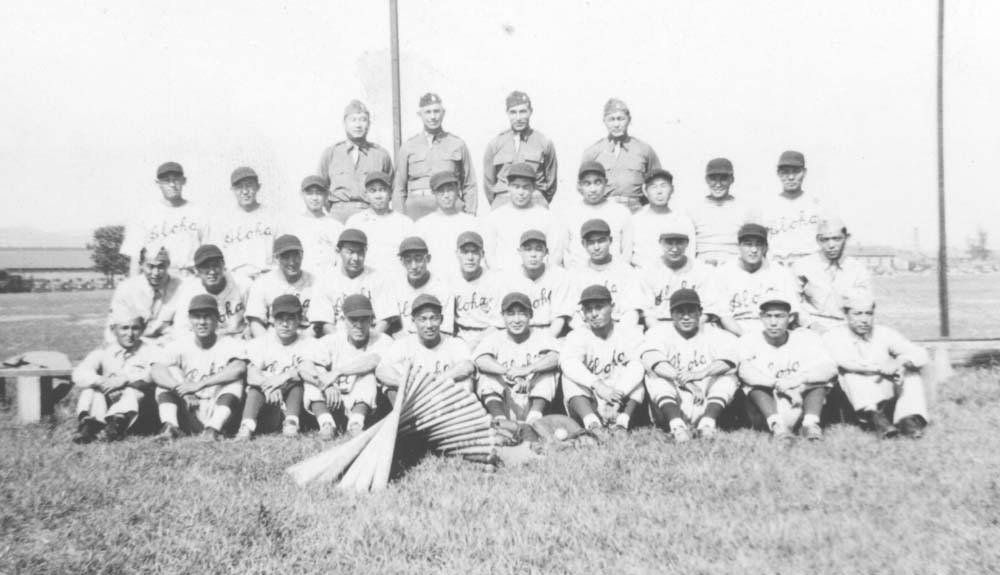
Alongside his professional success, Kometani remained deeply involved in athletics. In 1937, he became the owner of Honolulu’s leading semi-professional baseball team, the Asahi, which competed in Hawai‘i’s multi-ethnic league. The games were among the most popular sporting events of the era, drawing large and enthusiastic crowds. Under Kometani’s leadership, the team gained widespread respect, and in 1940, its talented local Nisei players were invited to Tokyo to compete in the Far Eastern Olympics against teams from across Asia.
Kometani was widely recognized in the community for his distinctive presence and personality. Standing 5 feet 10 inches tall — unusually tall for a Japanese American at the time — he was known for his strong build and gruff demeanor. Yet those who knew him also remembered his humor, generosity, and wide circle of friends that spanned diverse communities across the islands. During baseball season, he was known to treat his entire team to Sunday meals after their game, reflecting his strong sense of camaraderie and care.
Military Service with the 100th Infantry Battalion
Following the attack on Pearl Harbor in 1941, second-generation Nisei leaders like Kometani stepped forward to serve their community. In the immediate aftermath of the attack, the Hawaii Territorial Guard (HTG) was organized as a local emergency defense force, distinct from the Hawaii National Guard, which had been mobilized into federal service under the U.S. Army. Soon after its formation on December 7, Kometani joined the HTG and was reportedly the only Nisei member not discharged in January 1942, when military authorities removed American soldiers of Japanese ancestry (AJAs) from the unit. Although he requested release with the other men, his commander reportedly persuaded him to remain, believing he could better assist the Japanese community by staying.
In February 1942, Kometani became an early member of the Emergency Service Committee, an advisory group of Nisei deemed loyal to the United States, formed as part of a community outreach effort by the FBI and U.S. Army intelligence. As a result of this connection, when Kometani learned on May 30 that a segregated unit of AJA from Hawai‘i — the Hawaiian Provisional Infantry Battalion, later known as the 100th Infantry Battalion (Separate) — would be sent to the mainland for training, he asked his HTG commander and Col. Kendall Fielder, assistant chief of staff for military intelligence in Hawai‘i, and for permission to join the unit. Kometani wished to serve as a bridge between the AJA soldiers and their Caucasian commanding officers.
![Katsumi Kometani with his family in May 1942, the day he left for Camp McCoy, Wisconsin. [Courtesy of Dorothy Kometani]](https://www.100thbattalion.org/wp-content/gallery/photos-katsumi-kometani/katsumi_kometani_011.png "Katsumi Kometani with his family in May 1942, the day he left for Camp McCoy, Wisconsin. [Courtesy of Dorothy Kometani]")
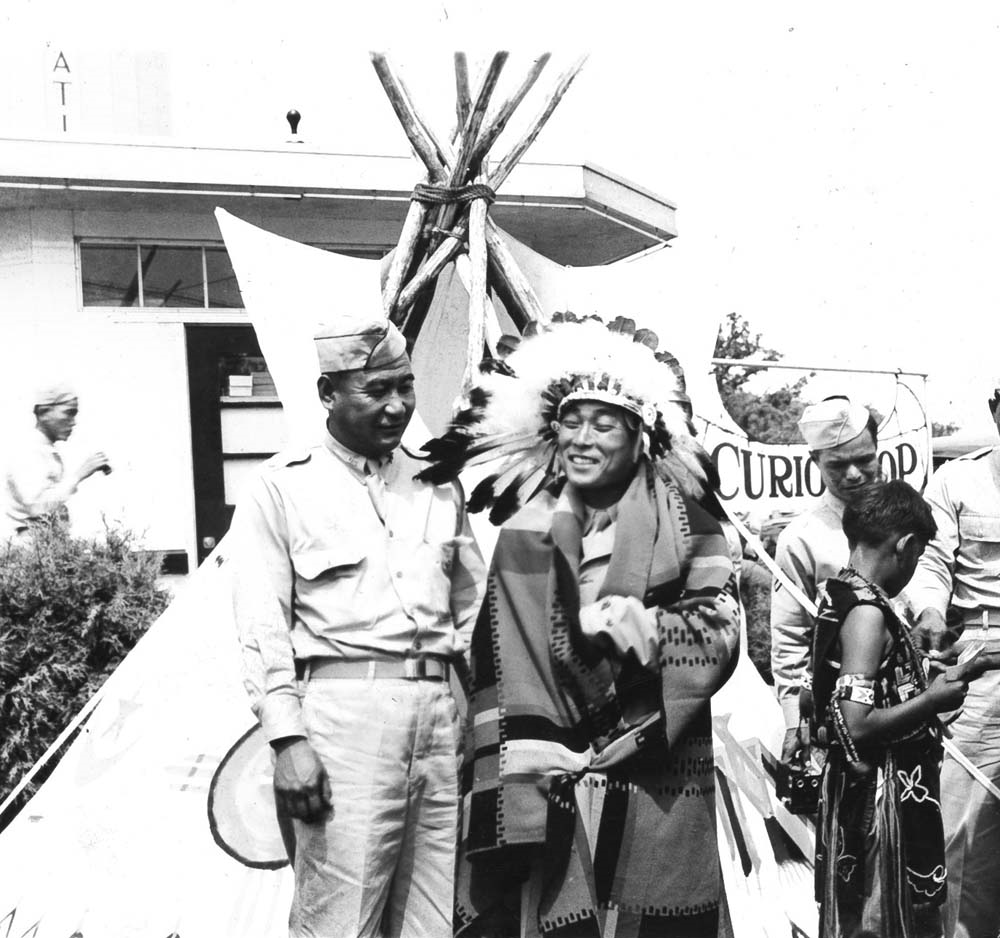
Upon arrival at Camp McCoy in Wisconsin, he quickly recognized the importance of building trust and understanding between the soldiers and local communities. Together with battalion executive officer Captain James “Jim” Lovell, he organized baseball practice and goodwill games throughout rural Wisconsin. At a time when tensions and prejudice were high in the wake of Pearl Harbor, these efforts played a vital role in bridging cultural divides and demonstrating that the AJA soldiers of the 100th were not so different from the broader American public.
As morale officer, Kometani worked tirelessly to ensure the men stayed focused, disciplined, and in good spirits. On a cold winter evening in Wisconsin, he rushed out to quiet young soldiers singing Japanese songs that might draw unwanted attention. When the arrival of Korean American officer 2nd Lieutenant Young Oak Kim was met with resentment from the Hawai‘i soldiers, Kometani stepped in as a peacemaker, helping to ease tensions and foster mutual respect. He possessed a remarkable ability to listen carefully, read situations, and respond with empathy and insight — instinctively understanding what people needed in moments of uncertainty.
One of Kometani’s lasting contributions was the creation of Club 100, now known as the 100th Infantry Battalion Veterans organization. Major James Lovell credited Kometani with initiating the idea of a postwar organization centered around a clubhouse where members could gather and continue the camaraderie formed during the war. The battalion voted to adopt the proposal.
The idea took shape during training at Camp McCoy, where each soldier contributed $2 from his monthly pay toward a shared fund for the future clubhouse in Hawai‘i. Contributions continued throughout the war, raising $50,000 by its end. The vision of Club 100 became central to Kometani’s morale program, giving the men a shared purpose and reinforcing a collective commitment that their sacrifices would be remembered and their legacy carried on.
When the 100th Infantry Battalion (Separate) deployed to the European Theater in 1943, Kometani remained by their side. He could often be found moving through dangerous terrain alongside Chaplain Israel Yost or assisting Dr. Isaac Kawasaki or Dr. Richard Kainuma in the aid stations. He would visit the front lines, comfort the wounded, guide litter bearers under fire, and ease the burdens of those pushed beyond their limits.
In April 1945, Kometani was awarded the Silver Star for his bravery near Fort Bastione, Italy. When a patrol became isolated and required urgent evacuation, he volunteered to lead litter bearer teams across two miles of mountainous terrain under enemy fire. After three hours of navigating dangerous conditions, his team successfully reached the soldiers and brought them safely back to friendly lines.
Life after the War
When the war ended in 1945, Kometani returned to his dental practice. Over the next five years, he not only worked full-time but also traveled from island to island, visiting the families of 100th Infantry Battalion soldiers who had been killed in battle. In their homes, he shared meals, listened to their stories, and helped carry the burden of their loss. The demands of long workdays, constant travel, heavy smoking, and social obligations, combined with emotional strain, took a toll on his health, leading to a series of heart attacks.
Even so, Kometani remained tireless in his service. In a 1945 speech he said, “We, who by God’s will, were permitted to return, and you, who are fortunate to be here, have challenge — an obligation to those who now peacefully sleep under the white crosses in Italy and France, to build a better Hawaii.”
As his family grew with the birth of another daughter, Linda, Kometani worked with Hawai‘i delegate to Congress Joseph Farrington to help secure federal jobs and pensions for Japanese American veterans. He also took on numerous leadership roles, serving as president of the Aloha Council of the Boy Scouts of America, a delegate to the 1950 Hawai‘i Constitutional Convention, chairman of the Territorial Board of Education, an advisor to the City Parks Department, and president of the local dental association.
At the same time, the Club 100 vision Kometani helped plant during the 100th’s mainland training continued to take shape. In September 1944, while the battalion was near Naples, Italy, before moving into France, representatives from each company met to approve the charter and bylaws for their postwar organization. The soldiers had contributed a portion of their pay to a fund since their training at Camp McCoy, and by that time more than $30,000 had been collected and sent to Charles Hemenway in Honolulu for investment. They elected officers for the organization, with Katsumi “Doc” Kometani as its first president, Sakae Takahashi as vice president, Andrew Okamura as secretary, and Hideo Yamashita as treasurer, and named Charles Hemenway, Joseph Farrington and Leslie Deacon as its first honorary members.
Club 100, the 100th Infantry Battalion veterans’ organization that the soldiers had envisioned and dreamed of during the war, was formally incorporated on December 21, 1945. Kometani was one of the original incorporators who petitioned for its charter. When their Clubhouse was completed in 1952, the veterans dedicated it to their fallen comrades, ensuring their sacrifices would never be forgotten.
Kometani continued to pursue his love of sports, helping organize an exhibition game between his Asahi team and the New York Yankees, featuring Joe DiMaggio. In his free time, he enjoyed golf at Waialae Country Club and moved with ease among diverse social circles during a period when racial barriers still existed.
In March 1949, Kometani received a letter from Frank T. Matsumoto, a member of the Japanese Diet, asking whether Honolulu residents could help make Japan’s return to the Olympic Games possible. Japan, like Germany, had not been allowed to participate in the 1948 Olympic Games, and its return to international competition required readmission by the International Olympic Committee (IOC).
The Japan Olympic Committee was unable to send its delegate, Dr. Matsuzō Nagai, to the IOC meeting scheduled for April in Rome, because under occupation rules, Japanese nationals traveling abroad at the time were not permitted to take money out of the country. Matsumoto appealed to Kometani for assistance, asking if Hawai‘i’s community could help fund Nagai’s travel.
Kometani responded by reaching out to friends in Honolulu and the neighbor islands for contributions. With the support of members and friends of the Olympic Committee for Japan, a Hawai‘i-based group of sports enthusiasts led by Dr. Katsumi Kometani, the funds needed to finance Nagai’s trip to and from Rome were successfully raised.
Nagai arrived in Honolulu on April 10 enroute to the IOC session, where he would advocate for Japan’s reinstatement. At the Rome meeting later that month, Nagai made a strong impression, and the IOC voted to restore Japan’s membership. Japanese athletes were allowed to return to Olympic competition at the 1952 Games in Helsinki, Finland, and from that point forward, Japan participated in every Olympic Games.
Kometani continued to assist Japanese athletic officials traveling through Honolulu, further strengthening ties between Hawai‘i and Japan.
Japan never forgot his help and kindness. In 1964, when Tokyo hosted the Olympic Games, Kometani was invited as an official guest of the Japan Olympic Organizing Committee. At the Tokyo Games, he was awarded the Order of the Sacred Treasure, Fourth Class, in recognition of the role he played in Japan’s Olympic efforts. In accepting the honor, Kometani emphasized that it was the people of Hawaiʻi, not he alone, who helped finance Nagai’s trip to Rome for the IOC meeting, and that he was receiving the medal for the people of Hawaiʻi:
“I had made a few friends among the Japanese college athletic officials before World War II when I owned the Asahi baseball club of the Hawaii League. And when they asked for help I did what any friend would do. I don’t think my contributions were so great. I merely did what I thought was the thing to do — Give a neighbor and friend a helping hand…”
“The sports fans of Hawai‘i were very generous. They contributed freely. Without their generosity, I would not have been able to raise the money to meet the pleas of our Japanese friends.”
He added that he did not feel deserving of special recognition, while noting that he appreciated the kindness of the Japanese officials. Kometani was again honored by Japan when he was invited by the Japan Olympic Committee to attend the 1972 Winter Olympics in Sapporo.
Kometani’s wide network of friendships was reflected in his close relationship with John A. Burns, a Democrat who managed the Asahi team during the war and later became Hawai‘i’s first elected governor. Despite their different political affiliations, the two remained lifelong friends.
Katsumi “Doc” Kometani passed away on March 16, 1979, and was laid to rest at the National Memorial Cemetery of the Pacific at Punchbowl, among comrades and friends. He left behind not only the legacy of a soldier, dentist, and community leader, but that of a man who instinctively understood what people needed — and gave of himself without hesitation.
Read Dr. Katsumi Kometani’s Officer profile
![Katsumi Kometani in Italy, 1945. [Courtesy of Dorothy Kometani]](https://www.100thbattalion.org/wp-content/gallery/photos-katsumi-kometani/katsumi_kometani_004.png "Katsumi Kometani in Italy, 1945. [Courtesy of Dorothy Kometani]")
!["Taken at Whitehall, Wisc. Our Moral Officer of course. Lt. "Doc" Kometani." [Courtesy of Leslie Taniyama]](https://www.100thbattalion.org/wp-content/gallery/photos-katsumi-kometani/masayoshi_miyagi-380x.png "\"Taken at Whitehall, Wisc. Our Moral Officer of course. Lt. \"Doc\" Kometani.\" [Courtesy of Leslie Taniyama]")
![Lt. Kometani and Edward Mitsukado at Wisconsin Depot. [Courtesy of Leslie Taniyama]](https://www.100thbattalion.org/wp-content/gallery/photos-katsumi-kometani/masayoshi_miyagi-305x.png "Lt. Kometani and Edward Mitsukado at Wisconsin Depot. [Courtesy of Leslie Taniyama]")
![Captain Kometani and Hiromi Suehiro at Camp McCoy, Wisconsin. [Courtesy of Dorothy Kometani]](https://www.100thbattalion.org/wp-content/gallery/photos-katsumi-kometani/katsumi_kometani_009.png "Captain Kometani and Hiromi Suehiro at Camp McCoy, Wisconsin. [Courtesy of Dorothy Kometani]")
![Captain Katsumi Kometani at Camp McCoy, Wisconsin [Courtesy of Dorothy Kometani]](https://www.100thbattalion.org/wp-content/gallery/photos-katsumi-kometani/katsumi_kometani_008.png "Captain Katsumi Kometani at Camp McCoy, Wisconsin [Courtesy of Dorothy Kometani]")
![Captain Kometani and Sakae Takahashi have a drink in Italy. [Courtesy of Dorothy Kometani]](https://www.100thbattalion.org/wp-content/gallery/photos-katsumi-kometani/katsumi_kometani_007.png "Captain Kometani and Sakae Takahashi have a drink in Italy. [Courtesy of Dorothy Kometani]")
![100th Battalion officers, Captain Brenneman, Major Lovell, Captain Kometani, and Lt. Col. Turner. [Courtesy of Dorothy Kometani]](https://www.100thbattalion.org/wp-content/gallery/photos-katsumi-kometani/katsumi_kometani_006.png "100th Battalion officers, Captain Brenneman, Major Lovell, Captain Kometani, and Lt. Col. Turner. [Courtesy of Dorothy Kometani]")
![Delegate Joseph R. Farrington from Hawaii visits boys at Menton, France, December 14, 1944. From left to right, Katsumi Kometani, Major Mackenzie, Chaplain Israel Yost, Delegate Farrington, Col. Gordon Sengls. [Courtesy of Dorothy Kometani]](https://www.100thbattalion.org/wp-content/gallery/photos-katsumi-kometani/katsumi_kometani_003.png "Delegate Joseph R. Farrington from Hawaii visits boys at Menton, France, December 14, 1944. From left to right, Katsumi Kometani, Major Mackenzie, Chaplain Israel Yost, Delegate Farrington, Col. Gordon Sengls. [Courtesy of Dorothy Kometani]")
![Katsumi Kometani (2nd from left) with Halo Hirose (right), a famous Hawaii swimmer, and friends at the pool. [Courtesy of Dorothy Kometani]](https://www.100thbattalion.org/wp-content/gallery/photos-katsumi-kometani/katsumi_kometani_002.png "Katsumi Kometani (2nd from left) with Halo Hirose (right), a famous Hawaii swimmer, and friends at the pool. [Courtesy of Dorothy Kometani]")
![1st Lt. Kometani [Courtesy of James Nogawa]](https://www.100thbattalion.org/wp-content/gallery/photos-katsumi-kometani/Iwasa-Masato-img441CX.png "1st Lt. Kometani [Courtesy of James Nogawa]")
![Officers Kometani, Corbin, Chipman, and Demaiolo in Ghedi, Italy, 1945. [Courtesy of Fumie Hamamura]](https://www.100thbattalion.org/wp-content/gallery/photos-katsumi-kometani/hamamura_stanley_086x_kcc.png "Officers Kometani, Corbin, Chipman, and Demaiolo in Ghedi, Italy, 1945. [Courtesy of Fumie Hamamura]")
![Chipman, Corbin, and Kometani in Ghedi, Italy, 1945. [Courtesy of Fumie Hamamura]](https://www.100thbattalion.org/wp-content/gallery/photos-katsumi-kometani/hamamura_stanley_084x_kcc.png "Chipman, Corbin, and Kometani in Ghedi, Italy, 1945. [Courtesy of Fumie Hamamura]")
![Col. Jack Conley, Chaplain Yost and Capt. Kometani. [Courtesy of Fumie Hamamura]](https://www.100thbattalion.org/wp-content/gallery/photos-katsumi-kometani/hamamura_stanley_065x_kcc.png "Col. Jack Conley, Chaplain Yost and Capt. Kometani. [Courtesy of Fumie Hamamura]")
![Col. Conley, Chaplain Yost and Captain Kometani. Last Campaign in Italy [Courtesy of Fumie Hamamura]](https://www.100thbattalion.org/wp-content/gallery/photos-katsumi-kometani/hamamura_stanley_064x_kcc.png "Col. Conley, Chaplain Yost and Captain Kometani. Last Campaign in Italy [Courtesy of Fumie Hamamura]")
![Captain Kometani and Other Officers. Last Push in Italy. [Courtesy of Fumie Hamamura]](https://www.100thbattalion.org/wp-content/gallery/photos-katsumi-kometani/hamamura_stanley_058x_kcc.png "Captain Kometani and Other Officers. Last Push in Italy. [Courtesy of Fumie Hamamura]")