Headquarters Company, 100th Infantry Battalion
Early Life
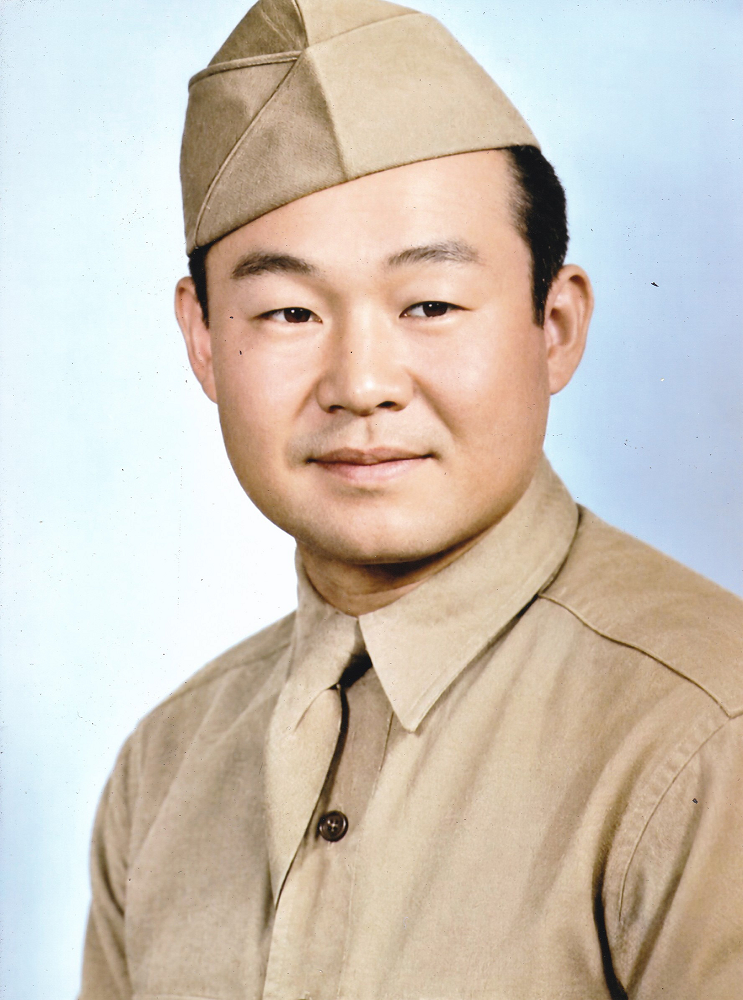
James Makoto Horikoshi was born in 1914 in Papaiko, Hawaii and was the oldest of three boys. He lost his mother when he was just eight years old and as the oldest sibling, he helped raise his two younger brothers. His father, the eldest son in his family, left Fukushima, Japan for reasons that remain unknown. According to records in Japan, he was reportedly a graduate of Waseda University. His mother suffered from an unknown illness and was sent back to Fukushima for medical treatment after the birth of her youngest son. She passed away in Japan trying to return to Hilo despite her illness. She is buried in Motomiya City in Fukushima, Japan.
Growing up in Papaikou, Hawaii, was a simple life, according to James’ autobiography, and there was never a shortage of food, with vegetables from the garden and fish from nearby rivers. There was no electricity in the early days of his childhood, and cooking was done by burning firewood, while lighting was provided by kerosene lanterns. He wrote that he did not have electricity until he was about eight years old while living with his grandmother. James was known as Jimmy and was nicknamed “Balloon” by close friends from the Big Island because, as he explained, he was heavy at one time and had a rounder face.
As a young boy, James wrote that his elementary school teachers allowed him to skip the 4th grade. When he entered the 9th grade, he became interested in band music but sadly could only afford to rent a saxophone for six months before having to give it up. He took up typing and also studied an array of science and math courses, including Algebra I and II, geometry, trigonometry, biology, chemistry, and physics.
According to his handwritten autobiography, James had a strong aspiration to attend Purdue University to earn a degree in electrical engineering. However, a lack of resources and money prevented him from attending university both before and after World War II.
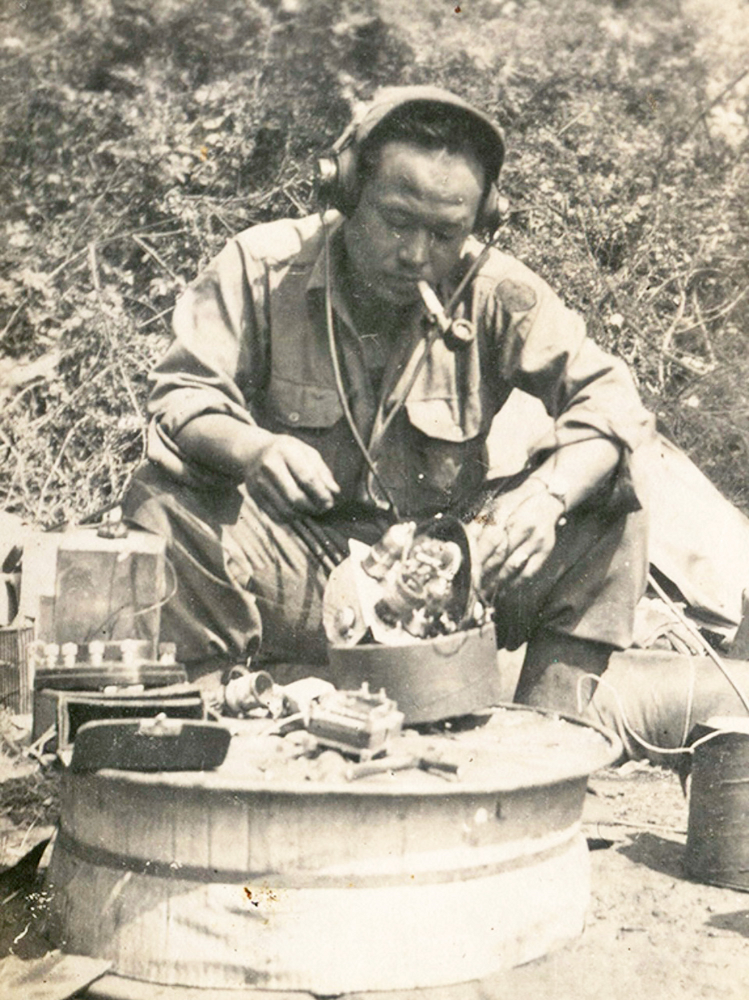
He made a bold step to attend a radio repair school in Honolulu, where the tuition included a room. After nine months, he returned home to Hilo to work as a radio repairman, but no one hired him because he had no experience. His background and knowledge of radios and circuits, along with his plan to open a radio repair shop in Hilo in 1941, may explain how he ended up working in communications with the 100th Infantry Battalion.
Living in Papaikou, a plantation town, was a challenge after graduating from Hilo High School in 1932. James always felt fortunate that he was able to board, attend, and graduate from high school. Upon graduation, he and others living in Hilo faced limited opportunities during the height of the Great Depression of 1932, which hit Hawaii very hard. He wrote about earning just $1.45 for a hard day’s work in the sugar fields. He also found miscellaneous work as a painter whenever he could.
During this period, he met his wife of over 65 years, Peggy Nakamura, while she worked at the Hilo Stationers Store in Hilo. James and Peggy married in a group ceremony on January 5, 1945, while he was on leave from the war, back in Hilo, Hawaii.
Military Career and Wartime Service
With the frustration of having limited to no opportunities in Papaikou and Hilo, James wrote in his autobiography that on November 12, 1941, he was examined by Army Medical and, on the same day, was “loaded on the inter-island steamer and rode overnight on a trip to Honolulu.” He wrote that there were six other boys from Papaikou in the same draft. They were all now in the U.S. Army and were sent to Schofield Barracks on Oahu.
He told and documented stories of the chaotic morning of December 7, 1941, as a U.S. Army soldier. He said that officers initially in the early morning, gave them rifles without any ammunition; later in the day, they were given ammunition to shoot back at low-flying enemy aircraft strafing Schofield. He also wrote that on December 8, they were put to work digging trenches around Schofield. James had National Guard training and was therefore chosen to be in the accelerated training group and did not go through the 13-week training.
On January 1, 1942, he completed the accelerated training and was selected to be part of an eight-member group transferred to Regimental Headquarters as radio men. They were ordered to study Morse code to become true radio operators, not just radio repairmen.
James learned that the six other boys from Papaikou who were drafted at the same time as he was, but went through the 13-week training, were all killed when the transport ship Royal T. Frank, taking them back to Hilo, was torpedoed by a Japanese submarine off the Hamakua coast. James recalled feeling very downhearted upon hearing the news about his hometown friends.
For the next five months, they served as radio operators at an unknown location before receiving orders to return to Schofield. It was at this time that they were told the Army was forming an all-Japanese American battalion of around 1,400 men to be called the 100th Infantry Battalion (Separate). The men were gathered into the unit at the end of May. On June 5, 1942, the unit departed Hawaii for the U.S. mainland, arriving in Oakland, California, on June 12 before moving to Camp McCoy, Wisconsin, for training. In January 1943, it transferred to Camp Shelby, Mississippi, for further training.
According to his Army service information, Private James M. Horikoshi (Army Serial Number 30101706) served in Headquarters and Headquarters Company (HQ & HQ Co.) in the 100th Infantry Battalion. Like many original members of the 100th Infantry Battalion (Separate), his Army Serial Number begins with “30,” consistent with enlistment through the Army’s Hawaii recruitment system.
As an original member of the 100th Infantry Battalion (Separate), whose members proudly called their unit “One Puka Puka,” he was part of the unit that traveled from Hawaii to Camp McCoy, Wisconsin. He later deployed with the 100th to Oran, North Africa, and later landed at Salerno, Italy, at the beginning of the battalion’s combat operations. James was 28 years old in 1942. When serving in the 100th, James wore the 34th Infantry Division’s “Red Bull” shoulder patch, which remains in his family’s possession.
James wrote that in June 1942, they:
“Very secretly were put on the train at Schofield Barracks and headed directly to Pier 39 where the transport S.S. Maui was docked. None of us knew where we were going except rumors.
We landed in Oakland and we headed for Wisconsin in four separate groups. We did not know what our destination was but was four days on the troop train and we finally reached Camp McCoy, Wisconsin. We stayed in the old area of Camp McCoy and they put us up in tents. It was getting cold and we did get our first snow on Labor Day I recall. All of us were happy to see snow but this became a misery later on. Five of us took a three-day pass to Chicago and when we returned, the camp was piled up with snow and we still had our summer uniforms. It was so cold, all our training took place indoors and the Army was disgusted.
In January 1943, the Army shipped the entire outfit to Camp Shelby, Mississippi. There was no snow there but it was just as bad with the slush and ice on the ground. We only had a pot belly stove to keep us warm at nights. We went through some vigorous training and the worst was the two months Louisiana maneuvers which took us all the way to the Sabine River in Louisiana. We maneuvered near Shreveport and Beaumont. We had to contend with the chiggers, ticks, heat, snakes and other discomfort. The water there was like orange juice and hard to stomach but when you are thirsty, you just close your eyes and nose and drink.”
When the 100th Infantry Battalion returned to Camp Shelby, the 442nd Regimental Combat Team was there. A month later, the 100th left for the European theater.
In his autobiography, James wrote:
“…Little did we know where we were headed for. We left Mississippi via New Jersey and New York. We were part of a 100-ship convoy, not knowing where we were going. We soon found out later as we were passing the Strait of Gibraltar. I never can forget passing through the Strait and seeing the Rock of Gibraltar in all its splendor — it was impressive. We then knew that we were entering the Mediterranean Sea. Soon our ship landed in Oran, Africa. We were camped in a cork forest and near a vineyard. Many of us got diarrhea as we ate grapes without washing…”
“My impression of Africa was about full of wild animals but on the contrary, we found Oran to be a beautiful old city with people speaking French. Our duties there was to guard Italian prisoners. We were issued rifles but with no bullets and the prisoners knew about this and they made fun of us. They had hot meals whereas we were given brown bags with sandwiches. We threw away our lunch bags and usually ate with the Italian prisoners to have hot lunches. The water there was brackish and you had to use saltwater soap to take a bath.”
“We were getting tired of this routine until one day word got out that we would become part of the 34th Division. One of their battalions was ordered and assigned to the General Eisenhower headquarters so we became the replacement. Then everything got hectic as we were issued new arms, vehicle ammunitions and rumors of invasion filtered out. We had to waterproof the electrical equipment and exhaust systems of the vehicles as it will be a beach landing.”
On September 22, 1943, the 100th Infantry Battalion (Separate) landed at Salerno, Italy, attached to the 133rd Infantry Regiment of the 34th Infantry Division. The battalion entered combat operations on September 26, and first encountered the enemy in combat on September 29, when it also suffered its first combat fatality.
In his autobiography, James wrote:
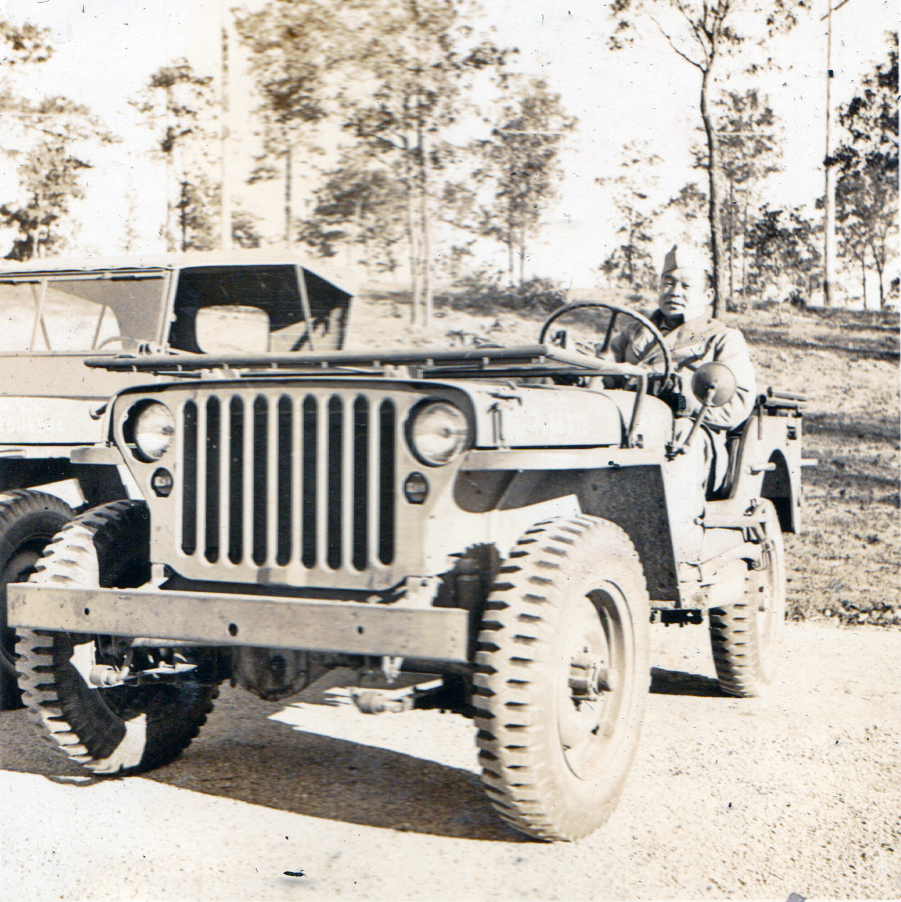
“Then it all began as we boarded the troop ship and landed in Salerno, Italy three days after the initial landing. My radio jeep got off the landing craft without even touching water whereas some of the other vehicles did get into the water as the landing craft did not reach the shore. It rained the first night and the troops headed inland. The next day we met enemy and we got our first fatality and we realized that this war was for real. We were so fearful of the German tanks with their self-propelled 88mm rifles. It was scary to say the least.
Since I was a radio operator with HQ, I was less exposed to the enemy than the members of the rifle companies who took the brunt of the fire. Talk about the sufferings from the cold, rain, mud and wet clothes for days at a time. The Army gave us rest time but these were not real comfort. We got the chance to get into dry clothes and eat hot meals. Then it was off to the front to relieve some of the other units as we leap frogged to the line of fire.”
“I remember our first Thanksgiving as the Army managed to send us some turkey dinner, but that day was wet and cold — not much of a celebration. The day before Thanksgiving, I lost two of my very good friends in the communication platoon. We had to cross the Volturno River for the third time, and prior to the crossing, my friend asked to exchange our shoes as his was very wet and worn. I gave him my shoes that evening, and he was killed as he died with my shoes on. I found this out the following day. I was crushed and could not help but thinking that perhaps he dies for me.”
James documented his experiences only up to this point in the war. Other than photographs with members of Headquarters Company, his autobiography does not describe his other wartime experiences. However, we know that the war continued to affect him, as he experienced many dreams and flashbacks.
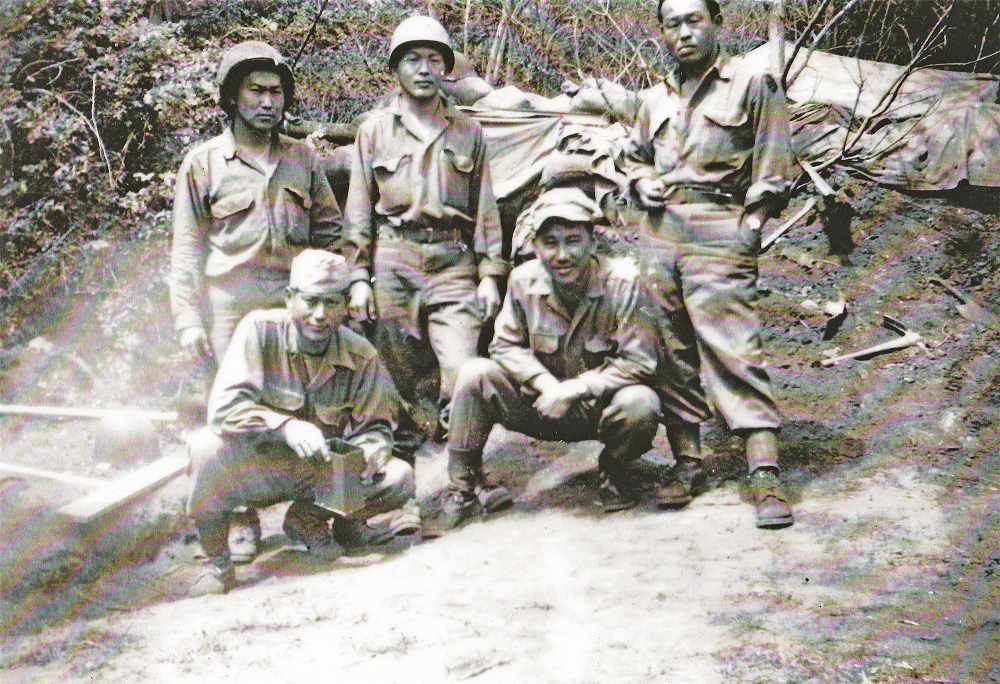
James was an integral part of the Radio Section within the broader Battalion Communication Section within Headquarters Company. As the battalion’s communications center, its Radio Section and other communications personnel helped maintain contact between commanders and frontline companies. Radio operators assigned to the 100th Infantry Battalion’s Headquarters Company had a highly critical and dangerous job. They were responsible for maintaining vital field communications between the frontline infantry companies and the battalion command post. They established communication networks across rugged mountain terrain, ran field telephone lines, and operated radios, often under heavy enemy fire. James told stories about how his radio backpack had saved him more than once while he was supporting the front lines.
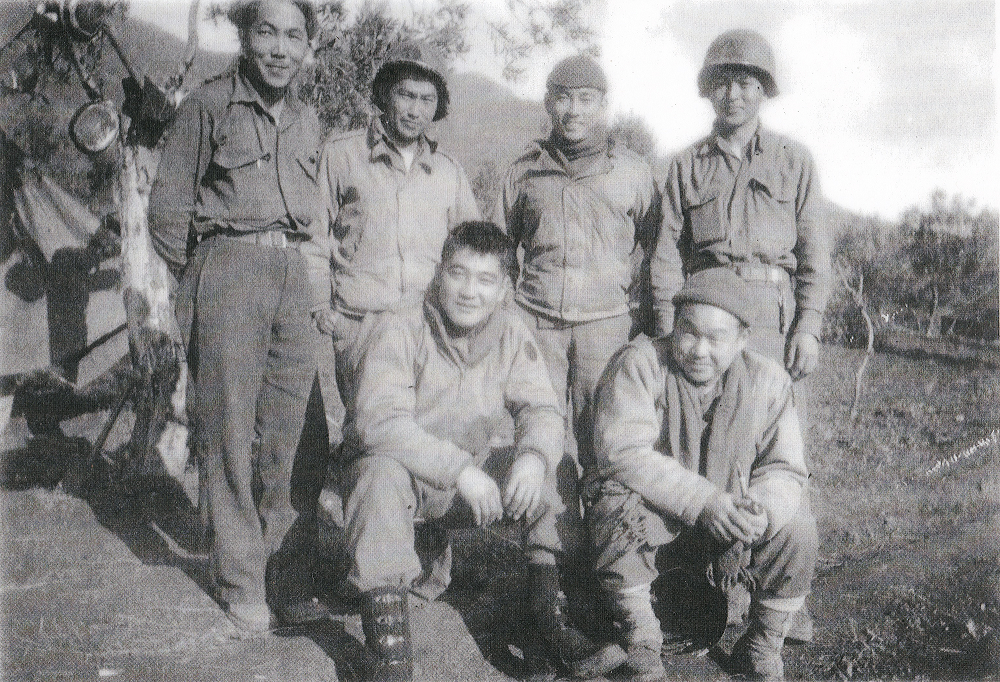
James’s name appears on official, declassified 100th Infantry Battalion company rosters for the Mediterranean Theater of Operations. He served alongside other Radio Section personnel, including Akiyoshi Kuriyama, Hidenobu Hiyane, James Oki, and David Suzuki. A photograph taken in Civitavecchia, Italy, in 1944, also includes Albert Oki, Isaac Akinaka, and Edward Saito.
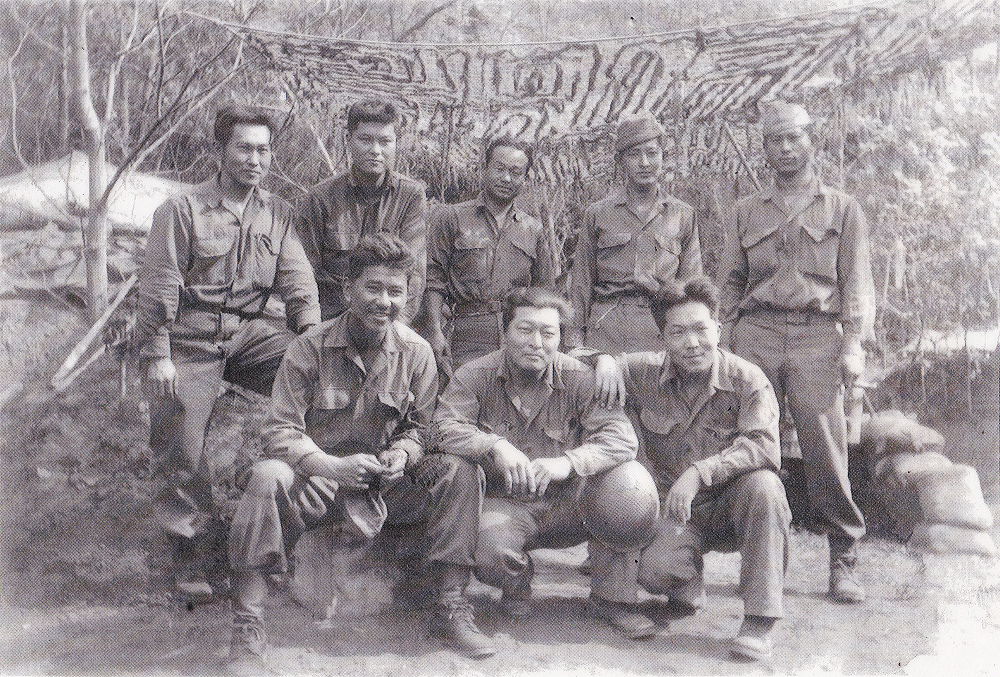
Throughout the 100th Infantry Battalion’s campaigns in Italy and France, Headquarters Company played a vital supporting role. From the landing at Salerno through the battles near Benevento, Monte Cassino, Anzio, and Belvedere, its communications personnel helped commanders coordinate troop movements and battlefield operations across rugged terrain and under enemy fire. Their responsibilities included maintaining communications during three treacherous crossings of the swollen Volturno River under heavy German observation and establishing command elements in the bitter cold of the Apennine Mountains. During the fighting near Monte Cassino, communications personnel worked to relay orders amid heavy enemy fire during the unsuccessful assaults on the fortified hill complex. At Belvedere, communications support helped coordinate the battalion’s operations against German forces.
After moving to France in September 1944, Headquarters Company continued supporting the battalion’s operations in the Vosges Mountains and the Maritime Alps. Returning to Italy in March 1945, its personnel helped maintain communications during the final offensive against the Gothic Line and the advance into the Po Valley. German forces in Italy formally surrendered effective May 2, 1945, ending organized German resistance in the Italian campaign. On May 8, 1945, Germany’s unconditional surrender took effect across Europe, marking the end of the war in Europe.
James would tell stories of having little to no R&R and was involved with the 100th from summer 1942 through December 1944. He was likely involved in most of Headquarters Company’s campaigns from 1942 to 1944.
Postwar Life and Wartime Memories
In high school, James had studied Spanish and said that this knowledge was useful when trying to learn and speak Italian throughout the war in Italy. James also instilled in his children and students the importance of English and good communication, in part because of his wartime service as a radio operator and his postwar managerial and administrative Civil Service roles in the Army’s Signal Corps at Schofield and Fort Shafter, where he worked until his retirement.
James also shared with his family that he had not wanted his younger brothers to join the Army. While serving in Italy, he experienced a bittersweet moment when he encountered his younger brother, Scotty, who had also enlisted and was serving with the 442nd Regimental Combat Team.
Throughout his life, he would put on a suit and attend every Memorial Day service at Punchbowl Cemetery and be very somber when he returned from the annual service. Even with coaxing from family, he refused to return to or visit Italy on commemorative tours. We know that relaying these stories was painful for him, and his memories and nights were akin to what we would call PTSD today.
James took an English class at the University of Hawaiʻi (UH), and one of his many assignments was to summarize a book review. His review was of the newly released book “Ambassador in Arms” by Dr. Thomas Murphy, an associate professor of history at UH.
His last paragraph read: “If I showed any partiality toward this book, it may be because I was a member of this original 100th Battalion. I laughed, I cried, I marched and cheered along as I read and relived my life as a soldier of this Unit. There were many unaccountable periods and reasons throughout my soldier life but when this book was published, the contents in the various chapters gradually revealed and completed the blanks like a finished jig-saw puzzle. The story of the 100th Battalion is so well summed in Ambassador in Arms, I consider this book as my personal diary of my Army life. The story of the 100th is now history but I was proud to have served with them.”
—–
This biography was prepared by James M. Horikoshi’s son, Neil Horikoshi, and daughter, Reverend Barbara Horikoshi-Firebaugh, in collaboration with Club 100. It is based on stories shared with them and a handwritten and typewritten autobiography that James prepared between April 3 and June 4, 1993. Quotations are taken from his typewritten autobiography.